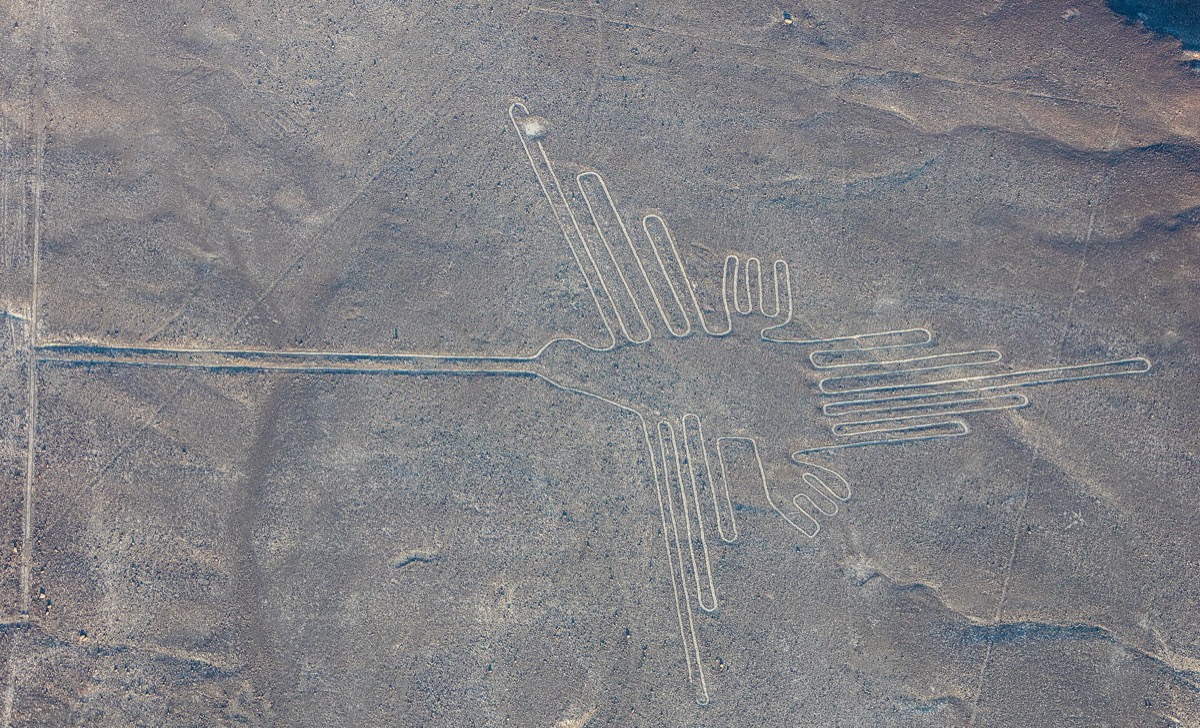
Across a stretch of Peruvian desert that gets less than an inch of rain a year run over eight hundred straight lines, three hundred geometric figures and seventy animal and plant designs. Some lines run thirty miles. They are nearly impossible to make out from the ground, and only came to public attention when pilots began flying over Peru in the nineteen thirties. So who were they drawn for?
Probably not the sky. Paul Kosok caught a line aligning with the sunset a day after the winter solstice in nineteen forty-one, and called the desert the largest astronomy book in the world. then defended that reading for forty years. American researchers arriving in the nineteen seventies began poking holes in it. The current view ties the lines to water and to rituals performed to obtain it.
The lines lie just over two hundred miles southeast of Lima, in a desert so dry it rains less than an inch a year. There are more than eight hundred straight lines, three hundred geometric figures including , rectangles, triangles and swirls, and seventy , among them a hummingbird, a spider and a monkey. The straight lines run up to thirty miles and the figures reach twelve hundred feet.
The lines are , and they survive because nothing disturbs them. The surface rock has oxidized to a deep rust, and removing the top twelve to fifteen inches exposes light sand in high contrast. With so little rain, wind and erosion, the designs have stayed largely intact for five hundred to two thousand years. Most are thought to be the work of the Nasca people, who flourished from around AD one to seven hundred.
The astronomical reading came first. Toribio Mejia Xesspe began systematic study in nineteen twenty-six, but the lines only reached public awareness through pilots in the nineteen thirties. Paul Kosok then found a line aligned with the sunset in June of nineteen forty-one, a day after the winter solstice. Maria Reiche then defended the astronomical and calendrical case for four decades.
The reframing came from ecology. Johan Reinhard argued that most lines did not point at anything on the geographical or celestial horizon, but led instead to places where people carried out rituals to obtain water and the fertility of crops. Aveni agrees that the straight lines and trapezoids relate to water, not as a way to find it but in connection with ritual, probably to plead for it.
wat. They are not drawings addressed to anybody overhead. They are places people walked to so as to ask for rain.
wat wat
In a place receiving about twenty minutes of rain a year, almost any large collective effort is going to be about water, which is the kind of reasoning that reframed the whole question.
How do we know?
Jason Golomb’s reference article for National Geographic traces the study of the lines from Toribio Mejia Xesspe in nineteen twenty-six through Kosok and Reiche to Johan Reinhard and Anthony Aveni.
What is still unknown
Reinhard is explicit that no single evaluation proves a theory about the lines, and that the case rests on combining archaeology, ethnohistory and anthropology.
Learn something?
Where to next
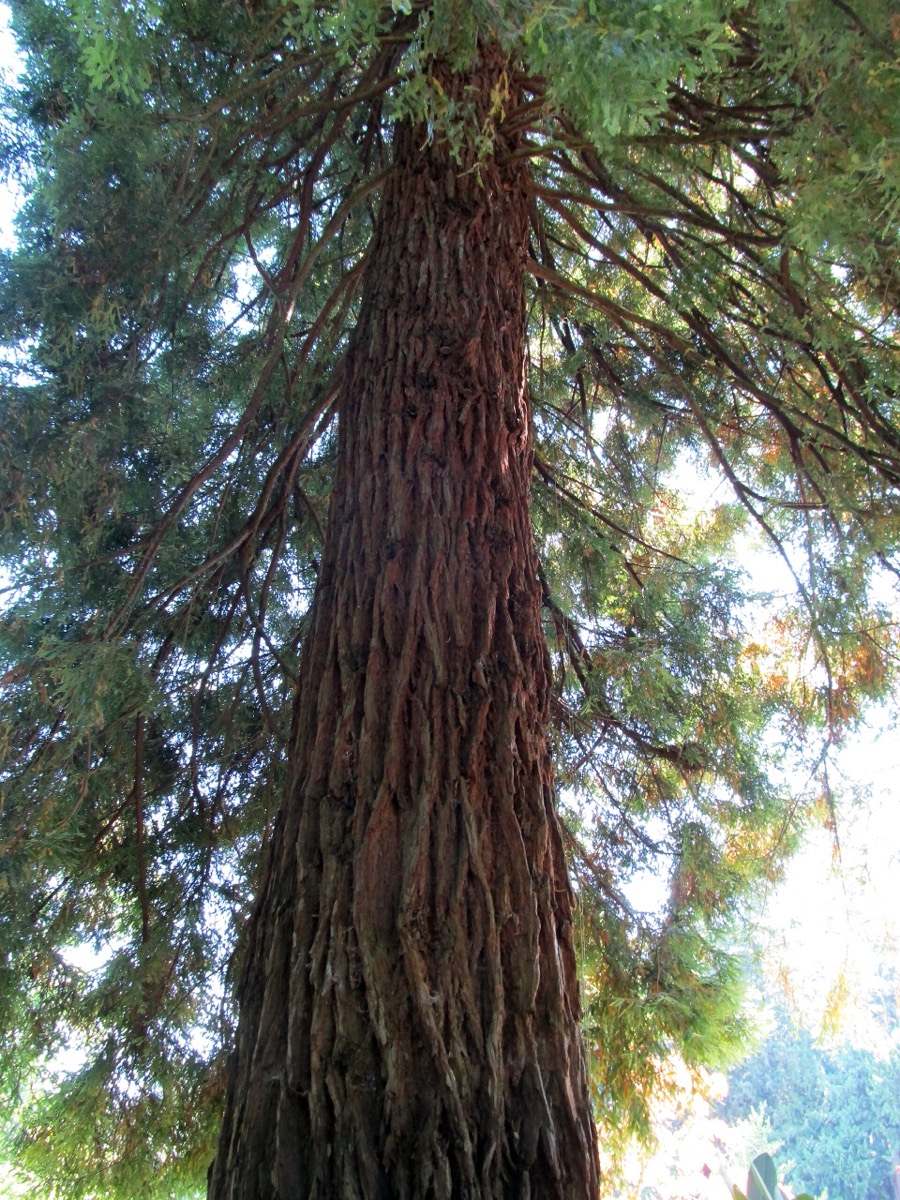 What sets the limit on how tall a tree can get?water
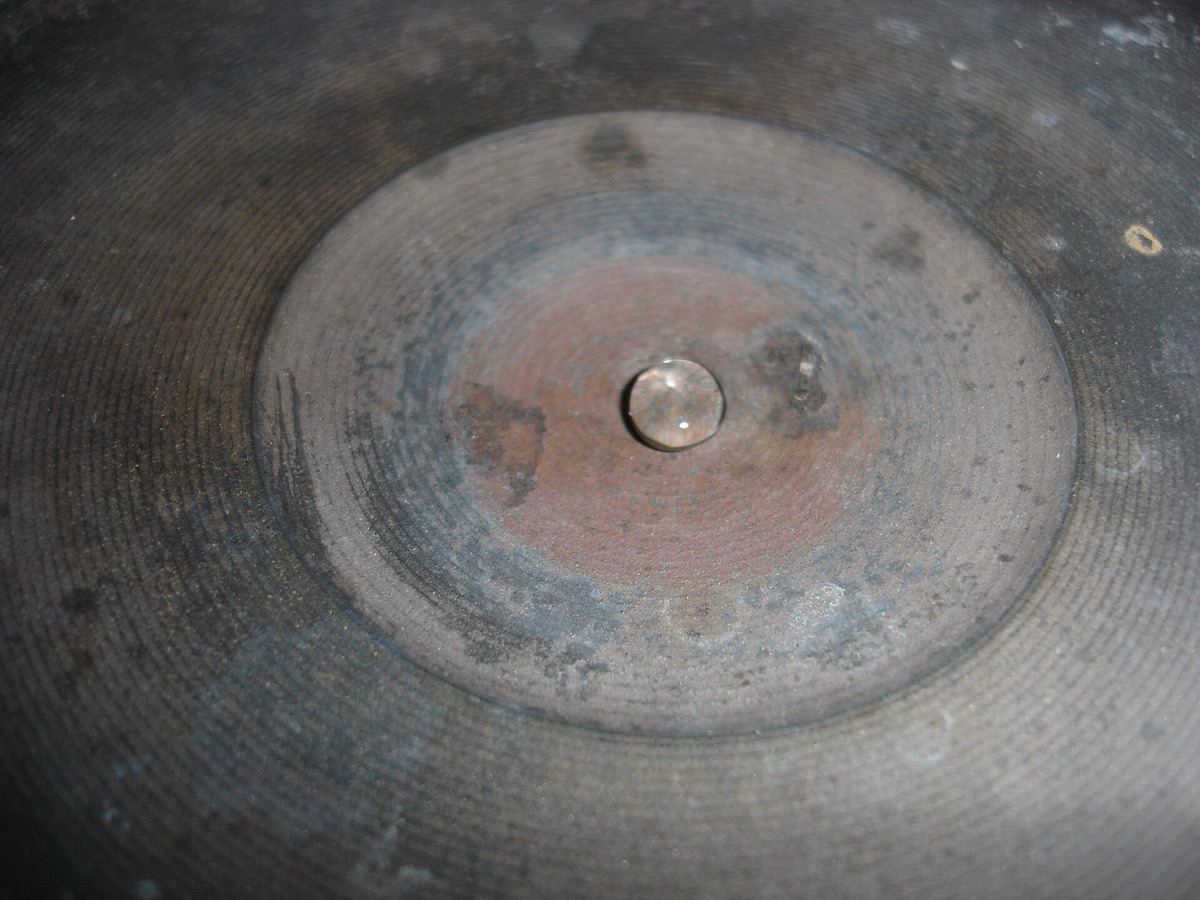 Why does a drop of water flee a very hot pan in particular?water
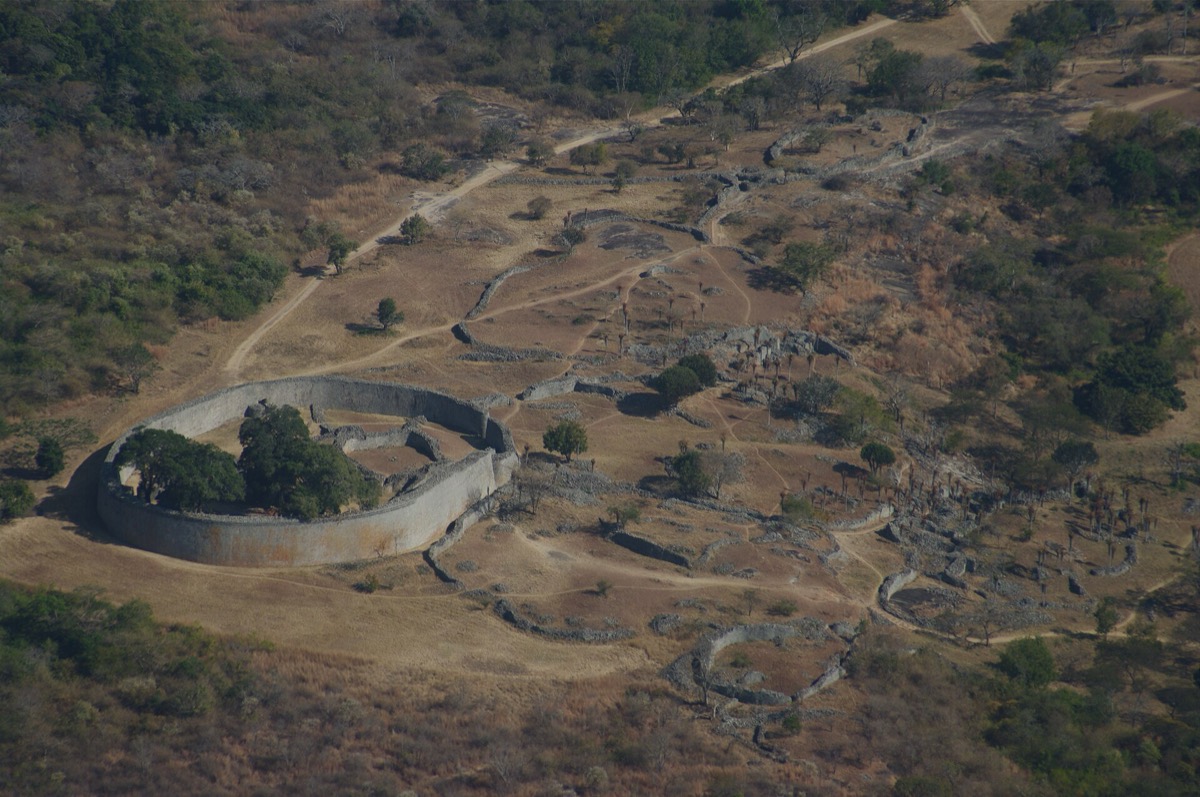 How did the great stone city of Africa secure its water?water