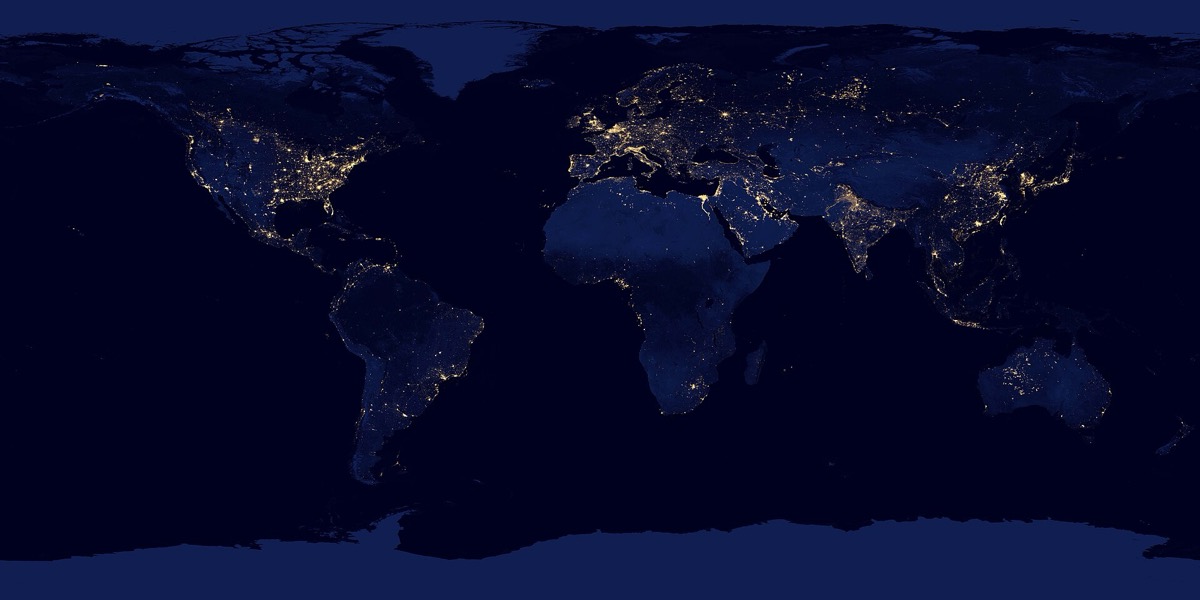
Street and building lights throw some of their light upward, and particles in the air scatter it into a dome of light over every city. A star is visible only if it is brighter than the background behind it. What does that do to ?
It takes it out first. The brighter the background, the fewer stars clear the threshold. And the Milky Way is exactly the wrong kind of object: broad, diffuse and faint, so its against the sky was small to start with. World maps of night sky brightness, built from satellite data and a scattering model, show a large share of Europe and North America living under a sky where it cannot be seen at all.
What takes the stars away is not the light aimed at them but the light that scatters. Street and building lights throw part of their output upward, molecules and particles in the air scatter it, and it comes back from the whole sky at once. Over every city a lit dome forms, which is .
From there it is a question of contrast and not of intensity. A star is visible only if it is brighter than the background behind it. The background got brighter, so the faint stars dropped below the threshold. Nobody switched them off.
The Milky Way goes first because it is exactly the wrong kind of object: broad, diffuse and faint, so its difference from the background was small to begin with. World maps of night sky brightness, built from satellite data and a scattering model, put a large share of Europe and North America under a sky where it cannot be seen.
The loss is not only aesthetic. Light at night disrupts bird migration, draws insects in, and moves body clocks, ours among them. What is unusual about is that it is entirely reversible: it goes the moment the fixtures are aimed downward or turned down. The maps describe an average, and cloud, humidity and dust change the brightness on any given night.
wat. The Milky Way is faint and broad, so it is the first thing to go as the background of the sky gets brighter.
wat wat
Beyond losing the view, light at night disrupts bird migration, insect behavior and the body clocks of animals and of people.
How do we know?
Satellites measure artificial light emitted upward, and that data is combined with a model of scattering in the atmosphere to calculate sky brightness at any point.
What is still unknown
The maps describe average conditions. Cloud, humidity and dust change the actual brightness on any given night.
Learn something?
Where to next
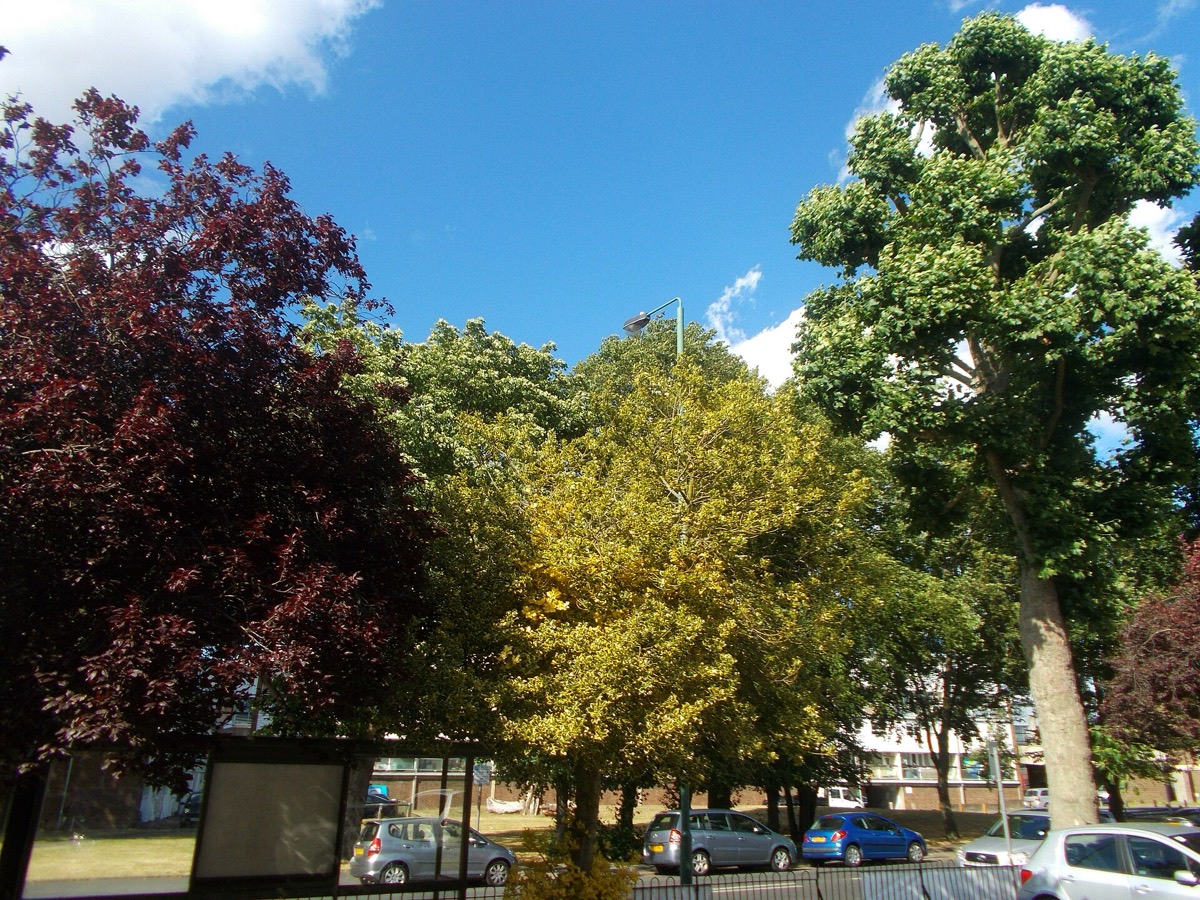 If trees cancel almost half the urban heat effect, why does the thermometer barely move?cities
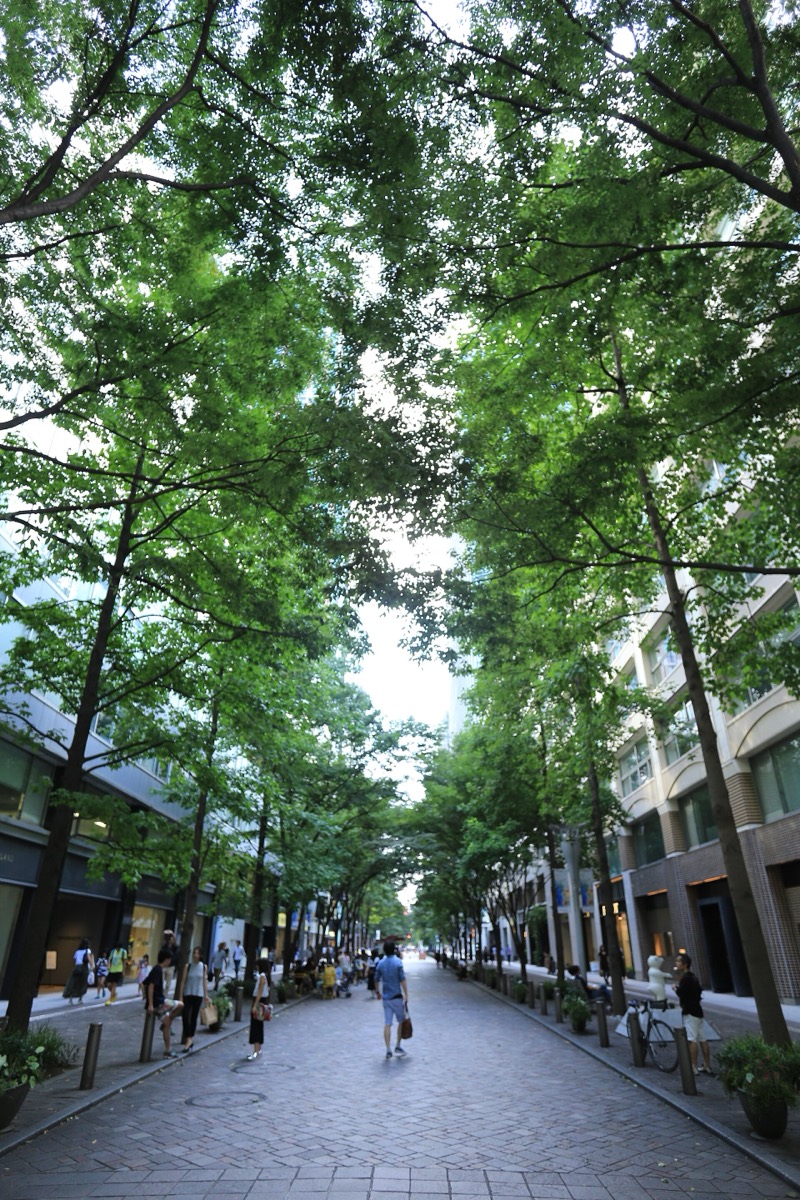 How much does one tree over a sidewalk change a summer afternoon?cities
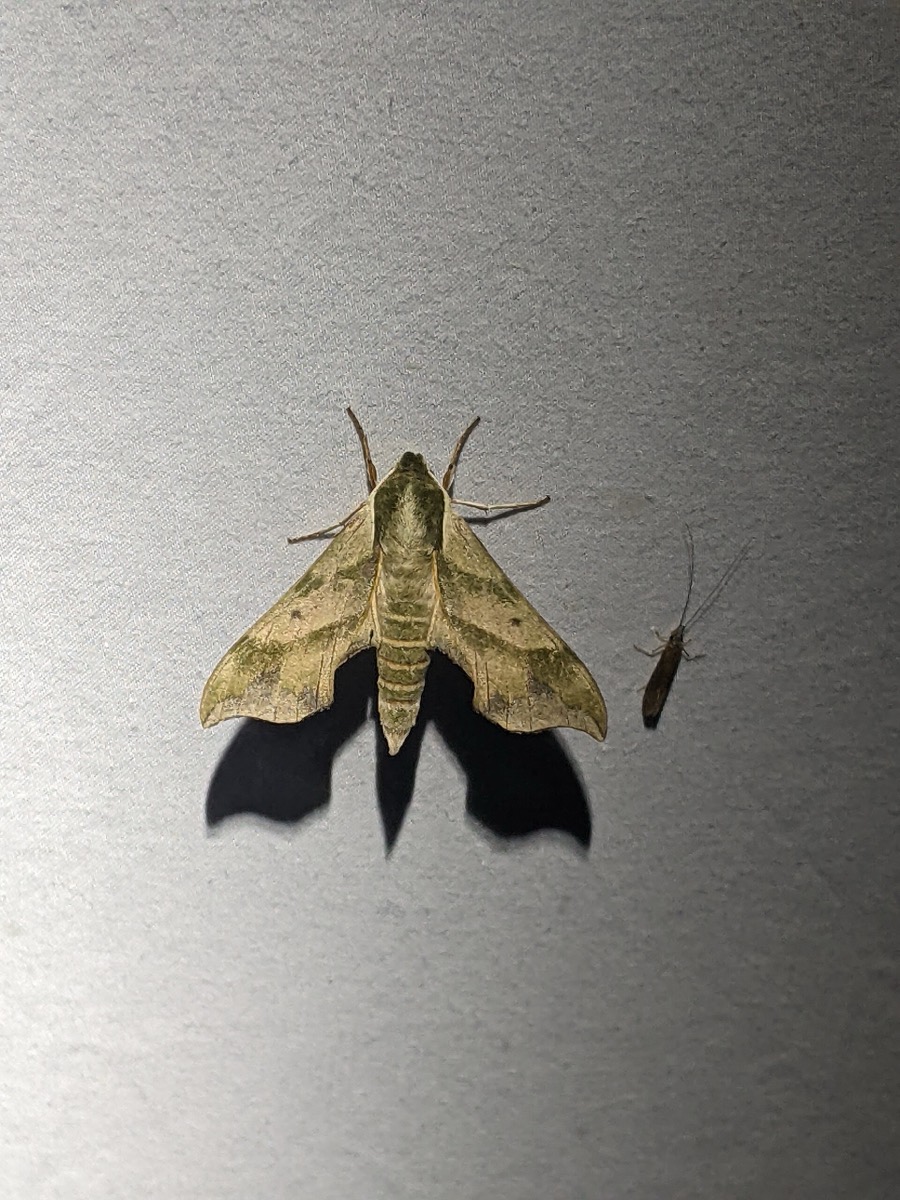 Does a streetlight reach a moth that flies outside its circle of light?light pollution