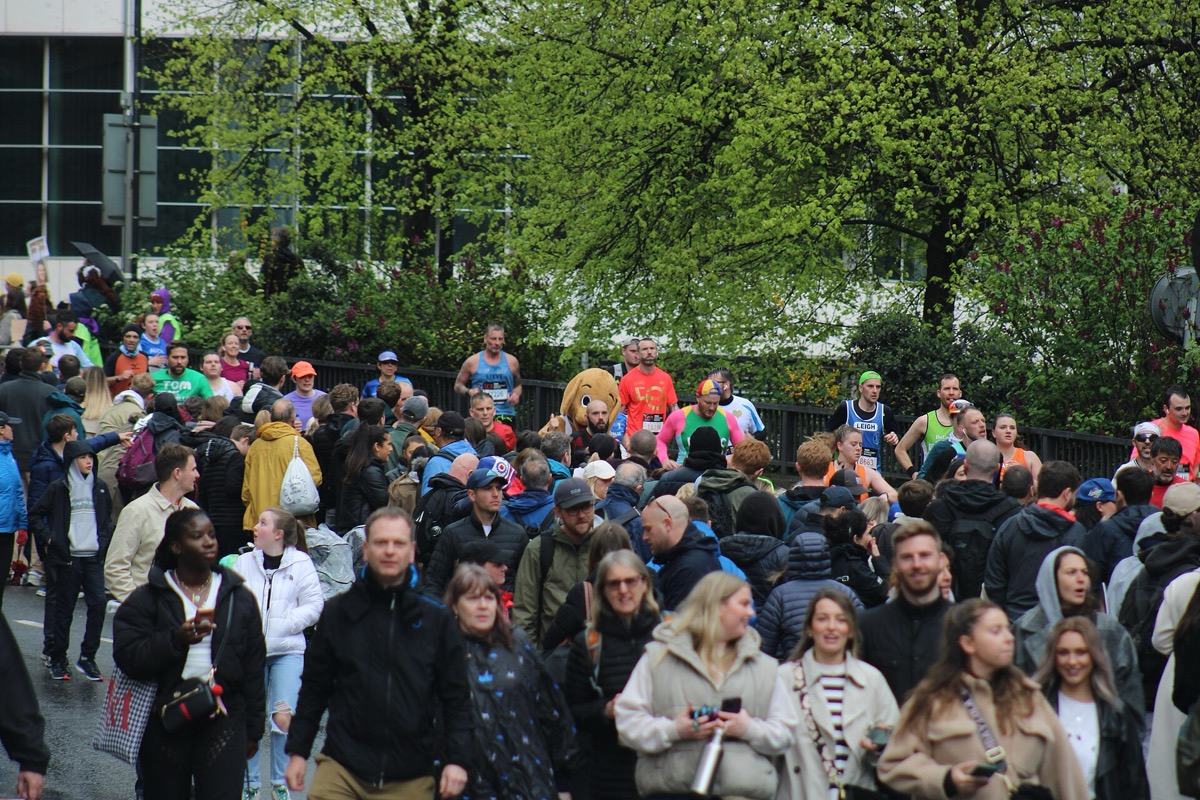
At speed, carries a real energy cost in running too, and not only on a bicycle. To put a number on it, researchers measured runners in a laboratory and worked out how much force somebody saves by running sheltered behind others. What is it worth?
A few minutes, at two-hour marathon pace. Air resistance grows roughly as the square of speed, so at walking pace it is nothing, and around twenty kilometers an hour it already reaches a few percent of the total effort. The researchers measured horizontal forces on runners, then calculated scenarios: behind one runner, behind two, or inside a tighter formation.
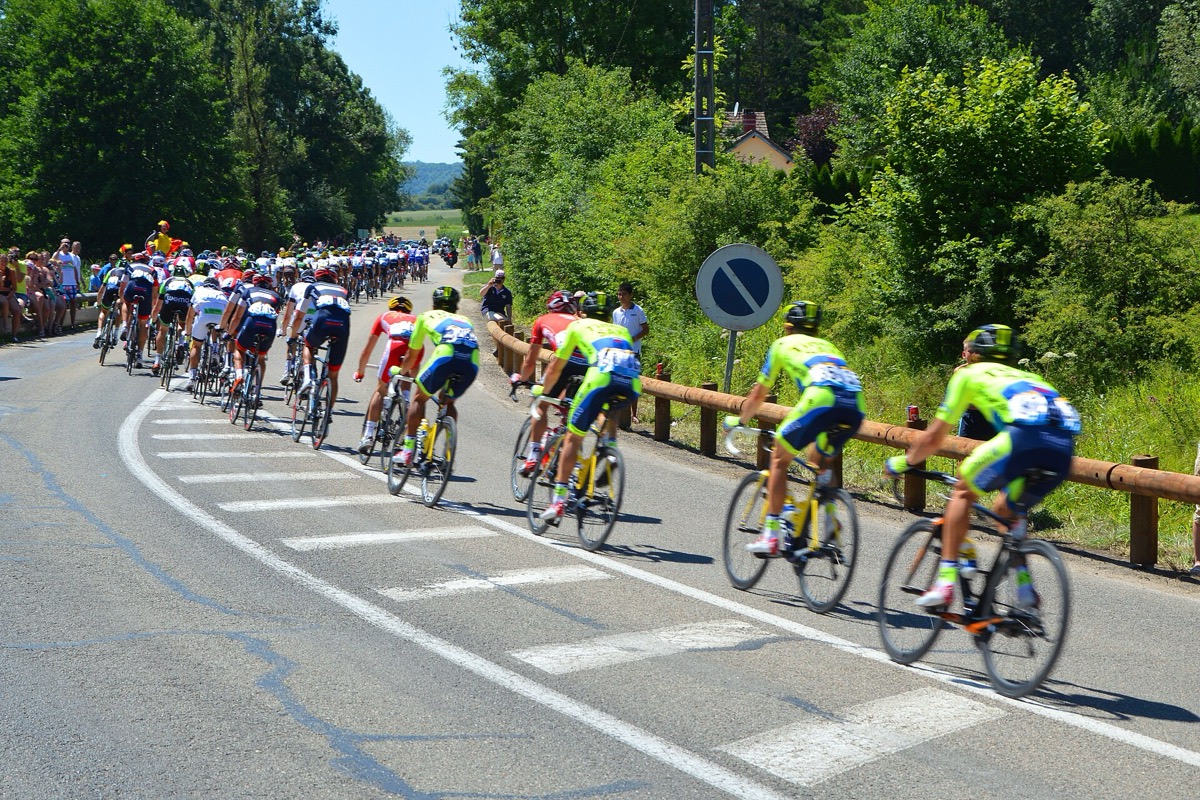
The idea is familiar from cycling, and there it is dramatic: a rider inside a bunch saves tens of percent of the effort. In running it was taken to be negligible, because the speed is so much lower.
The calculation explains why still matters here. Air resistance grows roughly as the square of speed, so at walking pace it is nothing. At elite marathon pace, around twenty kilometers an hour, it already reaches a few percent of the total effort.
To put a number on it, the team measured horizontal forces on runners in a laboratory. Then they calculated scenarios: behind one runner, behind two, or inside a tighter formation, and translated the result into time.
The estimate for two-hour marathon pace came to a possible saving of a few minutes, depending on the formation. Which is exactly why are planned around a rotating group of pacemakers and not only around a fast runner. And the dependence on conditions is high: speed, wind, heat, distance from the pack and the size of the runners all move the number, and at a slower pace the advantage is far smaller.
wat. In a fast marathon the air itself is an opponent you can partly hide from.
wat wat
It explains why record attempts are built around pacemakers and precise formations, rather than around one unusually fast runner.
How do we know?
The researchers measured horizontal forces on runners, combined that with data from earlier aerodynamic work, and calculated different pack scenarios at elite marathon speed.
What is still unknown
The saving depends on speed, wind, altitude, the runners’ size, the distance from the pack and the heat. At a slower pace the advantage is much smaller.
Learn something?
Where to next
 Why do so many marathon runners finish just before a round hour?marathon
 How little air does a rider buried inside the bunch actually feel?aerodynamics
 Do the fastest marathon runners also run the steadiest race?marathon