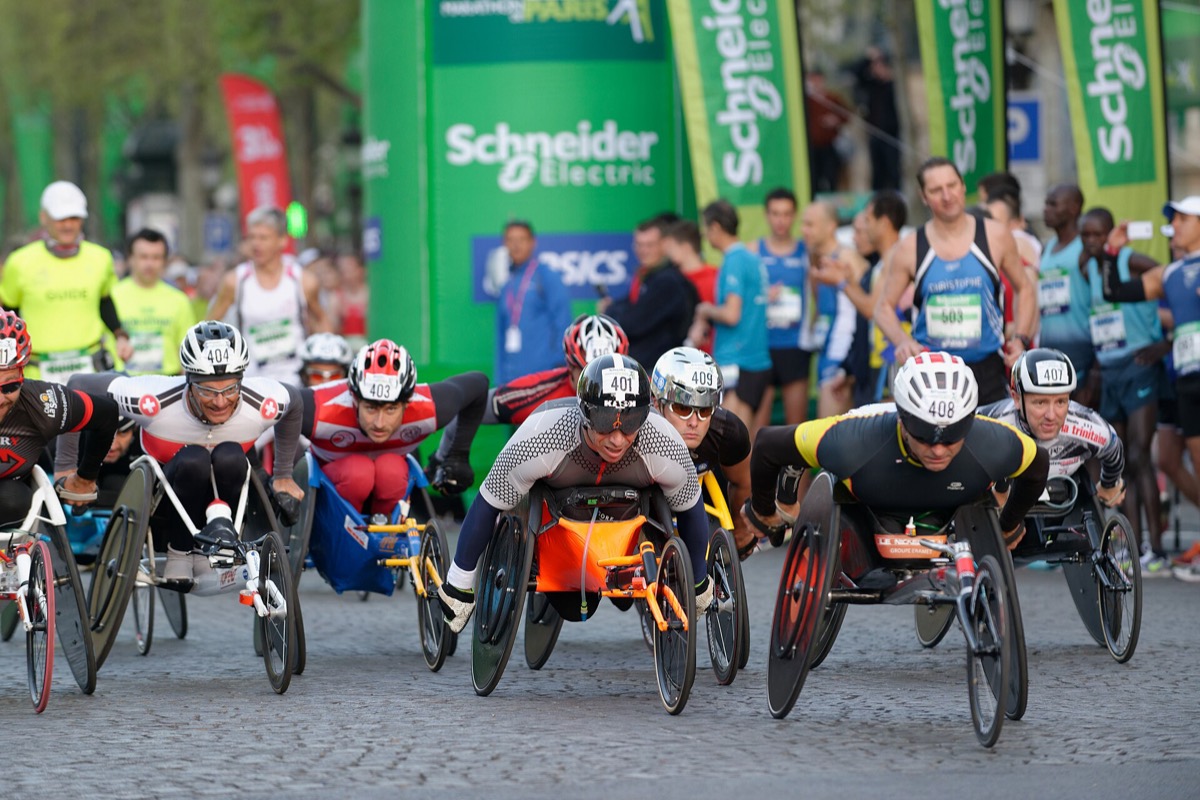
A round number has no physical meaning at all: the body does not know the difference between three fifty-nine and four oh-one. And yet, looking at millions of finishing times, they do not spread out evenly. Where do they up?
Curiosity counts. Here is the answer.
Just before. A round number has no physiological meaning, and it becomes a line: 3:59 gets told as a success and 4:01 as a miss. Across millions of finishing times there is a sharp pile in the minutes before each round hour and a trough right after it, and the pattern repeats around 3:00 and around 5:00 as well. The pace data explain how it arises: runners who came close to the mark sped up in the final kilometers, against every physical logic. The caveat is that the data show a population pattern and cannot know what each runner’s personal goal was.
Just before each round hour. A round number has no physical effect, and it becomes a : 3:59 feels like success and 4:01 like a miss. Across the finishing times there is a large excess just before every round hour and a shortfall right after it. data showed that runners close to the mark sped up toward the end.
With millions of results in hand, small bumps in the distribution stop looking accidental and start being measurable.
The researchers ruled out explanations such as Boston Marathon qualifying times or runners pacing a group, both of which would also put results just under a line.
The speeding up at the end appeared among those who could still cross the mark, which is evidence of changed effort rather than changed reporting.
A goal can improve a particular performance, and a late surge is not necessarily the healthiest or fastest strategy for every runner. And the data show a population pattern: they cannot know what each runner’s personal goal was.
wat. Across 9.8 million marathons, a 3:59 clock appeared more often than expected and 4:01 less often, because the round hour changed effort.
wat wat
An arbitrary goal can change real effort. A simple number helps people persist, and it also makes a tiny difference feel large.
How do we know?
An analysis of 9,789,093 marathon times examined the density of results and the changes in pace near the round time marks.
What is still unknown
The data show a population pattern and cannot know what each runner’s personal goal was.
Learn something?
Where to next
 How much time does a marathon runner save by staying inside a pack?marathon
 Which goal helps an athlete more: to win, or to execute correctly?goals
 Do the fastest marathon runners also run the steadiest race?marathon