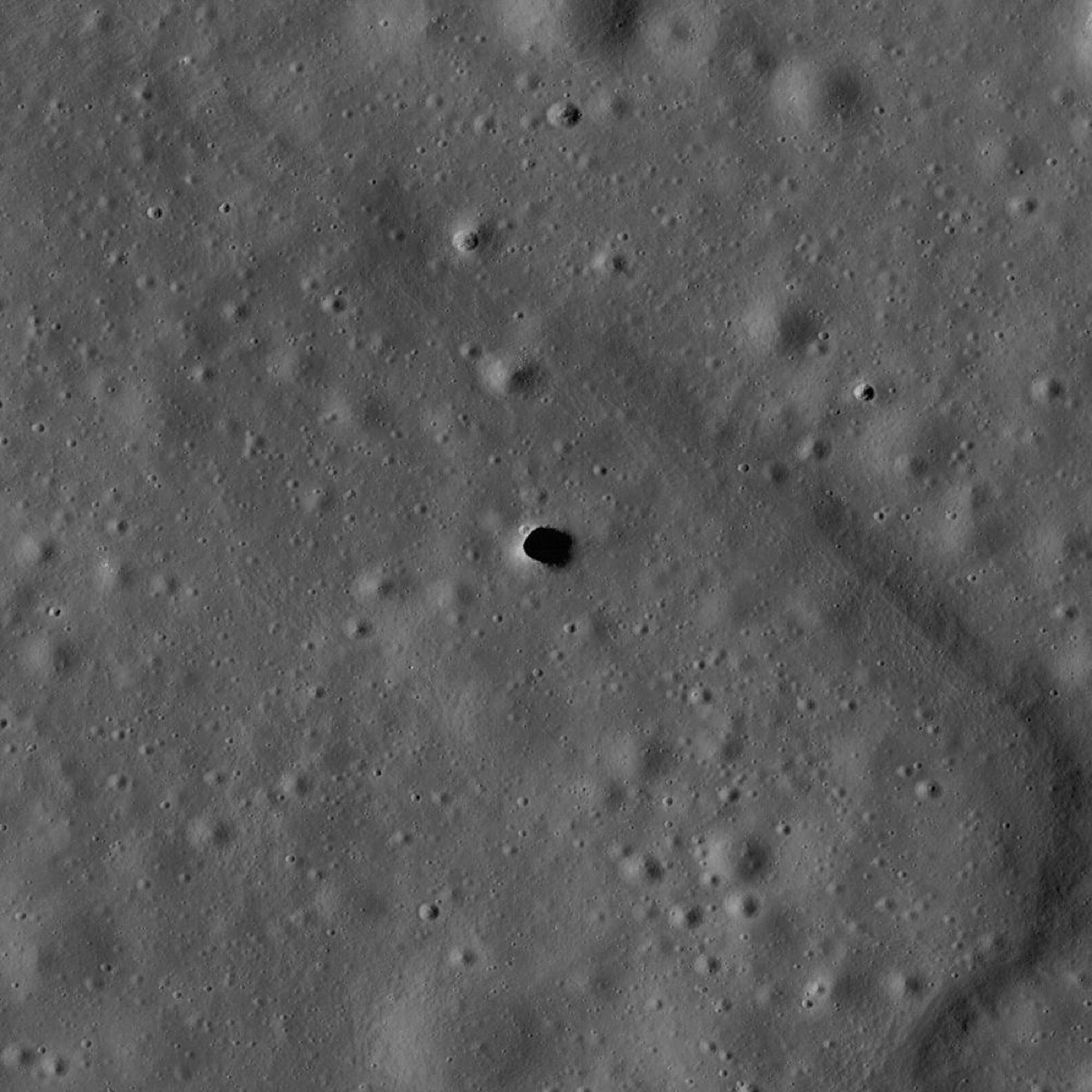
The lunar surface near the equator heats to about 127 degrees by day and cools to about minus 173 at night, so almost nothing can stay on it. A collapse pit has walls and shade. What goes on inside one?
It steadies. Data from the Diviner radiometer and models showed the floor of the pit stays about 100 kelvin warmer than its surroundings at night, although the measurement is not direct. A space continuing sideways beyond the sunlight may stay nearly constant around 290 kelvin, which is about 17 degrees Celsius. That figure is a reasoned prediction and not a finding.
The lunar surface near the equator heats to about a hundred and twenty-seven degrees by day and cools to about minus a hundred and seventy-three at night. There is no atmosphere to store and spread heat, and those are what defeat equipment.
In the picture is different. The walls and the shade trap heat and damp the swings. Data from in orbit showed the floor of the pit stays about a hundred degrees warmer than its surroundings at night.
The interesting number belongs somewhere else. A space continuing sideways beyond the sunlight may stay nearly constant around seventeen degrees Celsius.
A pit or a cave could therefore give a stable thermal environment, alongside protection from radiation and micrometeorites. But that constant temperature is : it refers to a space the model assumes exists beyond the opening, and measurements from orbit cannot prove its size or even that it is there.
wat. While the lunar surface jumps between 127 and minus 173 degrees, a shaded space in a pit may stay near 17.
wat wat
A pit or a cave could give astronauts a more stable thermal environment than the exposed surface, alongside better protection from radiation and micrometeorites.
How do we know?
The researchers compared 19 passes of the Diviner radiometer over a pit in Mare Tranquillitatis against two- and three-dimensional models of rock, dust, shade and radiation.
What is still unknown
The constant temperature refers to a shaded space the model assumes exists beyond the opening. Measurements from orbit cannot by themselves prove the size of the cave, or even that a continuous cave is there.
Learn something?
Where to next
 How is the distance to the Moon known to the millimeter?Moon
 Can you tell who lived in a cave without finding a single bone there?caves
 Why is one Patagonian cave wall covered in hundreds of hands?caves