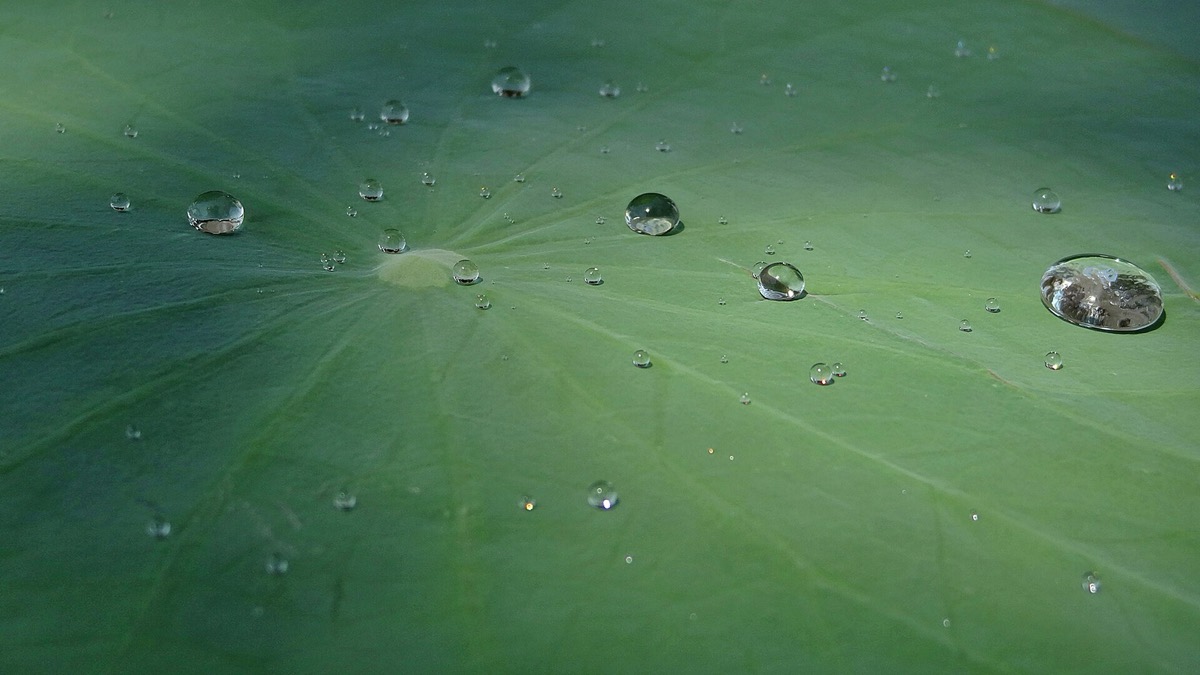
A lotus leaf grows in mud and stays clean, and the obvious explanation is a smooth surface that dirt cannot catch on. Under a microscope the opposite turns out to be true: the surface of the leaf is extremely rough. What does the rain do there?
It rolls, and it takes the dirt with it. Under a microscope you see covered with still smaller wax crystals. Water touches of the structure, stays in beads and rolls off easily. A dust particle more than it sticks to the leaf, so the droplet takes it along. Leaves dirtied with particles and rinsed with artificial rain came out almost entirely clean.
A lotus leaf grows in mud and stays clean, and the is not only that it repels water.
The surface of the leaf is not smooth. Under a microscope you see microscopic bumps covered with still smaller wax crystals, two levels of roughness together.
The water touches only the tips of the structure and rests almost on air, so it stays in beads and rolls at the slightest tilt instead of flattening.
What turns this into cleaning is the ratio of adhesion: a dust particle sticks to a droplet more than it sticks to the leaf, so the droplet takes it along. Contamination and rinsing experiments showed that water-repellent leaves came out almost entirely clean. The effect does not repel every liquid: oils, surfactants and wear of the structure cancel it.
wat. A lotus leaf cleans itself because droplets barely touch its rough surface, so they roll and take dust with them.
wat wat
The combination of chemistry and roughness produced engineering imitations for paints, fabrics and coatings that reduce the accumulation of water and dirt.
How do we know?
Electron microscopy revealed the roughness of the leaf surfaces, and contamination and rinsing experiments compared water-repellent leaves with surfaces that wet easily.
What is still unknown
The lotus effect does not repel every liquid and every contaminant. Oils, surfactants and wear of the structure can cancel the self-cleaning.
Learn something?
Where to next
 Which feather silences an owl in flight? There is no single answerbiomimicry
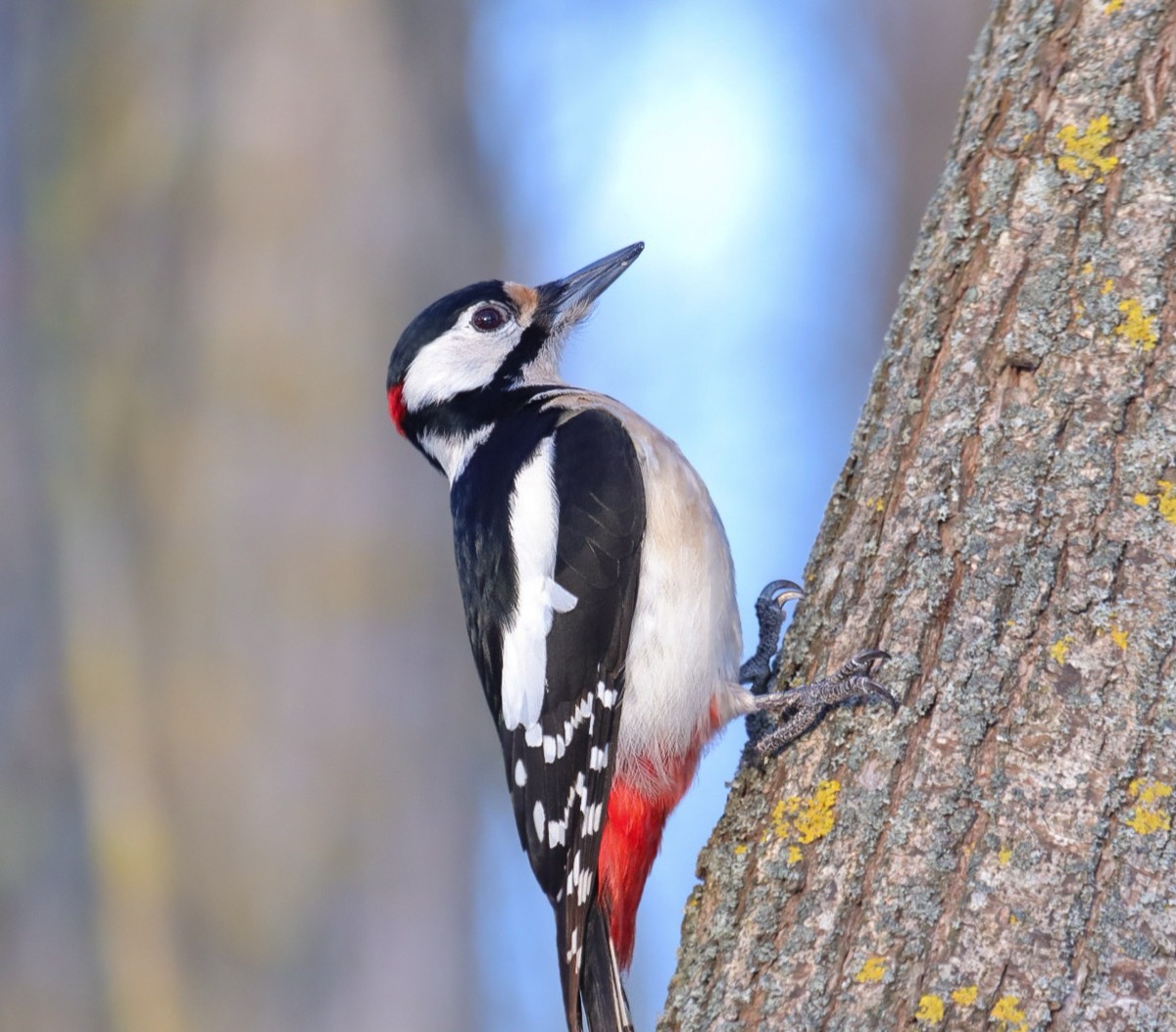 A woodpecker strikes a tree thousands of times a day. Is its head really immune?biomimicry
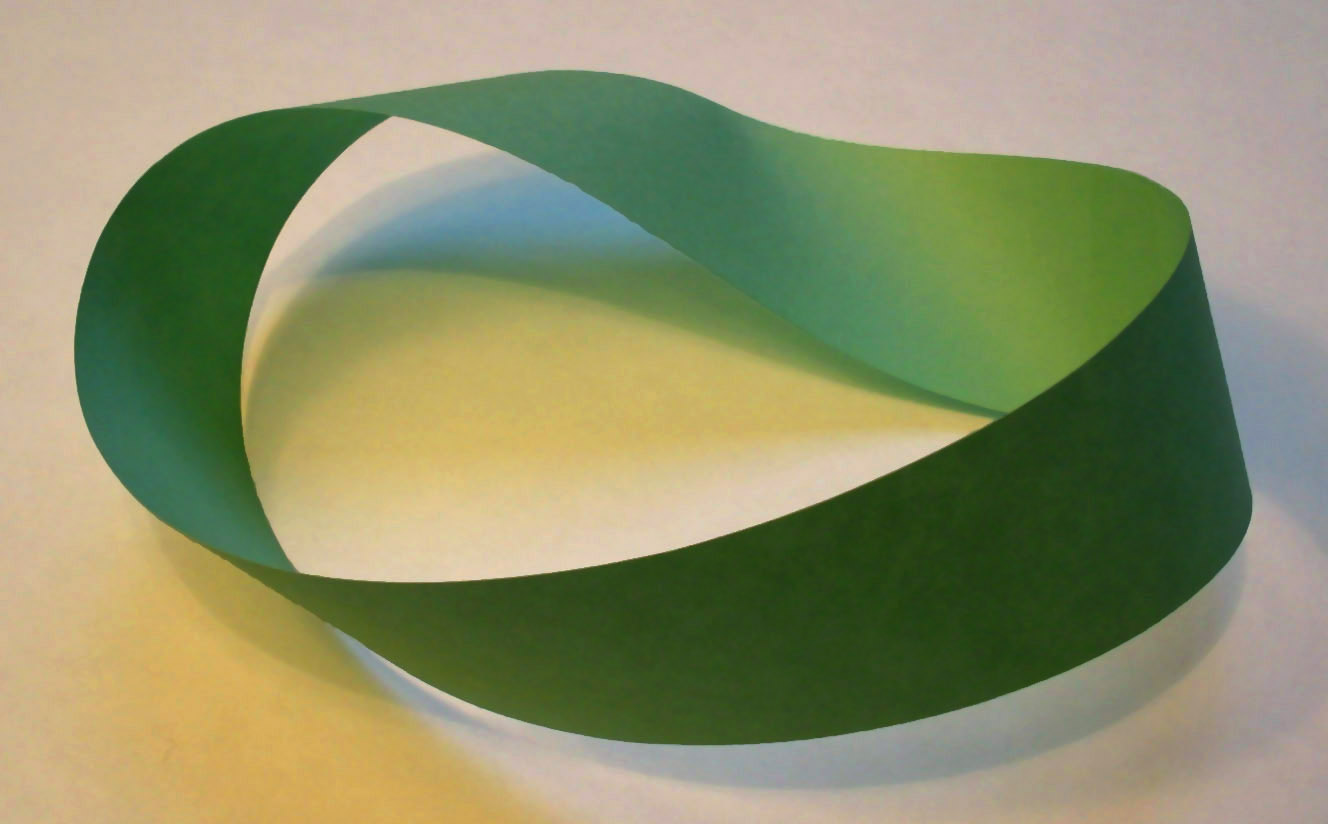 What do you get if you cut a one-sided surface down the middle?surfaces