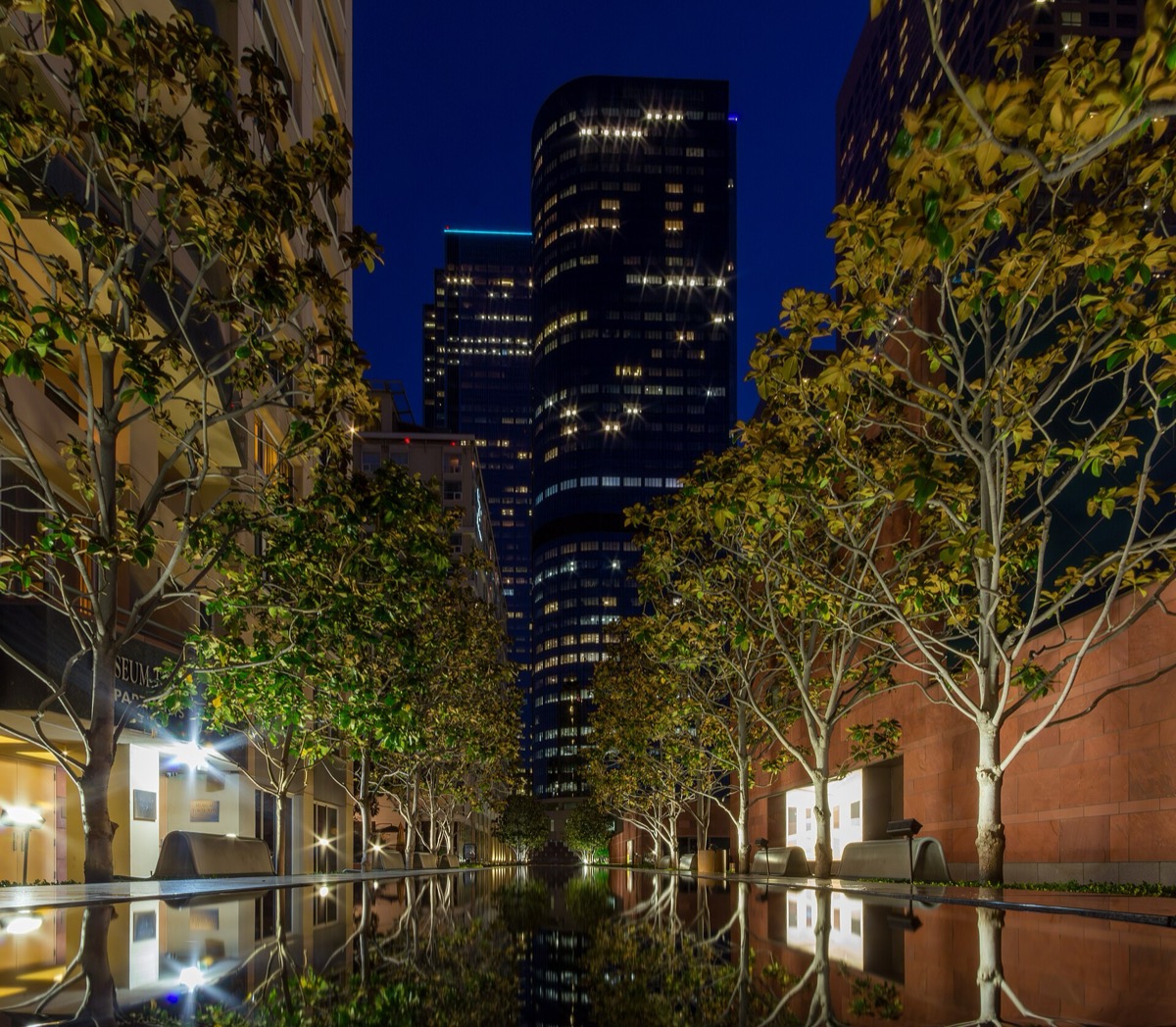
A is chosen by a municipality, usually for durability, root size and maintenance cost. Greater Los Angeles holds one of the most extensive urban forests on Earth, nearly all of it nonnative, planted after irrigation arrived in the early 1900s. Researchers followed where birds actually look for food across the city. Which trees feed them?
A small handful of them. Birds foraged most on two , the coast live oak and the California sycamore, plus a few nonnatives such as the Chinese elm. Each was used two to three times more than its share of the city. Eighty-three percent of street-tree species were used less than their . Affluent neighborhoods, with denser and larger trees, drew nearly five times the density of feeding birds.
Street trees are public property and a considerable part of the urban forest worldwide, and their value to wildlife is poorly understood. Los Angeles is an unusually good place to ask, since it has both an enormous urban forest, mostly nonnative, and a high diversity of birds using the city through the year.
The method is the part that matters. Rather than counting birds per tree, which would mostly measure which trees are common, the researchers recorded foraging behavior and then compared the use of each tree species against its availability across the city.
A few species carry the load. The coast live oak and the California sycamore, both native, were strongly preferred. So were several nonnatives, including the Chinese elm, the carrotwood and the southern live oak, each used two to three times more than their share of the city would predict. Eighty-three percent of street-tree species were used less than their availability.
The second finding is about people. Tree cover varies dramatically along a , and affluent communities, with denser and larger trees, attracted nearly five times the density of feeding birds. Which species a city plants, and where, is a decision about habitat.
wat. Not every city tree is equal to a bird: a few species supplied most of the food, and they were not shared evenly between neighborhoods.
wat wat
Choosing which species to plant, and planting them evenly across neighborhoods, builds habitat rather than only landscaping, and the current distribution follows income.
How do we know?
Wood and Esaian documented foraging behavior by birds on native and nonnative street trees across a socioeconomic gradient throughout Los Angeles, and compared how much each species was used against how common it is.
What is still unknown
This is observational work in one city. Which trees birds prefer depends on climate, on the local insects and on which bird species live there.
Learn something?
Where to next
 How much greenery in a neighborhood is linked to less mental distress?trees
 Do migrating birds actually see the magnetic field?birds
 What sets the limit on how tall a tree can get?trees