
Migrating birds navigate enormous distances at night and under cloud, so plainly they carry a compass. The leading hypothesis puts it somewhere unexpected: in the eye, in a protein that absorbs blue light. What would that mean for what they see?
A protein called absorbs blue light and produces a pair of molecules with unpaired electrons, and the direction of the magnetic field changes how fast the chemistry between them runs. If the brain reads that difference, the field would arrive through the visual channel, as a kind of shading laid over the picture the bird is already looking at. Which is not a figure of speech: the bird may be seeing direction.
The first hint that the compass has something to do with vision came from behavior rather than chemistry. Migrating birds orient well under blue and green light and go wrong under red. A sense that depends on the color of the light is a strange thing for a compass, and it points straight at the eye.
The candidate found there is a protein called cryptochrome. When it absorbs blue light a forms inside it, two molecules each holding a single electron. The spins of those two electrons are entangled, and a weak magnetic field changes the rate at which they evolve, and with it which products come out.
If the brain reads that difference, the magnetic signal is arriving on the visual channel. The usual guess is that it shows up as a shading or a tilt in brightness laid over the image, shifting as the bird turns its head. What it reads that way is an : the angle of the field lines against the ground, not north against south.
And here is where care is needed. That sensitivity turned up in an isolated protein in a laboratory, not in a living eye. Orientation experiments show that a bird responds to a change in the field, but they point to no particular mechanism. The missing link is the direct one, between the chemistry and the behavior. Close it, and gets one of its few solid cases: a quantum effect doing real work in a whole animal.
wat. A protein in a bird’s eye runs its chemistry at a different rate depending on which way the magnetic field points.
wat wat
If the mechanism holds up, it is a rare case of a quantum effect doing real work in the biology of a whole animal.
How do we know?
Researchers isolated cryptochrome from a migratory songbird and showed in the laboratory that its response to light shifts with a magnetic field. Separately, orientation experiments alter the field around a bird and record which way it turns.
What is still unknown
The sensitivity was shown in an isolated protein, not in a living eye. Nothing yet connects that chemistry directly to how a bird behaves in the field.
Learn something?
Where to next
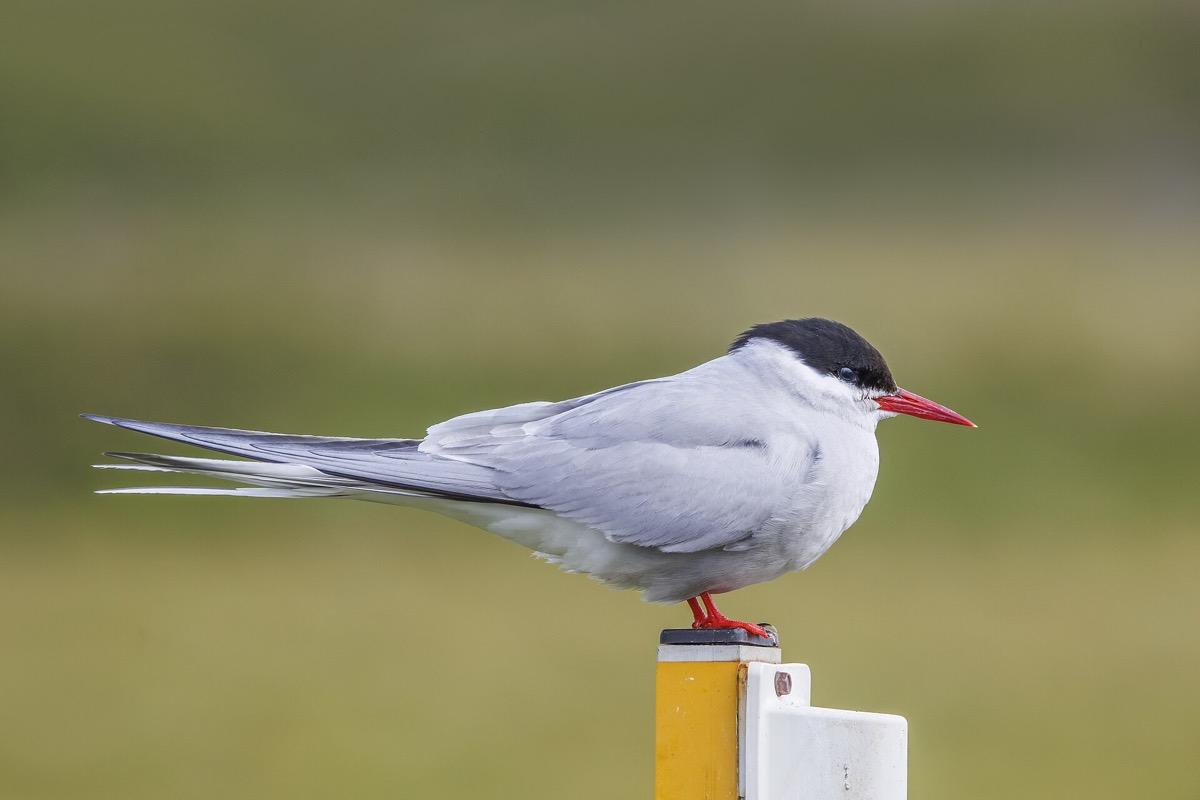 Which bird travels between both poles every single year?migration
 What happened to the birds inside the two beams of light over Manhattan?birds
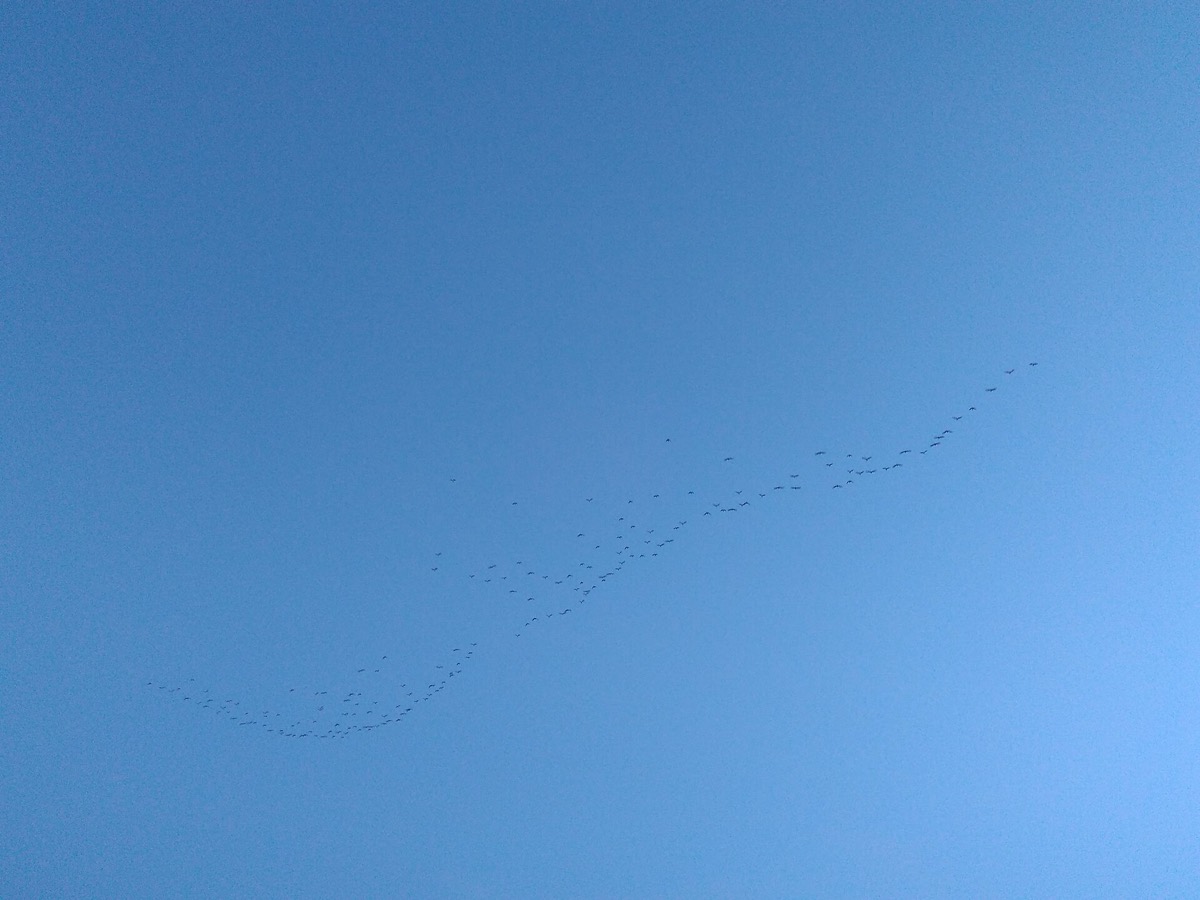 What decides where billions of migrating birds come down to rest?birds