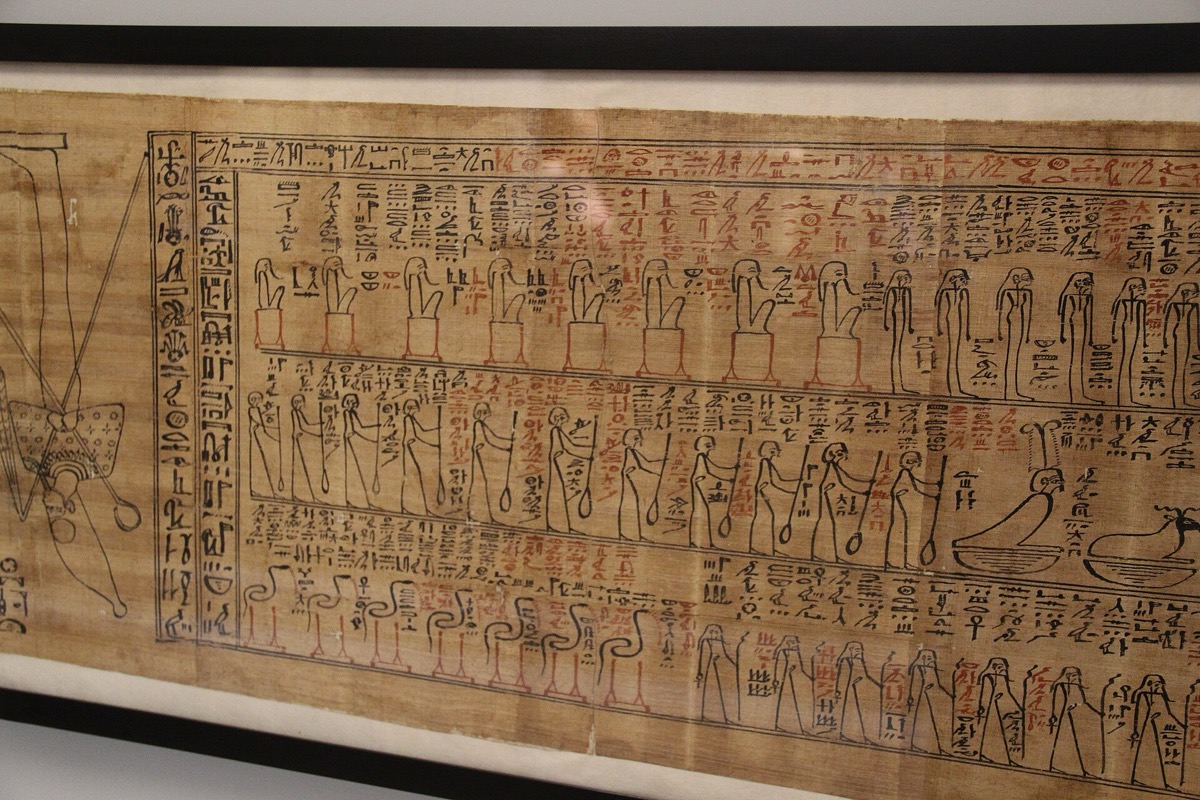
The picture everyone carries is a single fire and a single culprit, with Julius Caesar usually cast in the part. In forty-eight BCE he was in Alexandria defending Cleopatra against her brother, and his men set the ships and wharves alight to trap the enemy fleet. The flames did reach the . Is that how the library ended?
Probably not, and probably not in one go. Sources disagree about the damage even in forty-eight BCE: Plutarch says the whole library burned, while Seneca the Younger quotes a lost work putting the loss at forty thousand scrolls. Later writers still refer to the Mouseion, and scholars went on working with collections that a total fire would have destroyed. What the evidence supports better is a slow demise through neglect.
The library was a bastion of Greek culture in Egypt, built inside the Mouseion under the . Around two hundred and ninety-five BCE, Ptolemy I Soter set his adviser Demetrius of Phaleron the task of assembling the world’s greatest collection of written works. Ptolemy died before it opened, and historians mostly agree it began under his son, Ptolemy II Philadelphus.
The acquisitions were aggressive and the scope was wide. Scouts scoured the world, taking or copying treasures including the library of Aristotle and original plays by Aeschylus, Euripides and Sophocles. The collection reached beyond Greek literature to works from Syria, Persia and India. Hundreds of thousands of filled it, and it grew large enough to spin off the nearby.
The famous fire came in forty-eight BCE. Caesar’s men, trying to block Ptolemy’s fleet, set Alexandria’s ships and wharves burning, and the fires spread to the Mouseion. How much was lost is genuinely disputed: Plutarch says everything, while Seneca the Younger, quoting a now-lost work, puts it at forty thousand scrolls. Later sources still mention the Mouseion, and scholars kept working with collections that would not have survived a complete burning.
The slower account has more behind it. Alexandria came under Roman rule, and Roman leaders seem to have largely ignored the repository; one curator describes the library as rather slowly demising due to neglect. Ptolemy VIII had already expelled all foreign scholars around one hundred and forty-five BCE during a succession struggle, which is its own kind of fire.
wat. No single match. The greatest collection in the ancient world was mislaid rather than destroyed.
wat wat
A catastrophe has a culprit and a date; neglect has neither. The second is the commoner way institutions are lost, and the harder one to notice while it is happening.
How do we know?
Erin Blakemore’s article for National Geographic gathers the competing accounts, drawing on historians including Guy de la Bedoyere, Roy MacLeod and the librarian Sebastian Modrow.
What is still unknown
Modern scholars know frustratingly little about the library and its scholars, as one of the historians quoted puts it, so the alternatives are weighed against thin and contradictory ancient testimony.
Learn something?
Where to next
 Did Alfred Nobel really found the prizes after reading his own obituary?myth
 Did the people of Easter Island really destroy themselves before Europeans arrived?myth
 Do the black and white stripes really cool a zebra down?myth