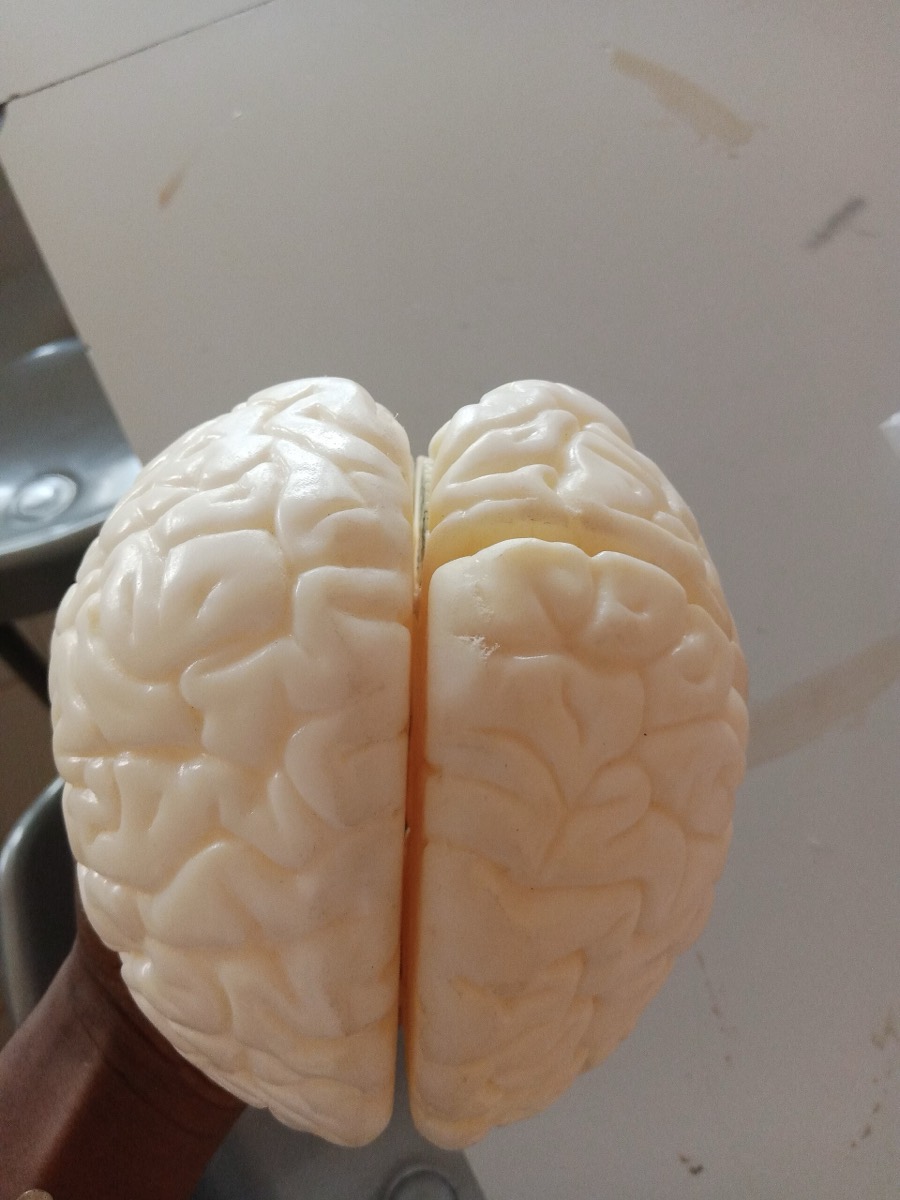
The idea that creative people use the right side of the brain more and analytical people the left is among the most durable in popular psychology. To test it, researchers at the University of Utah analyzed resting brain scans, split the brain into thousands of regions, and checked which of them lean to one side. What did they find?
Real and no lateral people. Specific functions genuinely are concentrated on one side, language mostly on the left and attention mostly on the right, and not one person turned up with a general lean to either side. It was a : scans of 1,011 people aged seven to twenty-nine, with the brain divided into some 7,000 regions examined separately.
This myth has a true kernel, which is why it is so durable. The two halves of the brain really are not identical: language is processed mostly on the left in most people, and spatial attention mostly on the right. The error is in the jump from there to personality types.
The popular claim is not about a function but about a person: that some people have a "stronger" right side and are therefore creative, and others the reverse. That is a testable claim, because it predicts a measurable difference between people.
The test was run on 1,011 people aged seven to twenty-nine, in resting brain scans, divided into some 7,000 regions. They asked not what lights up during a task but about , which networks work together in each person. That is exactly the level at which the claim is pitched.
The result: specific functions do lean one way, and no person was found with a general lean. So the claimed brain basis for a division between "right-brained" and "left-brained" does not exist. What the study does not do is rule out different thinking styles, and it measured neither creativity nor analytical thinking. It took the legs out from under the explanation, not from under the phenomenon.
wat. Language leans left, attention leans right, and no whole person leans either way.
wat wat
The myth underpins personality tests and teaching methods sold commercially, and imaging data give it no support.
How do we know?
The analysis looked at functional connectivity in MRI, which measures which brain regions work together at rest, rather than only which regions light up during a particular task.
What is still unknown
The study examined brain activity at rest and did not try to measure creativity or analytical thinking directly. It rules out the claimed brain basis, not the existence of different thinking styles.
Learn something?
Where to next
 What does the brain do at night that it cannot get done by day?brain
 Why does somebody else’s yawn catch you in particular?brain
 How do immune cells trained in the gut end up protecting the brain?brain