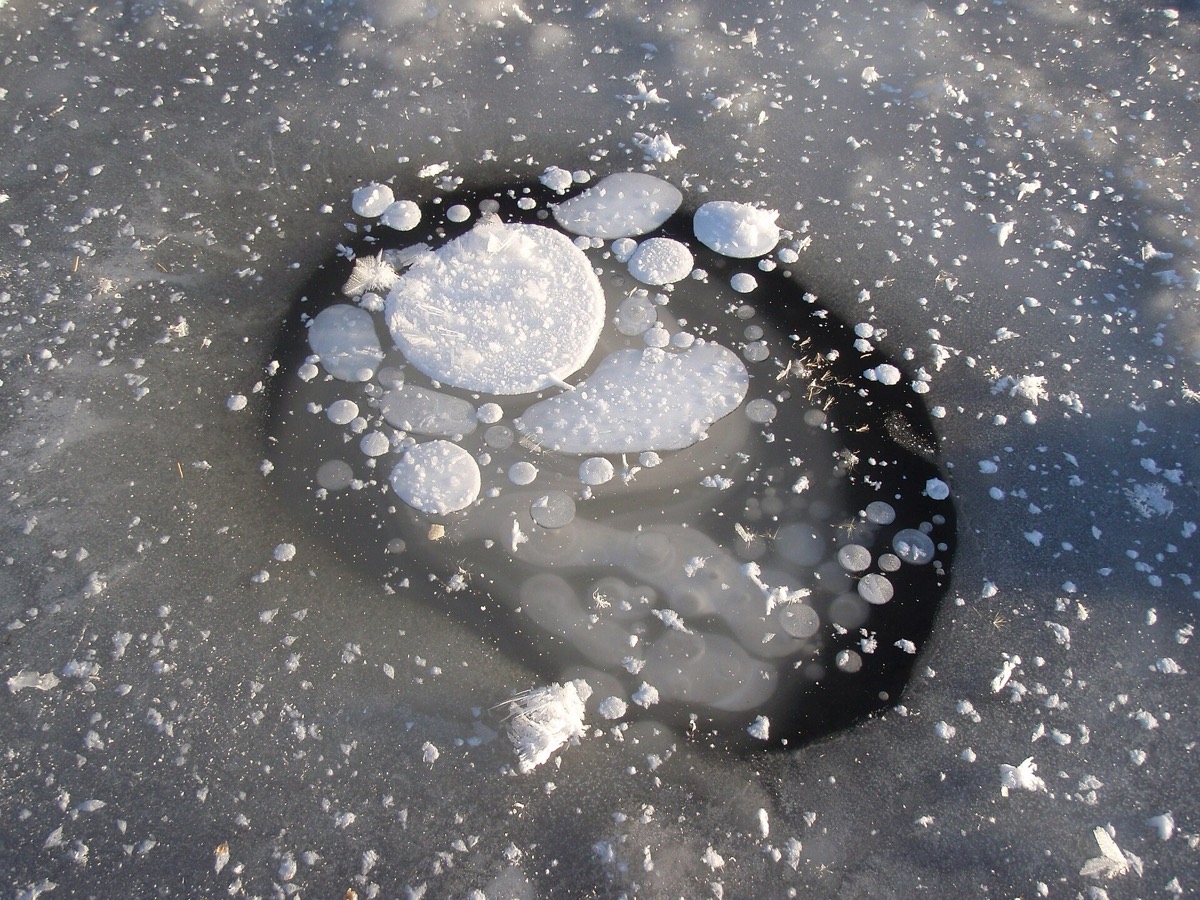
Microbes in the oxygen-free mud of a lake bed produce methane, which rises in bubbles. Over a northern winter the ice grows downward into water that is still bubbling, and the result is visible from above: columns of trapped bubbles stacked through the ice. Greene and colleagues asked what that storage does to the gas budget.
It intercepts most of the methane and releases the rest at thaw. In Goldstream Lake, a thaw lake in interior Alaska, eighty percent of the methane in bubbles trapped by ice dissolves into the water column over winter, and about half of that is . Seven percent of the annual is held as and emitted when the ice melts.
The starting quantity is large. Microbial methane ebullition from anoxic lake sediments comprises a globally significant flux to the atmosphere. In temperate and polar lakes those bubbles can be trapped by winter ice cover and later released during spring thaw. The authors call that interception ice-bubble storage, and treat it as a distinct mode of emission.
What happens to a bubble depends on timing. Before it is encapsulated by the downward-growing ice, some of its methane dissolves into the lake water, where it may be subject to oxidation. So the ice does not simply delay an emission: it diverts part of it into the water, where microbes can convert it to carbon dioxide instead.
The study pairs field characterization of Goldstream Lake, a lake in interior Alaska, with a model of its annual methane cycle. Summertime ebullition dominates the annual emissions to the atmosphere. Eighty percent of the methane in bubbles trapped by ice dissolves into the water column in winter, and about half of that is oxidized. Seven percent of annual ebullition methane ends up stored in the ice and emitted as it melts.
Two factors control the split: the ice growth rate and the magnitude of the ebullition flux. That makes the forecast easy to state, and unwelcome. In a warmer climate there will likely be less seasonal ice cover, so less ice-bubble storage, less dissolution from trapped bubbles, and greater methane emissions from northern lakes.
wat. The bubbles in the ice are not a decoration. They are methane that the lake caught on its way out, and mostly dissolved instead of releasing.
wat wat
Warming cuts the ice, and the interception goes with it. Less seasonal ice means less storage, less dissolution from trapped bubbles and greater methane emissions from northern lakes.
How do we know?
A paper in Biogeosciences combining field characterization of Goldstream Lake with a model of its annual methane cycle, tracking what happens to bubbles before, during and after encapsulation by the growing ice.
What is still unknown
One thermokarst lake, characterized in the field and then modeled. The percentages are outputs of that model for that lake rather than a measured budget for northern lakes generally.
Learn something?
Where to next
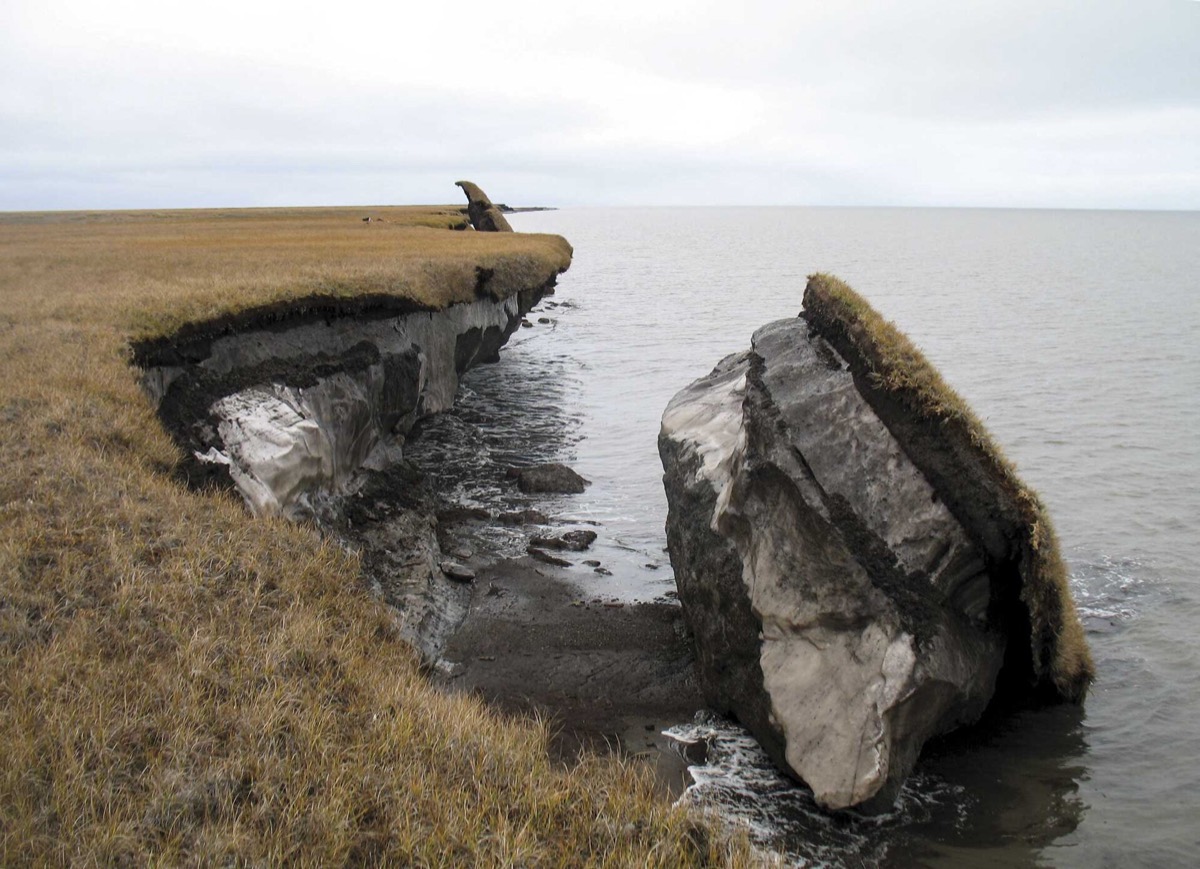 What comes out of the frozen ground of the north when it thaws?permafrost
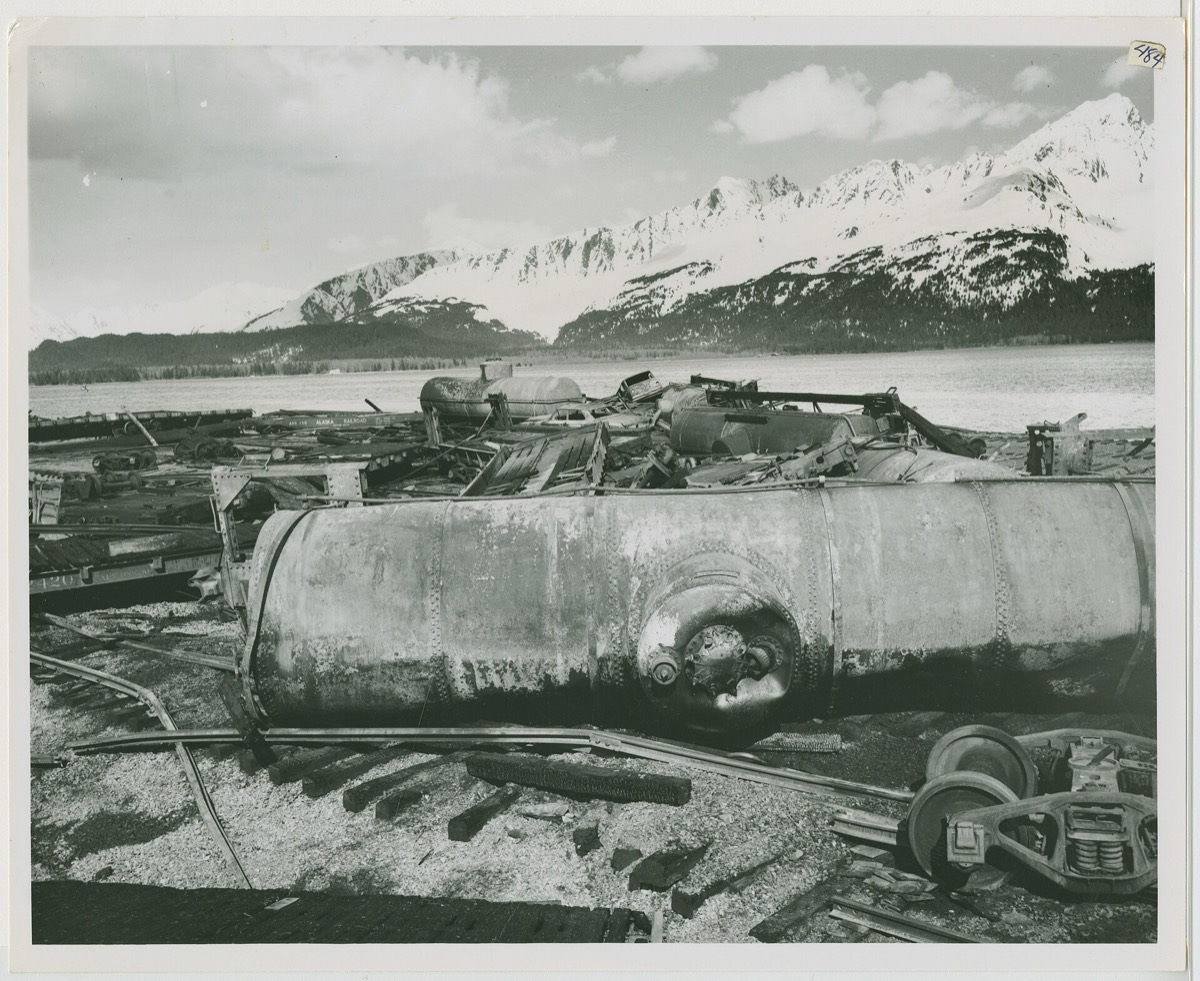 How far does a tsunami from Alaska actually travel?alaska
 How high can a wave reach if the water has nowhere to go?alaska