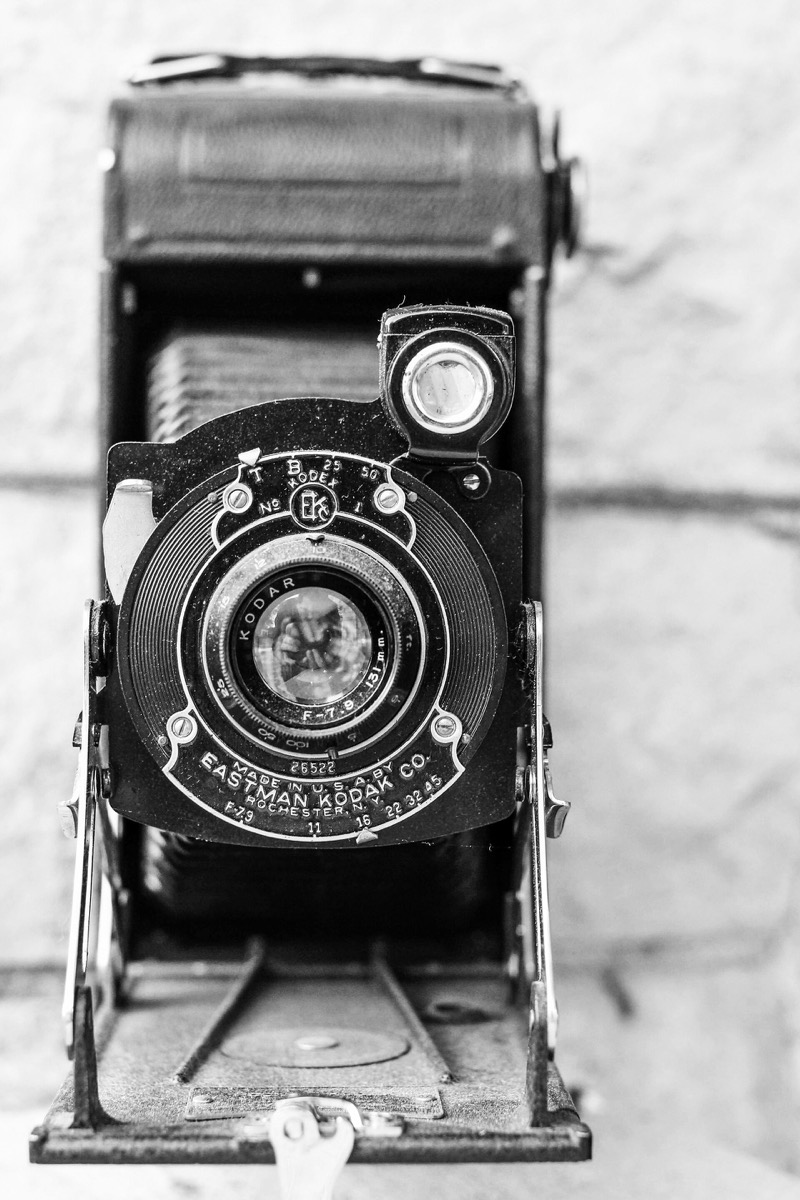
The company that dominated film photography also built the first digital camera, which is the sort of detail that sounds like hindsight and is not. A supervisor at Eastman Kodak handed a young engineer a question about a newly invented light-sensing chip and complete autonomy to answer it. The National Inventors Hall of Fame records what he built, and what the company then did about it.
Steven Sasson at Kodak, in December 1975. In 1974 he was asked whether the recently created could serve as a camera image sensor. He combined a , 16 nickel cadmium batteries, an analog to digital converter, a CCD imaging array and several dozen circuits on six circuit boards. It could capture an image, convert it to an electronic signal, digitize it and store it.
Steven Sasson joined a research laboratory at the Eastman Kodak Company in 1973, after an electrical engineering degree and master’s at Rensselaer Polytechnic Institute. He had been taking electronics apart since childhood in Brooklyn, where at thirteen he built an amateur radio and inadvertently transmitted on a banned frequency, drawing a warning from the Federal Communications Commission.
In 1974 his supervisor Gareth Lloyd asked him to investigate the recently created charge-coupled device, a mechanism that captures light and transfers it into usable data. The question was whether it could produce an image sensor for a camera. Sasson was given complete autonomy, and thinking back to how televisions display electrical pulses as a two-dimensional pattern, he wondered whether the idea could be applied to an all-electric camera.
The result arrived in December 1975. It combined a Super 8 movie camera lens, 16 nickel cadmium batteries, an analog to digital converter, a CCD imaging area array, and several dozen digital and analog circuits wired together on six circuit boards. The device could capture an image, convert it to an electronic signal, digitize that signal and store the image, which made it the world’s first digital camera.
Kodak dominated the US film photography market, and Sasson kept working on the technology anyway. In 1989 he and his colleague Robert Hills developed the first self-contained digital single-lens reflex camera, and Kodak initially declined to sell the product, to protect its film sales. The went on to lead the digital camera market, with convenience and quality that surpassed film. Sasson received the National Medal of Technology and Innovation in 2009 and the Royal Photographic Society’s Progress Medal in 2012.
wat. The first digital camera was built inside the world’s biggest film company, which later declined to sell the one that followed.
wat wat
The company’s decision is the part worth remembering. Kodak initially declined to sell the self-contained DSLR that Sasson and Robert Hills developed in 1989, to protect its film sales, and the DSLR went on to lead the digital camera market.
How do we know?
The National Inventors Hall of Fame’s inductee profile of Steven Sasson records the assignment, the components of the 1975 device, the later DSLR work with Robert Hills, Kodak’s response and the awards that followed.
What is still unknown
An inductee profile written to honor its subject, drawing on an interview with him. It is a reliable record of what was built and when, and it is not an independent account of Kodak’s commercial reasoning.
Learn something?
Where to next
 A cockatoo wants the seed inside a hard fruit. Why is one tool not enough?innovation
 How long did the first photograph take to expose?photography
 Why are there eighteen moons on one early photographic plate?photography