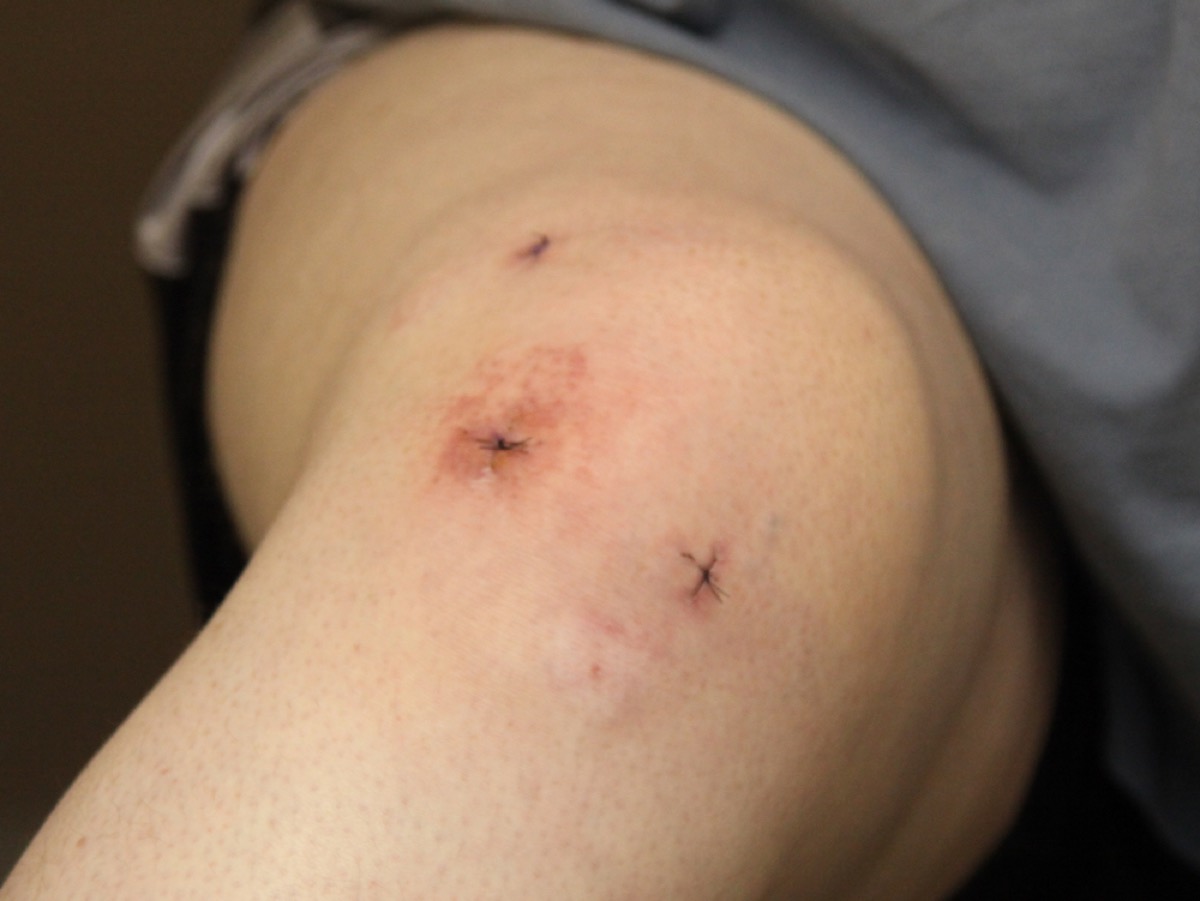
Many patients report relief after arthroscopy of the knee for osteoarthritis, and it was unclear how the procedure achieved that. The way to find out is to compare it against a convincing imitation of itself. So 180 patients were randomized, and some of them got skin incisions and nothing else.
At no point did either surgical group report less pain or better function than the placebo group. On the Knee-Specific Pain Scale at one year the three groups scored 48.9, 54.8 and 51.7, with the placebo group lowest, and the confidence intervals exclude any clinically meaningful difference out to two years.
The starting point is not scepticism about the surgery but curiosity about it. Many patients report symptomatic relief after arthroscopy of the knee for osteoarthritis, and it was unclear how the procedure achieves that result.
So the trial randomized 180 patients with osteoarthritis of the knee to arthroscopic , arthroscopic , or , where the placebo group received skin incisions and a simulated debridement with no arthroscope inserted. Patients and assessors were , and 165 patients completed the trial.
Outcomes were tracked over 24 months with five self-reported scores, three for pain and two for function, plus an objective walking and stair-climbing test. At no point did either intervention group report less pain or better function than the placebo group.
The numbers make the point sharply. Knee-Specific Pain Scale scores at one year were 48.9 for placebo, 54.8 for lavage and 51.7 for debridement on a scale where higher means worse, and at two years 51.6, 53.7 and 51.4. The confidence intervals for the differences exclude any clinically meaningful difference.
wat. Two real knee operations and one imitation produced the same pain scores two years later.
wat wat
Patients did feel better after surgery, and so did the patients who only thought they had it, which separates the operation from the recovery.
How do we know?
Moseley and colleagues randomized 180 patients to arthroscopic debridement, arthroscopic lavage or placebo surgery, blinded patients and assessors, and followed five self-reported scores plus a walking and stair-climbing test over 24 months.
What is still unknown
One trial of 180 patients with knee osteoarthritis, which says nothing about arthroscopy for other knee problems such as a locked joint from a torn meniscus.
Learn something?
Where to next
 Does a placebo still work if you are told up front that it is one?placebo
 Does a blade of volcanic glass leave a better scar than surgical steel?surgery
 Which organ grows back to exactly the size the body needs?surgery