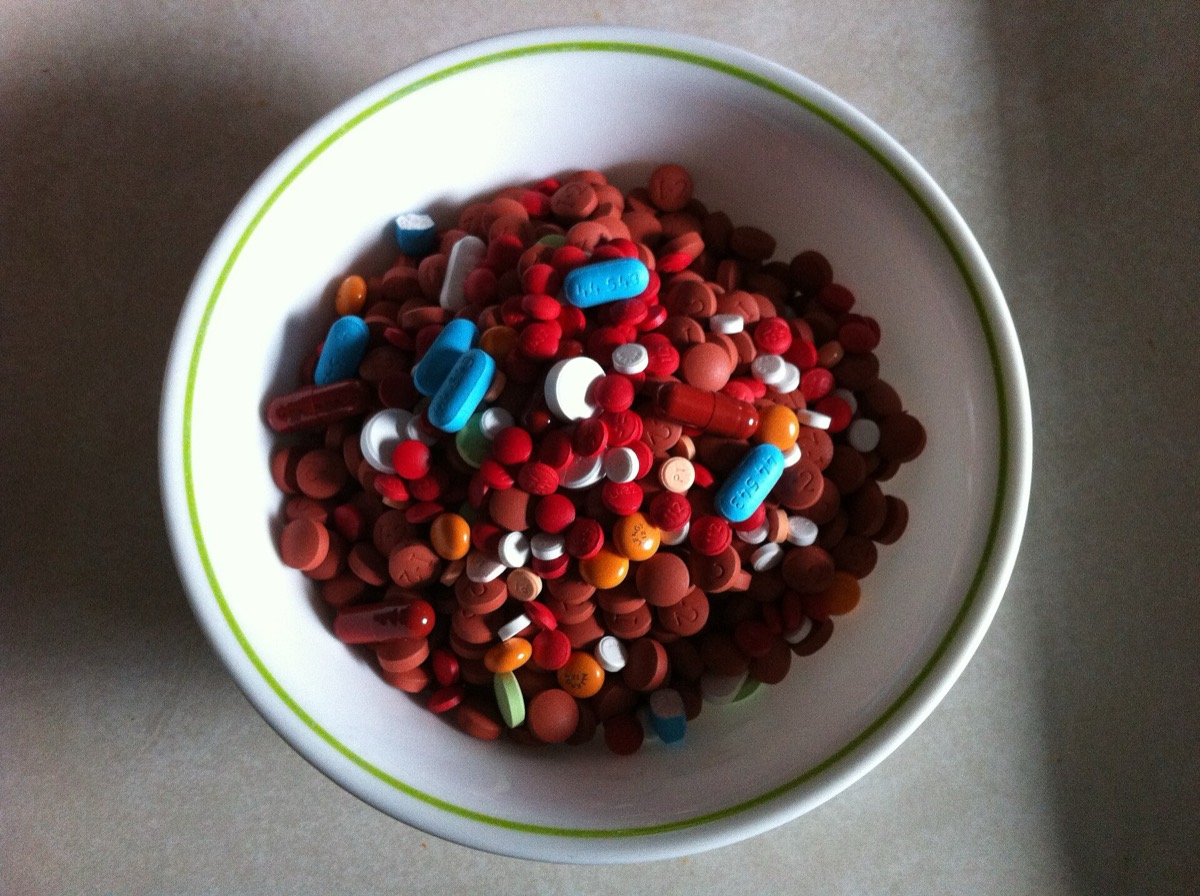
The standard explanation was that a placebo works because the patient believes they got a drug, which ruled it out as an actual treatment. To test that, a trial handed people pills while telling them plainly the capsules held nothing active, and compared them against a group given no treatment. What did the participants report?
Some of them improved anyway, mostly in symptoms only they can report: pain, fatigue, the discomfort of . The proposed explanation is that the ritual itself is the active part, taking something inside a frame of attentive care. The reverse exists too and is called : expecting harm produces real symptoms.
What was being tested here was an assumption, not a phenomenon. Placebos have been known for a century, and the standard account was that they work because the patient believes a drug was given. From which it followed that they could never be used, since a treatment requiring a lie is not a treatment.
The move was to remove the lie. This is an : participants received pills and were told plainly that they contained nothing active, and sometimes that the body can respond to the ritual itself. The comparison group received no treatment.
Some improved anyway, mostly in pain, fatigue and the symptoms of irritable bowel syndrome. The proposed explanation is that the frame is the active ingredient. A regular appointment, an attentive explanation, a daily act that signals you are being looked after, and a symptom someone is tracking.
Two caveats worth keeping. The trial tracked rather than conditions with objective markers, and the samples were fairly small. This replaces nothing. What it does change is where the manner of delivery belongs: not in the noise to be subtracted, but in what is doing the work.
wat. Even with the bottle labeled as containing nothing active, some patients reported less pain than those given no treatment at all.
wat wat
How a treatment is delivered, the explanation and the attention around it, is part of its effect rather than noise to be subtracted.
How do we know?
A randomized controlled trial where one group received pills described openly as placebos and the comparison group received no treatment at all, with participants reporting the severity of their own symptoms.
What is still unknown
The trial tracked self-reported symptoms, not diseases with objective markers. Samples were fairly small, and none of this substitutes for medical treatment.
Learn something?
Where to next
 If a placebo relieves pain, what is actually doing the relieving?placebo
 Does a treatment work better when it has a side effect?placebo
 Why does a chili pepper feel hot when it never warms your mouth?pain