Cooperation experiments almost always use two animals, often with a barrier between them, which answers questions about understanding a partner and says little about a crowd. live in groups and have to tolerate each other at close quarters. Schwing and colleagues built a box that opens only when two, three or four chains are pulled at the same moment, with a reward that can be shared unevenly but never taken entirely. What decides whether it opens?
by the bird at the top. of the box by the highest-ranking bird was the single largest obstacle in the two-chain version. High-ranking birds learned to hold back during one session where a crowd of birds left no room to monopolize anything. After that, restraint by dominants stayed the strongest predictor of success across two, three and four chains. The odds rose with how much restraint every dominant present showed.
Most laboratory cooperation experiments put two animals on a task, frequently with a physical barrier between them. That design answers real questions about whether an animal grasps the role of a partner, and it tells you almost nothing about why cooperation works in a group that has to tolerate crowding.
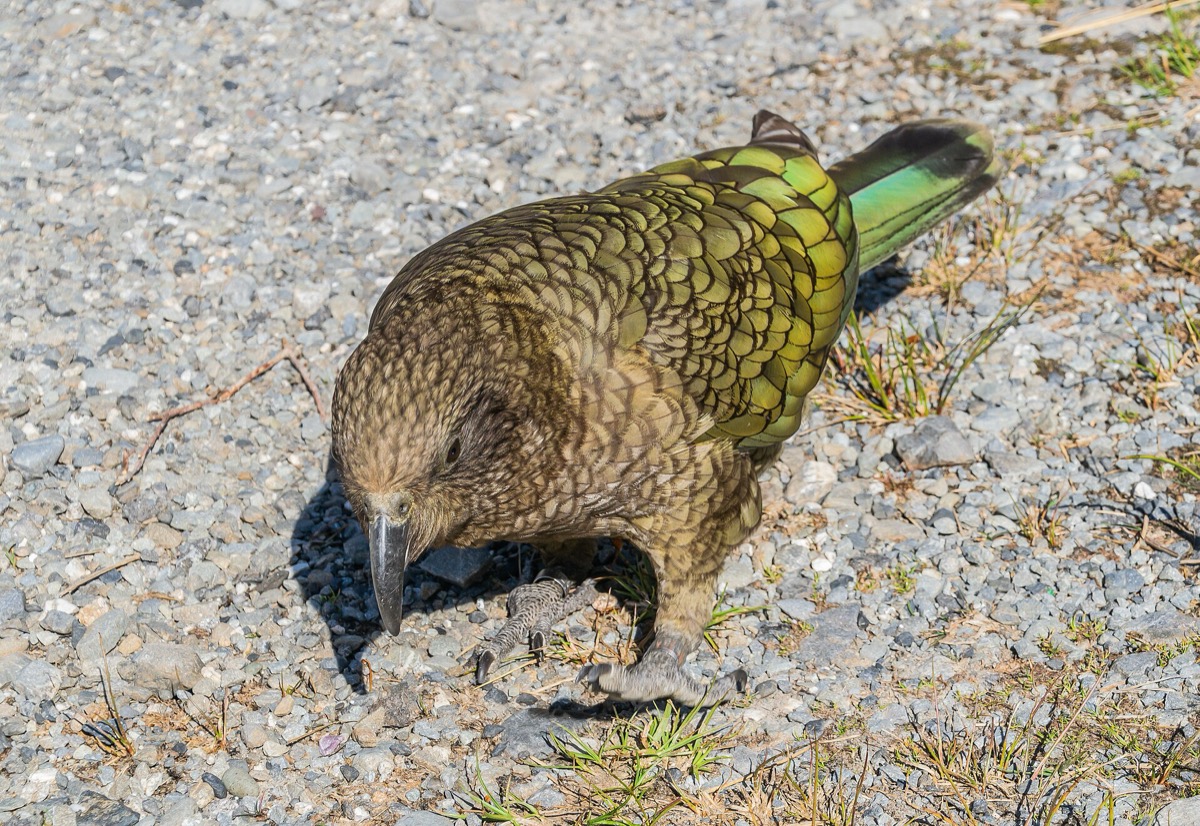
Schwing and colleagues built a box requiring two, three or four chains to be pulled simultaneously, and set kea parrots on it. The reward could be divided unevenly but not taken completely by one bird, which keeps a losing partner in the game. Dyadic, triadic and tetradic versions were all eventually solved, the four-bird case being the first such demonstration in a non-human animal.
The obstacle showed up immediately in the two-chain setup. The highest-ranking bird monopolized the box, and nothing else about the group mattered while that continued. Then came a single session in which a large number of birds were present and monopolizing was physically impractical, and the high-ranking birds learned to restrain themselves.
After that session, restraint by dominants remained the strongest factor in whether the first trial succeeded, at every group size. The probability of success rose with the degree of restraint shown by all the dominant birds present. Prior experience with the task helped in later sessions, and increasing cut success noticeably once four chains were involved.
wat. The puzzle was never whether the parrots could coordinate. It was whether the boss would let them.
wat wat
Cooperation in a group is often framed as a problem of coordination. Here the binding constraint is social: whether the animal who could take everything chooses not to.
How do we know?
Schwing and colleagues tested kea parrots on a box needing two, three or four chains pulled simultaneously, scoring dominance, rank distance, tolerance, affiliation and coordination against success.
What is still unknown
Captive kea with a specific apparatus and a reward that could not be fully monopolized by design, which is a gentler setting than a wild food source. The work measures restraint without explaining where it comes from.
Learn something?
Where to next
 When does a cooperating group stop cooperating?cooperation
 Does walking in step actually make us cooperate?cooperation
 Why did a good storyteller matter to a group of hunters?cooperation