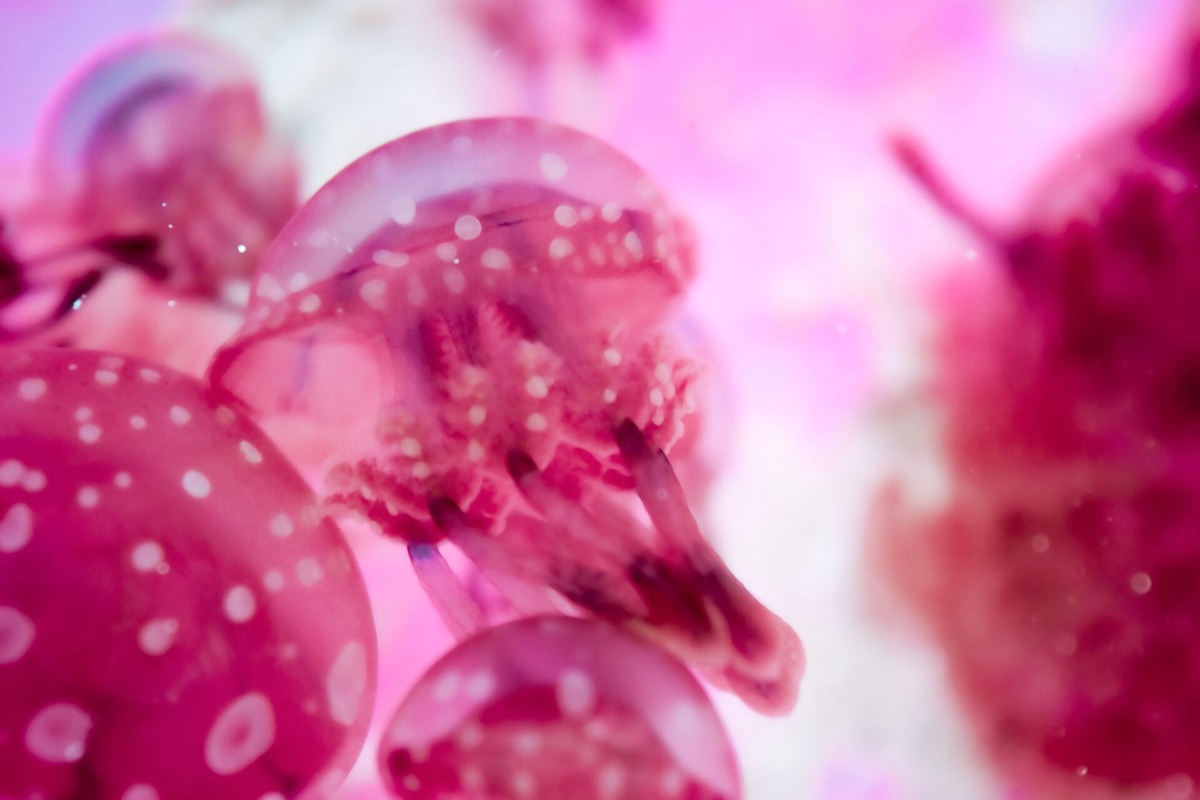
A jellyfish runs one way: a fixed to a rock, then a swimming medusa that breeds and dies. In one very small species biologists found a second route, one that switches on when the animal is injured, starving or under stress. Where does it go from there?
Backwards. The medusa contracts, its cells change identity through , and it returns to the polyp stage, from which it can bud new medusae. This is not immortality in the ordinary sense but : an ability to bypass the end of the cycle under particular conditions. And the individual that went back does not carry on living as a medusa. It becomes an earlier stage.
What is described here is not an escape from death but a bypass around the end of a cycle. In jellyfish the ordinary sequence runs one way: a polyp fixed to a rock, a swimming medusa budded from it, breeding, death. In one small species a second route turned up.
The trigger is not age but trouble: injury, starvation or environmental stress. In response the medusa contracts, sinks, and its cells change identity. What was a muscle cell or a cell of the bell becomes a cell of another kind, and the animal returns to the polyp form.
From there the cycle can begin again, and the polyp buds new medusae. Worth noticing that the particular medusa that went back does not carry on living as a medusa but becomes an earlier stage. This is closer to recycling than to life extension.
The scientific value is not in the immortality but in the change of identity. A mature cell turning into a cell of another kind is what stem-cell researchers achieve in the laboratory only with difficulty, by switching genes on artificially. Here it happens naturally, across a whole tissue. The qualification matters: in the wild most individuals are eaten or infected long before the mechanism comes into play, and the nickname "the immortal jellyfish" misleads.
wat. Under stress it contracts and goes back to the polyp stage, and from there buds new medusae instead of dying.
wat wat
Changing the identity of a mature cell is precisely what stem-cell researchers are trying to achieve in the laboratory. Here it happens by itself.
How do we know?
Researchers watched the process in the laboratory, in animals held in tanks and deliberately exposed to stress, and recorded it repeatedly in the same individuals across cycles.
What is still unknown
In the wild most individuals are eaten or fall ill long before the mechanism comes into play. The nickname "the immortal jellyfish" misleads.
Learn something?
Where to next
 How does one rodent survive 18 minutes with no oxygen?aging
 What else does the tiny muscle that gives you goosebumps do?stem cells
 What happened to the memory of mice when their gut bacteria were swapped?aging