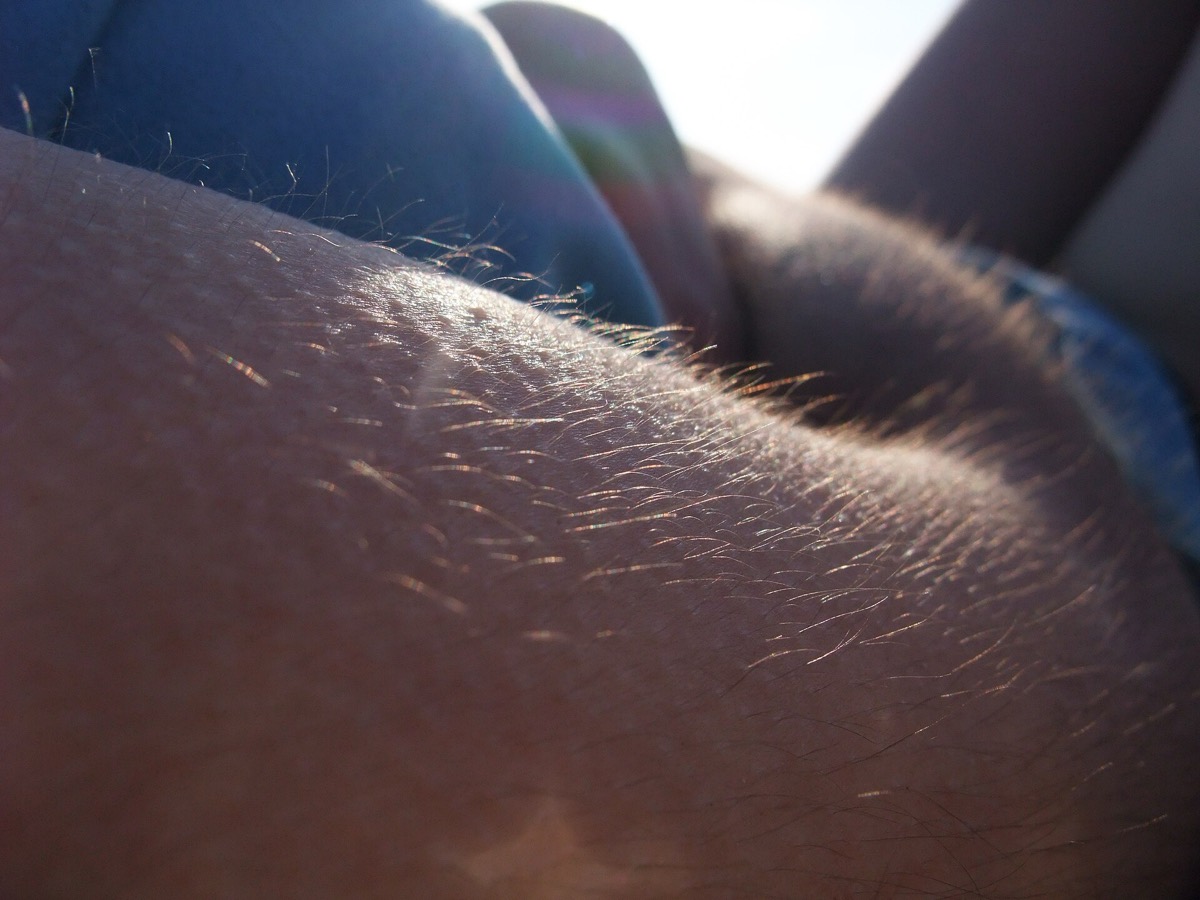
Goosebumps form when a small muscle at the base of each hair contracts and stands it up. In furred mammals that puffs the coat out and insulates against cold, and in us it has counted as a useless leftover. So why is that muscle still there?
Because it holds a nerve in place. A 2020 Harvard study found the system has a : that same muscle forms a physical bridge between the sympathetic nerve and the that renew the hair follicle. Remove the muscle and the nerve retreats and loses the connection. Low, steady nerve activity keeps the stem cells ready, and prolonged cold drives them to grow new hair.
Goosebumps are the handiest example of a vestige. A tiny muscle contracts and stands a hair up; in a furred animal that puffs the coat out and insulates against cold, and in us it simply does nothing. The coat went and the response stayed.
The 2020 study looked at that same structure from another angle and asked what else touches it. turned out to be not only an actuator but a bridge: it physically connects a fiber of the to the stem cells that renew the hair follicle.
The decisive experiment was to remove the muscle, after which the nerve retreats and loses the connection, and the follicle’s capacity to regenerate is damaged. Which is to say the muscle works as a scaffold holding the nerve in the right place, and that is a job with nothing to do with raising a hair.
Out of that comes a picture with two states. Low, steady nerve activity keeps the stem cells ready, and prolonged exposure to cold raises it and drives the growth of new hair. That is a direct link between the nervous system and tissue renewal, which makes it an interesting direction for hair loss and for wound healing. The mechanism was described in mice, and it still needs confirming for human skin, where the quantity of hair and its job are very different.
wat. Without that tiny muscle, the nerve retreats and loses its link to the stem cells entirely.
wat wat
Understanding this connection between the nervous system and stem cells in the skin opens a research direction for hair loss and for wound healing.
How do we know?
The researchers examined the structure at cell level in mice, and showed that removing the muscle makes the nerve disconnect and damages the follicle’s ability to regenerate.
What is still unknown
The mechanism was described in mice. It still needs confirming that it works the same way in human skin, where the quantity of hair and its job are very different.
Learn something?
Where to next
 What are wrinkled fingertips for?skin
 Why does no two people share a fingerprint, not even identical twins?skin
 Why does a failing heart hurt in the arm?nervous system