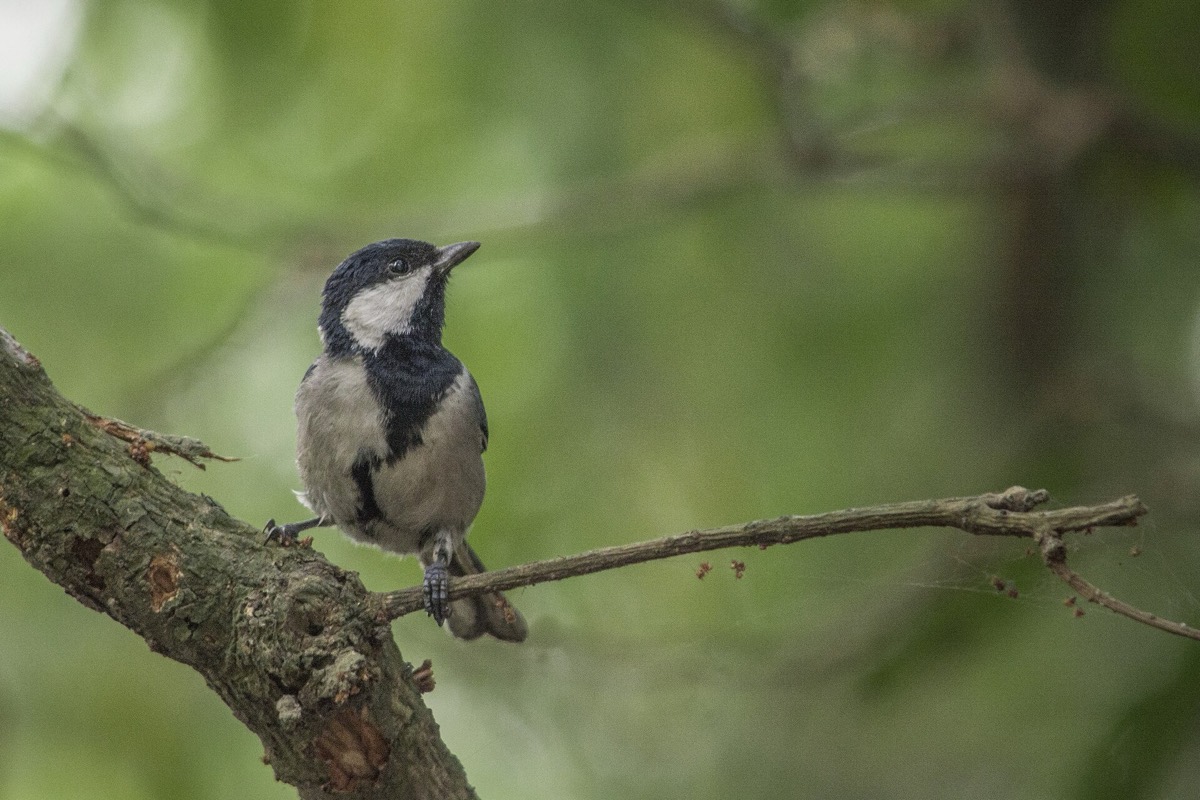
Traffic noise sits low in the frequency range, and birds in noisy cities sing both louder and higher. The standard reading is that the higher pitch is an adaptation lifting the song clear of the . Some have gone further, suggesting urban and rural songs could diverge far enough to split populations. Nemeth and Brumm modeled what each change actually buys in transmission. Which one helps?
The loudness, almost entirely. was modeled for great tits and blackbirds, across levels of urban noise and in their forest habitats. A rise in vocal pitch extended that distance only marginally, while adjustments in amplitude had a strong effect, significantly larger. Frequency change is not doing much against traffic. The higher pitch may be a physiological side effect of singing loudly.
Birds in noisy cities sing louder and at a higher pitch than their country relatives. The pitch has attracted most of the attention, because it suggests the birds are dodging the low-frequency rumble of traffic, and several studies have argued it is an adaptation to reduce masking.
The argument has been pushed a long way. If urban and rural songs diverge enough, the suggestion goes, birds might stop recognizing each other across the divide, which would be the beginning of reproductive isolation inside a single species.
Nemeth and Brumm checked the premise with models of signal transmission, for two species that do sing higher in cities, the great tit and the blackbird. For each they calculated communication distance across different levels of urban noise and in natural forest habitat.
An increase in vocal pitch extended communication distance only marginally. Adjustments to had a strong effect, significantly larger than anything pitch achieved. Frequency change, in other words, is not an effective answer to traffic noise. The higher song of a city bird may instead be a physiological consequence of singing at high amplitude, or an of urban life with nothing to do with transmission.
wat. Raising the pitch barely carries further. Raising the volume does, and the pitch may simply come along with it.
wat wat
A widely repeated adaptation story turns out to rest on a correlation, and the version that survives modeling is duller and easier to act on: cities are loud, so birds shout.
How do we know?
Nemeth and Brumm built signal transmission models for great tit and blackbird song, calculating communication distance under different urban noise levels and in natural forest.
What is still unknown
Models of sound transmission rather than measurements of whether birds actually reach each other, and two species. Showing a change is ineffective does not prove it has no other function.
Learn something?
Where to next
 Does a giraffe actually listen to the birds riding on its neck?birds
 What decides where billions of migrating birds come down to rest?birds
 Why do so many people put food out for garden birds?birds