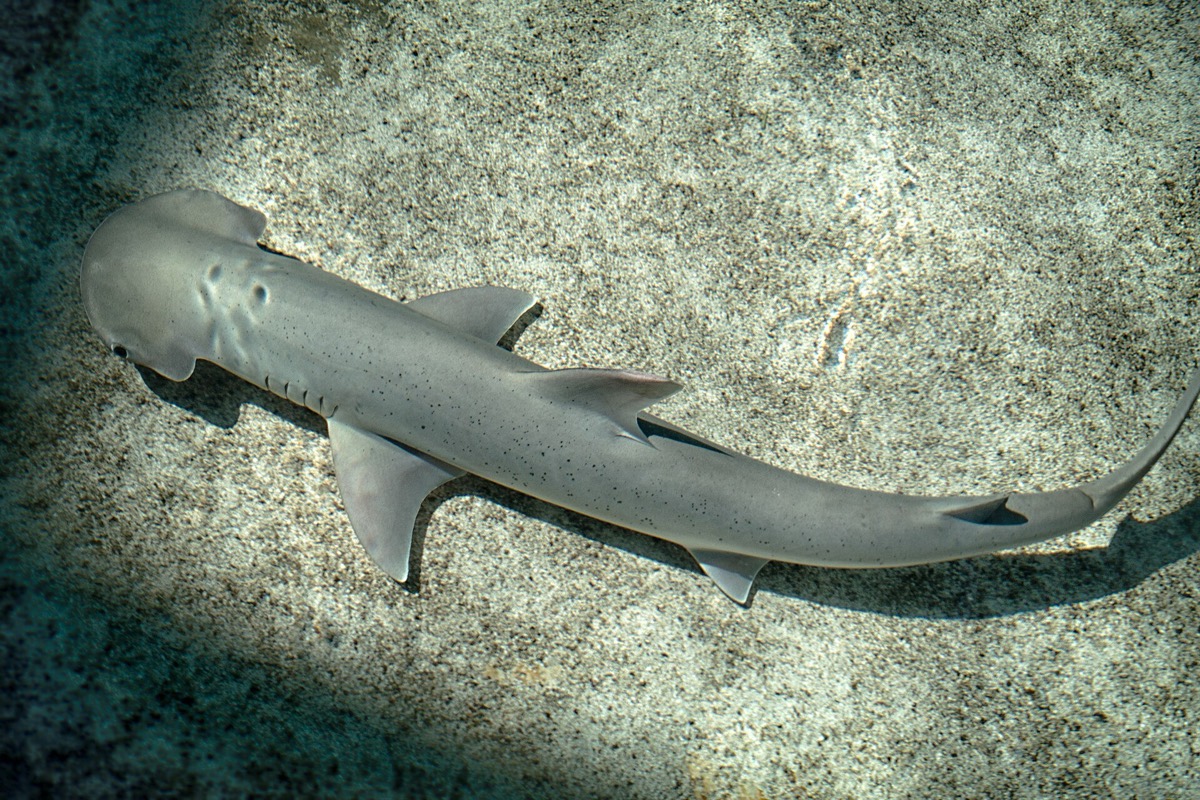
Three hammerhead sharks were held for years with no males, and one of them gave birth anyway. The simple explanation is that she had stored sperm from an old mating, which sharks do. So the DNA of mother and pup was compared. What came out?
No father at all. The pup carried only maternal genetic variants and was less genetically varied than its mother. The pattern pointed to a particular route: a , a spare cell made alongside the egg and normally discarded, had merged back with it and filled the role of the sperm. The offspring is not a clone of the mother but a narrowed version of her.
Three hammerhead sharks were held in an aquarium for years with no male, and one of them gave birth. The first and most plausible explanation was not a virgin birth but : female sharks can keep sperm from an old mating for a long time.
The genetic test was meant to decide between the two. Had sperm been involved, the pup would carry at least one variant its mother does not have. The researchers examined four and mitochondrial DNA, and found no paternal contribution at all.
The pattern they found pointed to a particular route: a polar body, a spare cell made alongside the egg and normally discarded, had merged back with it and filled the role of the sperm. The offspring is not a clone of the mother but a narrowed version of her, genetically uniform at almost every site.
The caveat should restrain the conclusion. This is one birth in captivity, and there is no knowing how far the phenomenon exists in the wild. More important, is no solution for a population at risk: it sharply reduces genetic diversity, and the offspring are more vulnerable to disease and to change. What the finding does change is the understanding of reproductive flexibility in a very old vertebrate lineage.
wat. The DNA of the hammerhead pup held only a maternal contribution, which ruled out a hidden father and a long-stored sperm.
wat wat
This was the first genetic evidence of virgin birth in a cartilaginous fish, and it changes what is understood about reproductive flexibility in a very old vertebrate lineage.
How do we know?
The team examined four nuclear markers and mitochondrial DNA from mother and pup, and compared the pattern against the predictions of sperm storage and of the different parthenogenesis routes.
What is still unknown
The finding rests on a single birth in captivity. Parthenogenesis reduces genetic diversity and is not necessarily a strategy that will sustain a population in the wild.
Learn something?
Where to next
 Why does a cat walk past a bowl of sugar?genetics
 Does a filter-feeding shark eat while crossing an ocean?sharks
 Where did the tool for rewriting genes come from?genetics