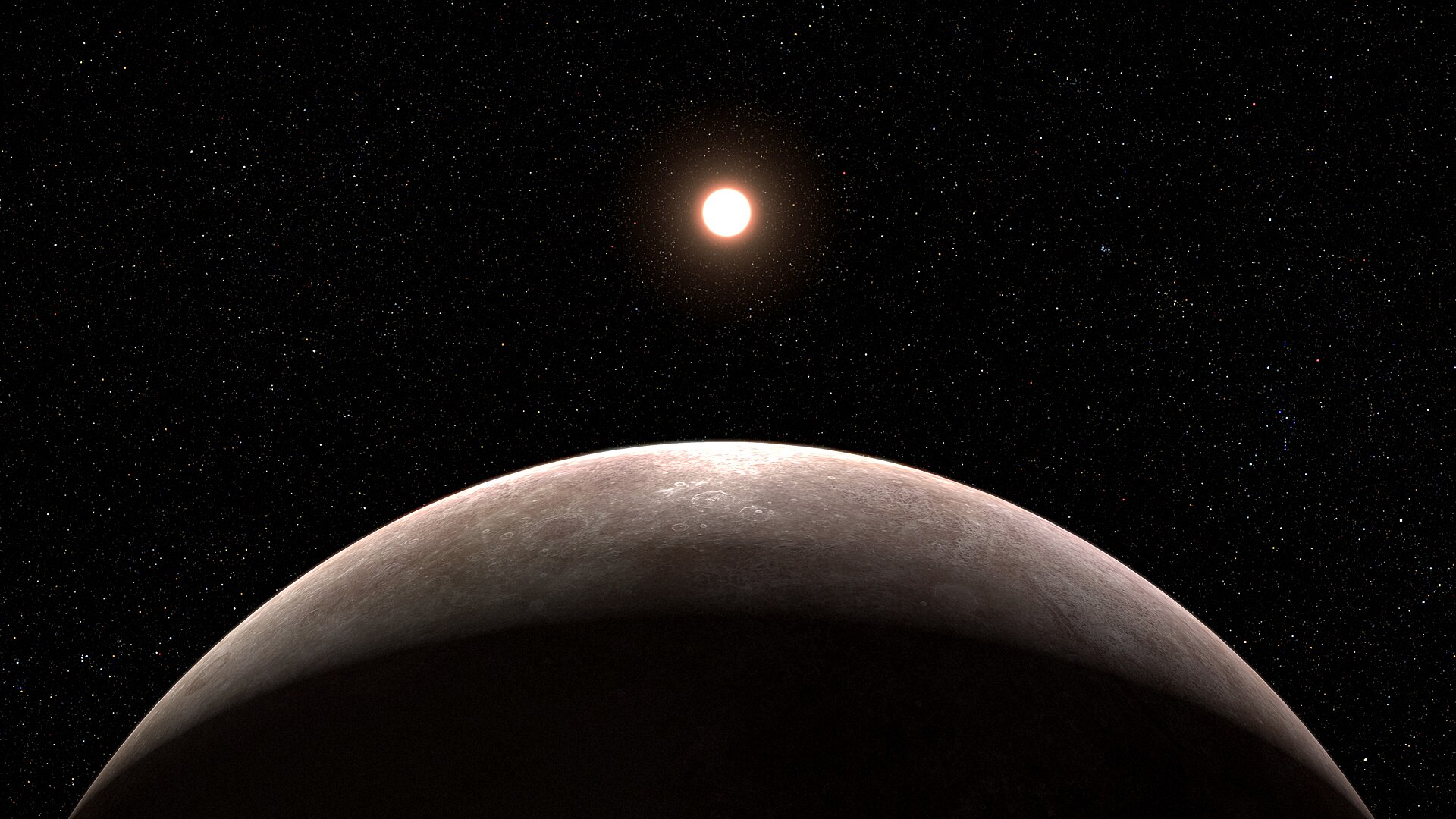
Air is not held down by a lid. The molecules of a gas are moving at speeds that depend on temperature, in every direction, and a world keeps them only if its gravity can outrun them. That gives a sharp criterion with two numbers in it: how fast you need to go to leave, and how fast the gas is already going.
It comes down to a comparison of two speeds. A planet or moon cannot long retain an atmosphere if its is low enough to be near the of the gas molecules making up that atmosphere. Escape velocity depends only on the mass of the body and your distance from its center, which is why , at about two point four kilometers per second, has nothing to breathe.
Escape velocity is the velocity needed for a body to escape from a gravitational center of attraction without undergoing any further acceleration. It is the square root of twice the gravitational constant times the attracting mass, divided by the distance from that mass’s center, which means it depends on the mass and the distance and nothing else.
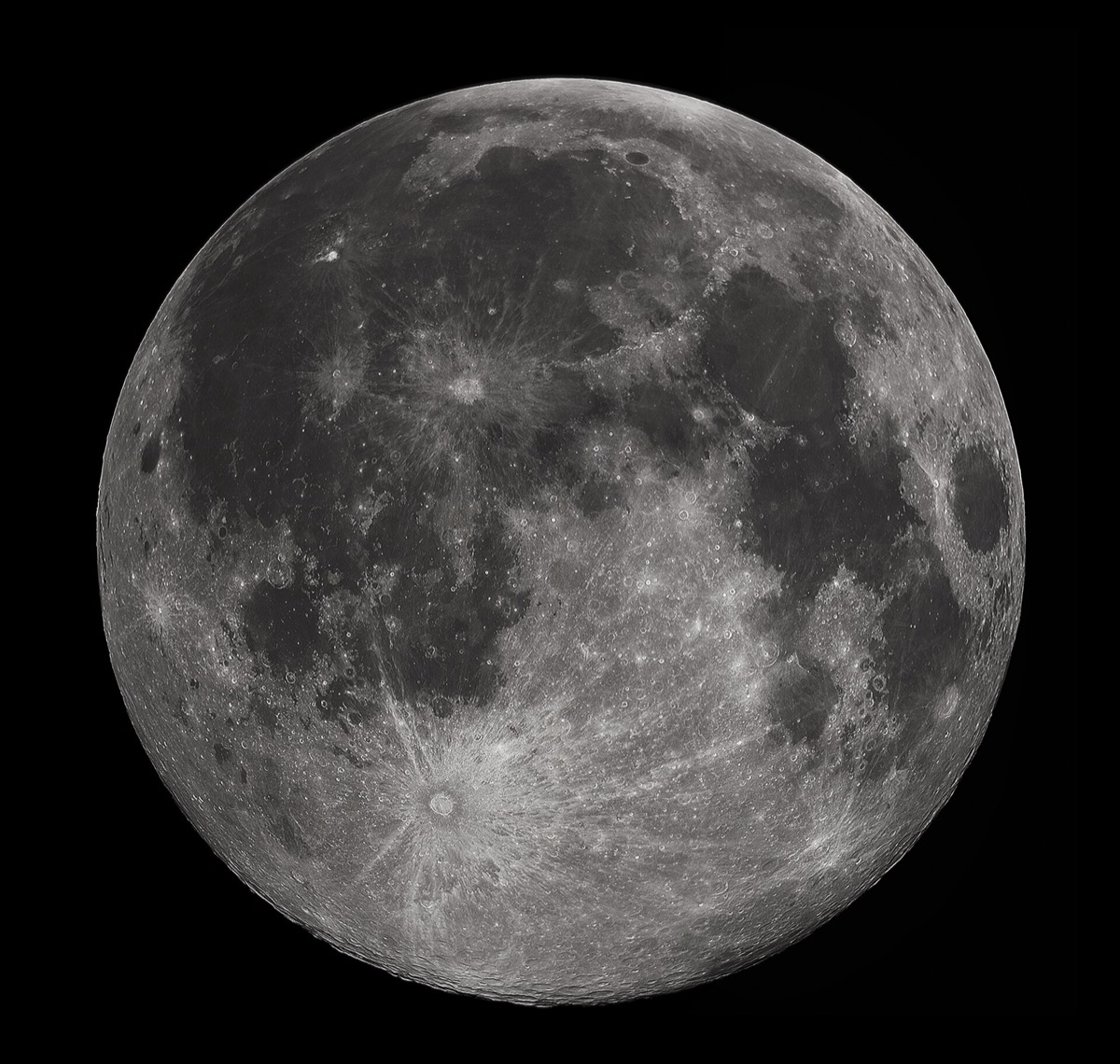
Two consequences follow from the formula itself. Escape velocity decreases with altitude, and at any given altitude it is the square root of two, about one point four, times the velocity needed to maintain a circular orbit there. At the Earth’s surface, disregarding atmospheric resistance, it comes to roughly eleven point two kilometers per second. At the Moon’s surface it is about two point four.
The atmospheric criterion follows directly. A planet or moon cannot long retain an atmosphere if its escape velocity is low enough to be near the average velocity of the gas molecules making up the atmosphere. Nothing is sealing the gas in: the molecules are always moving, always in all directions, and the question is only whether the fast tail of that distribution is fast enough to leave.
The same arithmetic covers the extreme case. Inside the of a black hole, the escape velocity exceeds the speed of light, so not even rays of light can escape into space. The Moon and the black hole sit at opposite ends of one formula, and so does every atmosphere between them.
wat. An atmosphere stays if the gas is slower than the exit speed. Nothing else is holding it in.
wat wat
The same criterion decides what an atmosphere is made of, not just whether there is one. Light molecules move faster at a given temperature, which is how a world can keep carbon dioxide and lose hydrogen.
How do we know?
Britannica’s physics entry on escape velocity, which gives the formula, the figures for the Earth and the Moon, and the condition under which a body loses its atmosphere.
What is still unknown
A definition rather than a model of any particular atmosphere. It gives the threshold without the detail of how a given planet’s upper atmosphere is heated and stripped.
Learn something?
Where to next
 How is the distance to the Moon known to the millimeter?gravity
 What is left behind when a star swallows one of its own worlds?planets
 On which planet does the year end before the day does?planets