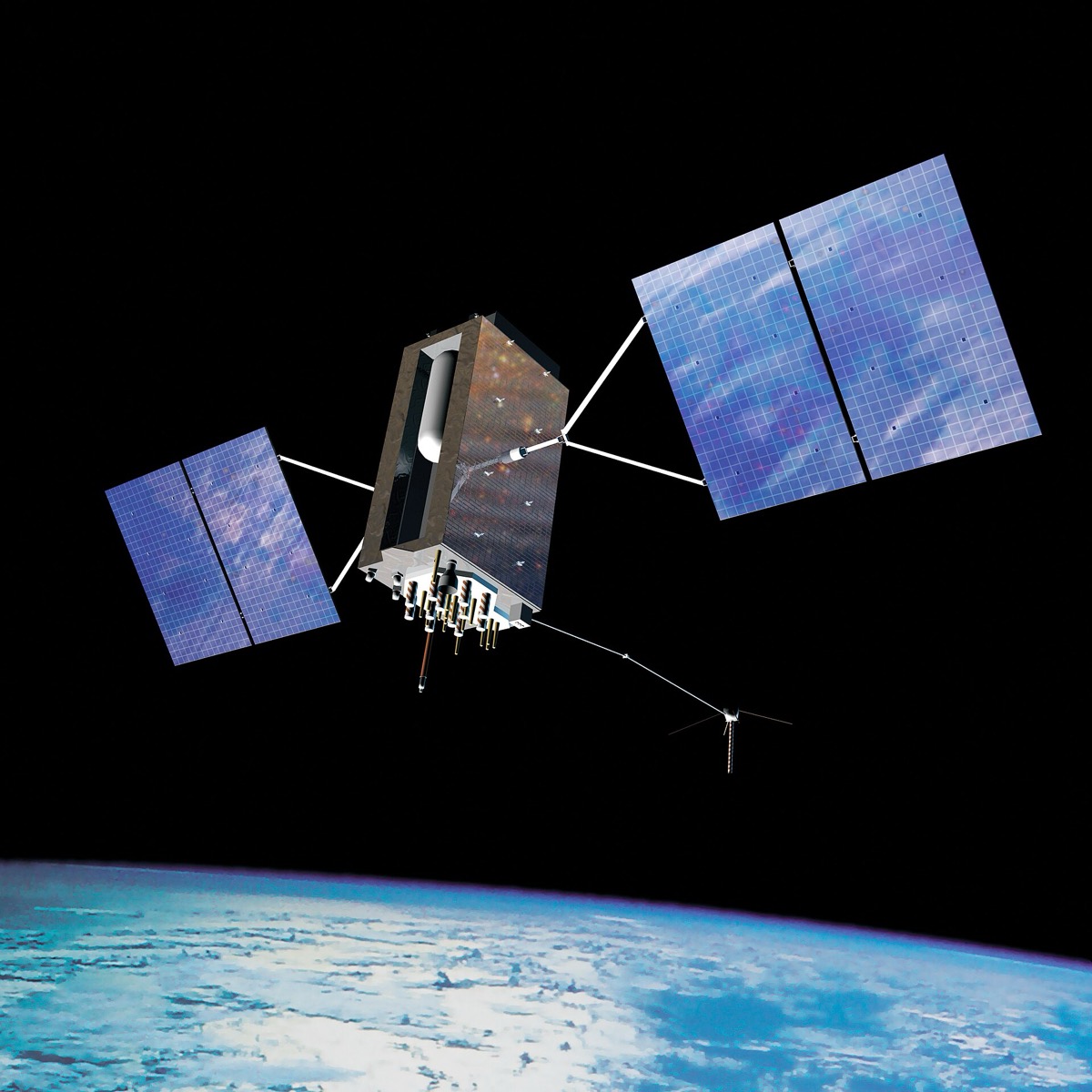
A navigation receiver works out where it is by : from minute differences in the arrival times of signals from several satellites. So the accuracy of their clocks is everything. Relativity says two opposite things about such a clock: its high speed should slow it down, and the weaker gravity up there should speed it up. Which one wins, and what does it cost?
Gravity wins. The is larger than the , so on balance the satellite clock runs slightly too fast, by a few tens of microseconds a day. That sounds negligible and it compounds into a disaster: with no correction, the position error would grow to kilometers within a single day. Which is why the correction is designed into the system in advance, and the clocks are tuned to a slightly different frequency before launch.
The key to understanding this is that GPS is not a positioning system but a timing system. The satellite does not know where you are; it only broadcasts its own time. The receiver works out how long the signal was on the way, multiplies by the speed of light, and gets a distance.
So any error in the clock becomes an error in place immediately, at a brutal exchange rate: a billionth of a second is thirty centimeters. That is why every satellite carries , and why this is a system in which time is the whole story.
And two opposite influences act on that clock. The satellite moves fast, so its clock should lag. It also sits in weaker gravity, so its clock should gain. The second influence is the larger, and on balance the satellite clock runs ahead by a few tens of microseconds a day.
It sounds negligible and it compounds into a disaster: with no correction, the position error would grow to kilometers within one day. So the correction is built into the system from the start, and the clocks are tuned to a slightly different frequency before they ever launch. This is the most everyday demonstration that relativity is no abstraction. And even so, in ordinary use, atmospheric delays and reflections off buildings contribute far more error than it does.
wat. The two effects pull in opposite directions, and gravity wins, so the clock on the satellite runs too fast.
wat wat
It is the most everyday demonstration that relativity is not an abstract theory but a condition for technology everybody uses.
How do we know?
The difference follows from relativity, and physicists have measured it directly with atomic clocks flown in aircraft and carried on satellites. Navigation systems correct for it by design.
What is still unknown
The correction is one part among many. Atmospheric delays and reflections off buildings contribute more error than relativity does in ordinary use.
Learn something?
Where to next
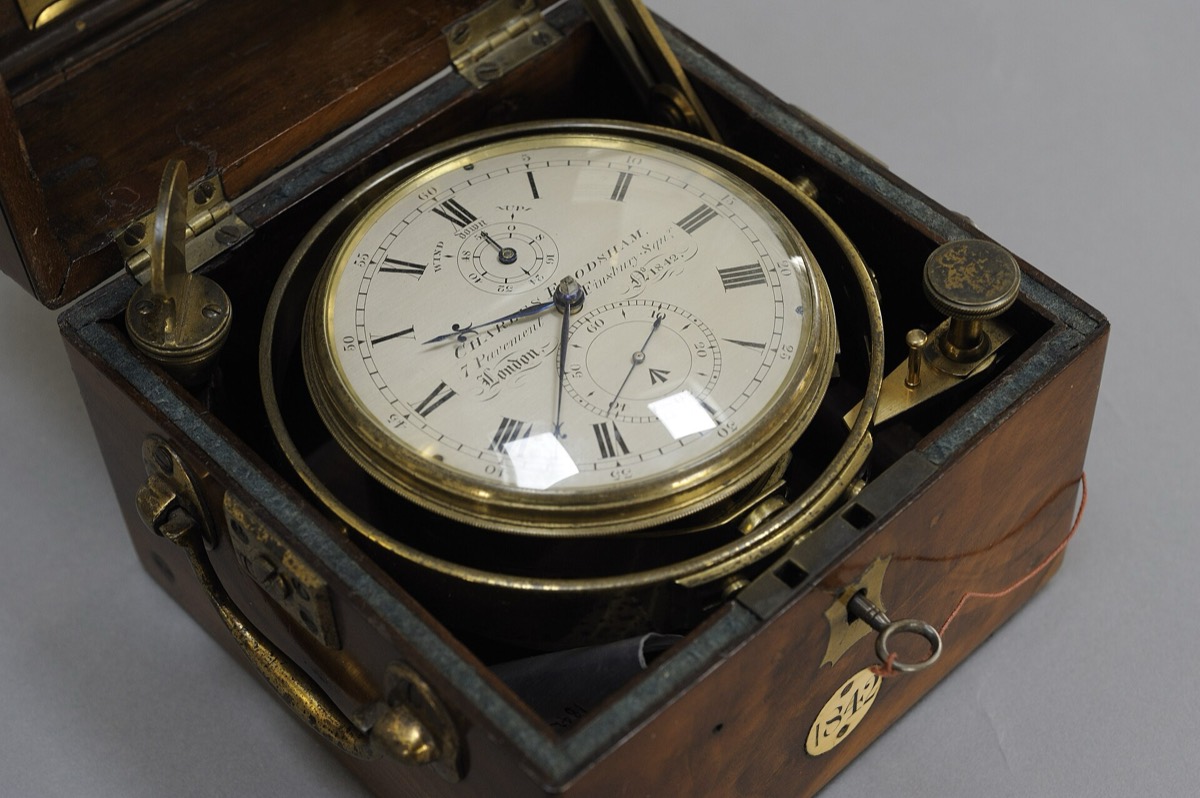 Which problem sank whole ships until one clock was invented?navigation
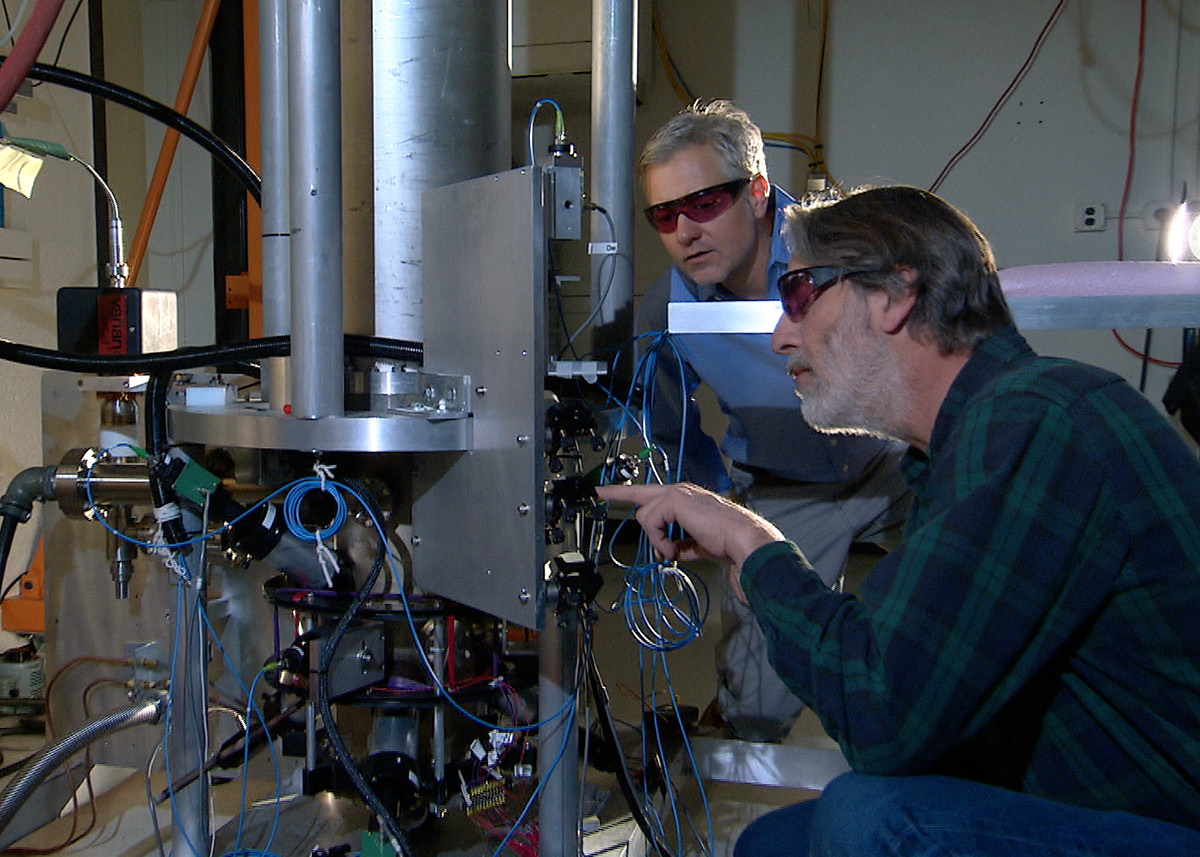 How small a difference in height can a clock feel?relativity
 How do you prove an ant measures distance by its own steps?navigation