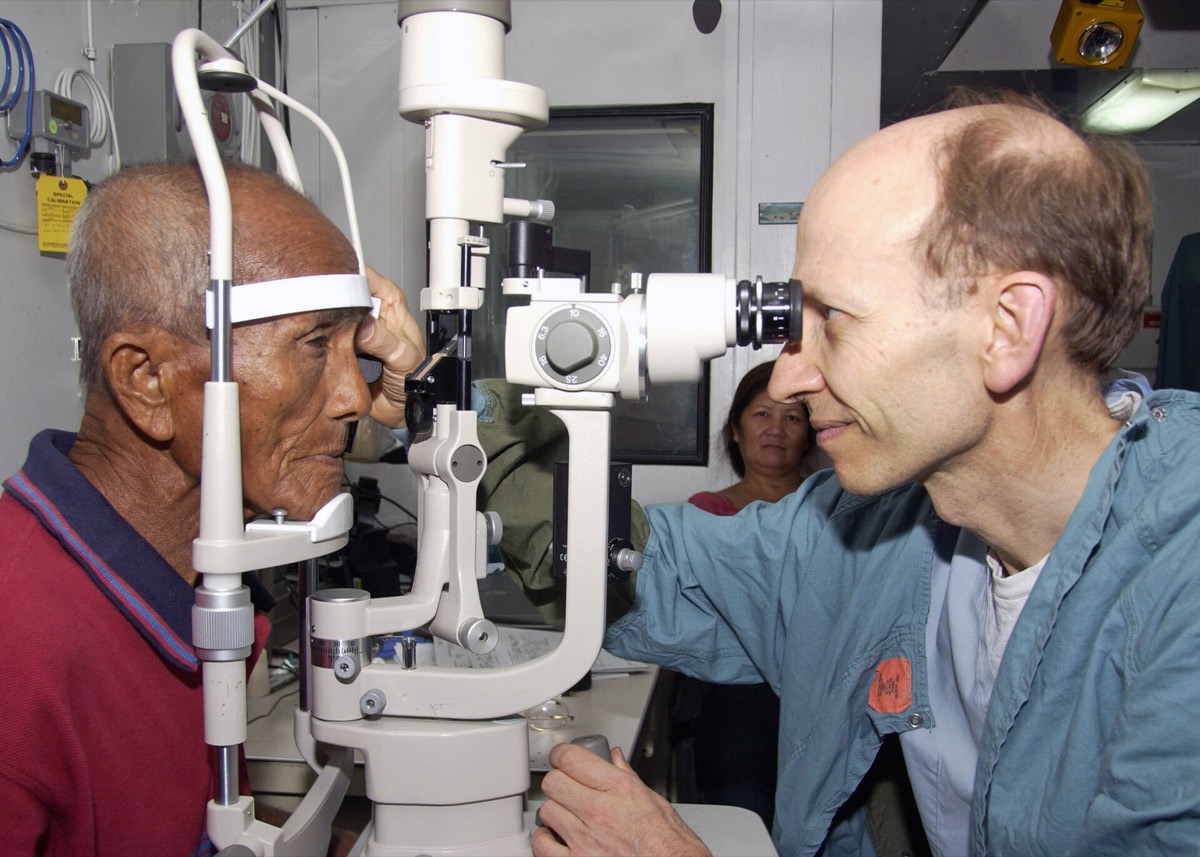
Several visual functions have , windows in early life after which they cannot fully develop. Whether aiming the eyes at something belongs on that list was unknown. The people who could answer it are hard to study, because sight restored after congenital blindness usually comes with pervasive that wrecks eye tracking. So the authors built new calibration and analysis techniques and tested them anyway.
They could aim their eyes, after decades of blindness. Individuals whose dense bilateral congenital cataracts were removed after three to thirty-six years of visual deprivation performed gaze shifts. Their extensive nystagmus distorted the trajectories, and their latency and accuracy were no worse than in a control group who had nystagmus from other causes. The deprivation itself did not add a deficit.
Sensitive periods have been identified for several human visual functions, meaning windows in early life during which input is required for normal development. It was unknown how far visually guided oculomotor control depends on early visual experience, or whether people whose sight was restored after congenital deprivation can direct their eyes at all.
The population that answers this is small and difficult to measure. Sight recovery after congenital blindness typically brings pervasive nystagmus, which contaminates eye tracking data badly enough to make standard analysis useless. So the authors developed new calibration and analysis techniques for exactly that situation.
They then tested individuals with long periods of from birth, from three to thirty-six years, due to congenital, dense, total, bilateral cataracts. Three control groups were assessed alongside: people with nystagmus from causes other than cataracts, people with developmental cataracts after removal, and people with normal vision.
The congenital cataract reversal individuals were able to perform visually guided gaze shifts, even where their blindness had lasted decades. Their nystagmus distorted the eye movement trajectories, as expected, and their latency and accuracy were as predicted from that nystagmus rather than worse than the nystagmus control group. The authors describe the effectiveness as remarkable given the deprivation. It is also a null difference in a small special population, measured with techniques built for the purpose.
wat. After as much as three decades of blindness from birth, restored eyes still aimed themselves about as well as any eyes with the same tremor.
wat wat
The comparison group is what makes the result readable. Measured against others with the same eye movement disorder, these individuals were not impaired, so the oculomotor system had not missed a window.
How do we know?
Zerr and colleagues developed calibration and analysis techniques for eye tracking data contaminated by nystagmus, then compared sight-recovery individuals against three control groups: nystagmus from other causes, developmental cataracts after removal, and normal vision.
What is still unknown
A small and unusual population, with eye movements measured through pervasive nystagmus using techniques the authors had to invent. A null difference against a nystagmus control group is not the same as normal oculomotor function.
Learn something?
Where to next
 What does an eye with twelve color channels actually see?vision
 What does the brain do at night that it cannot get done by day?brain
 Why does somebody else’s yawn catch you in particular?brain