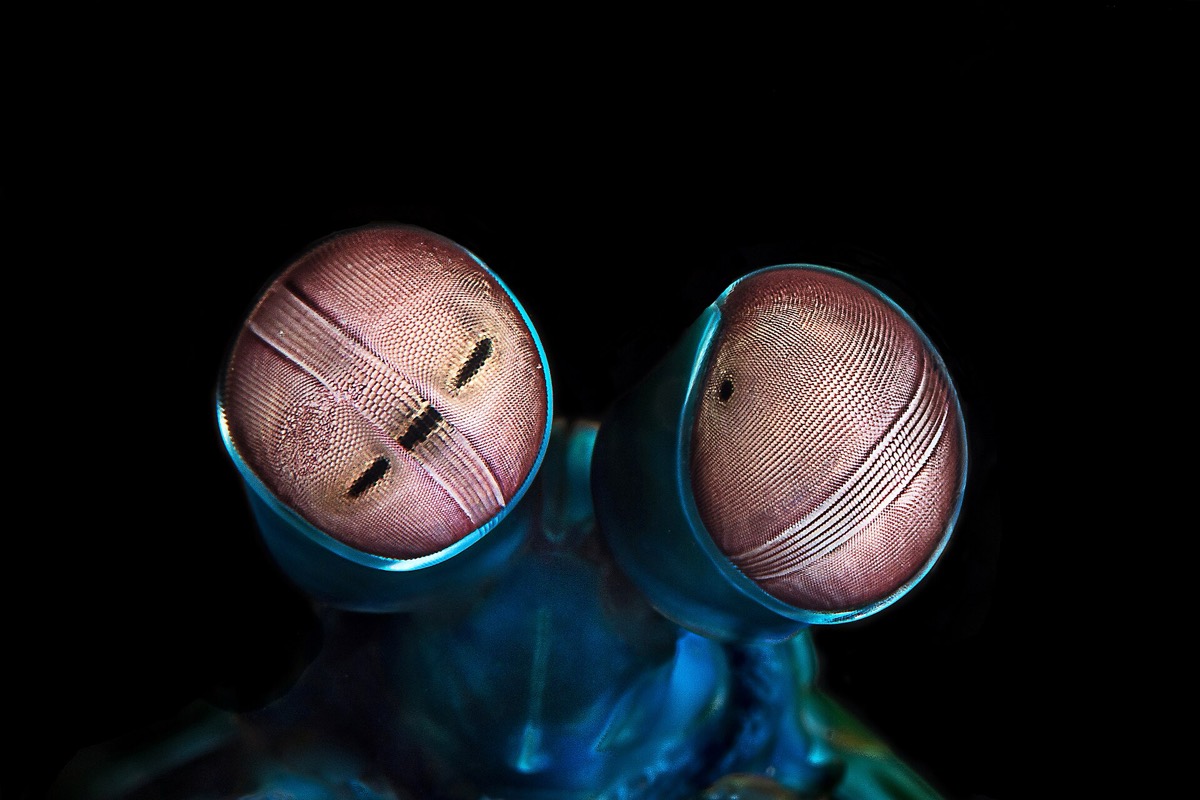
Some mantis shrimp carry twelve , each tuned to a narrow slice of the spectrum from deep ultraviolet out to far red. Human vision manages fine color discrimination on three. Twelve ought to deliver something extraordinary, and nobody could say what. Thoen and colleagues ran behavioral tests, training the animals to tell one color from a neighboring one. How fine can they cut it?
Surprisingly coarse. The discrimination tests came out poor, far worse than three or four channels would support, which rules out the conventional that vertebrate eyes use. The experiments point instead at a previously unknown arrangement: temporal signaling combined with , sweeping the receptor rows across a scene. That gives color recognition rather than discrimination, a fast match instead of a fine comparison.
Stomatopod eyes are among the most complex in the animal kingdom, and the headline figure is twelve photoreceptor types in some species, each sampling a narrow band from deep ultraviolet to far red. The usual conclusion drawn from that is a world of color no person could imagine.
The mystery is that three or four channels are already enough for fine color discrimination. Adding more brings diminishing returns under any conventional scheme, so twelve is not an upgrade of the system we have. Something else must be going on.
Thoen and colleagues measured it rather than speculating, running behavioral wavelength discrimination tests on the animals. Performance was surprisingly poor: the shrimp could not separate wavelengths anything like as finely as a system using color-opponent coding would manage.
What the experiments suggest instead is a different design. Each receptor row reports its own narrow band, and scanning eye movements sweep those rows across the scene. Color then arrives as a sequence of signals in time rather than as a set of values to compare. That yields recognition, matching a color quickly against something already known, rather than discrimination. For an animal that strikes in milliseconds, speed may be worth more than precision.
wat. Twelve channels buy speed, not precision. The animal is reading a barcode rather than mixing paint.
wat wat
The assumption that more receptor types means finer color vision turns out to be wrong, because what an eye does depends on how the signals are compared, not how many there are.
How do we know?
Thoen and colleagues trained stomatopods on behavioral wavelength discrimination tasks and measured how close two wavelengths could be before the animals stopped telling them apart.
What is still unknown
Behavioral thresholds in trained animals, and the temporal scanning account is what the results suggest rather than a mechanism recorded in the nervous system.
Learn something?
Where to next
 Can someone blind from birth learn to aim their eyes after sight is restored?vision
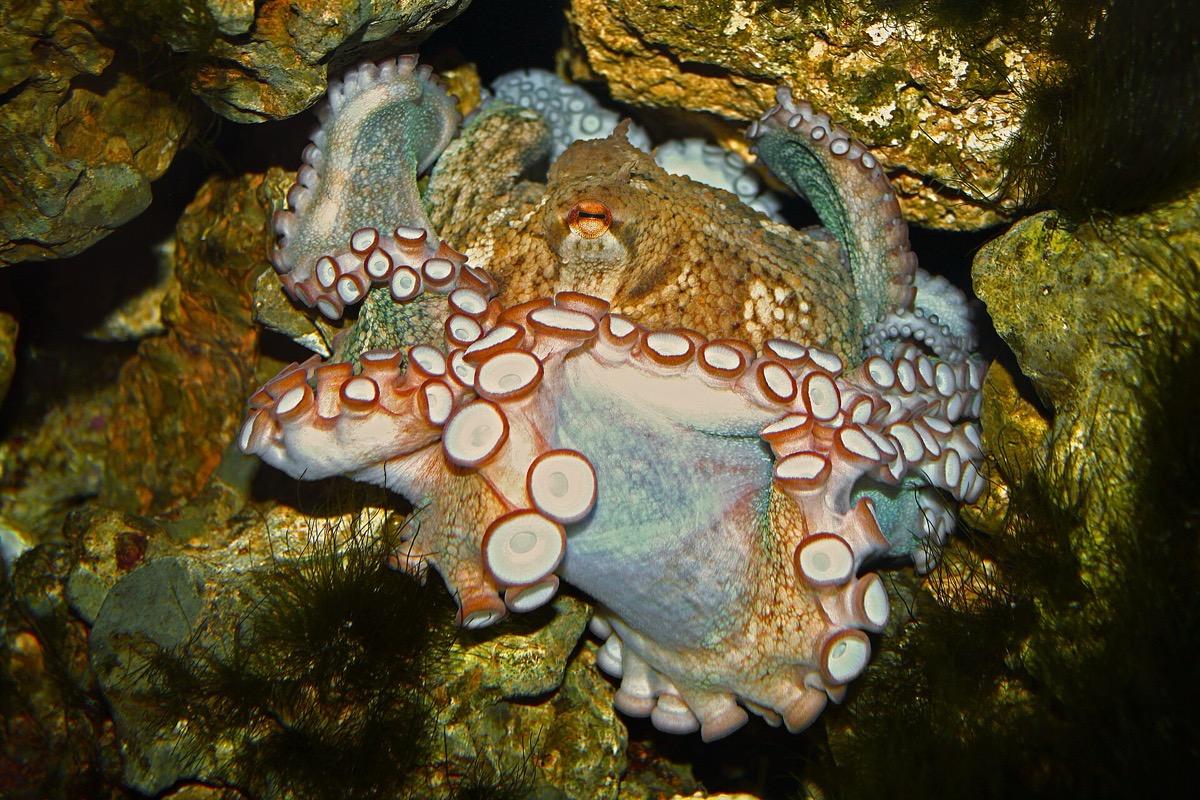 Where is most of an octopus’s brain?brain
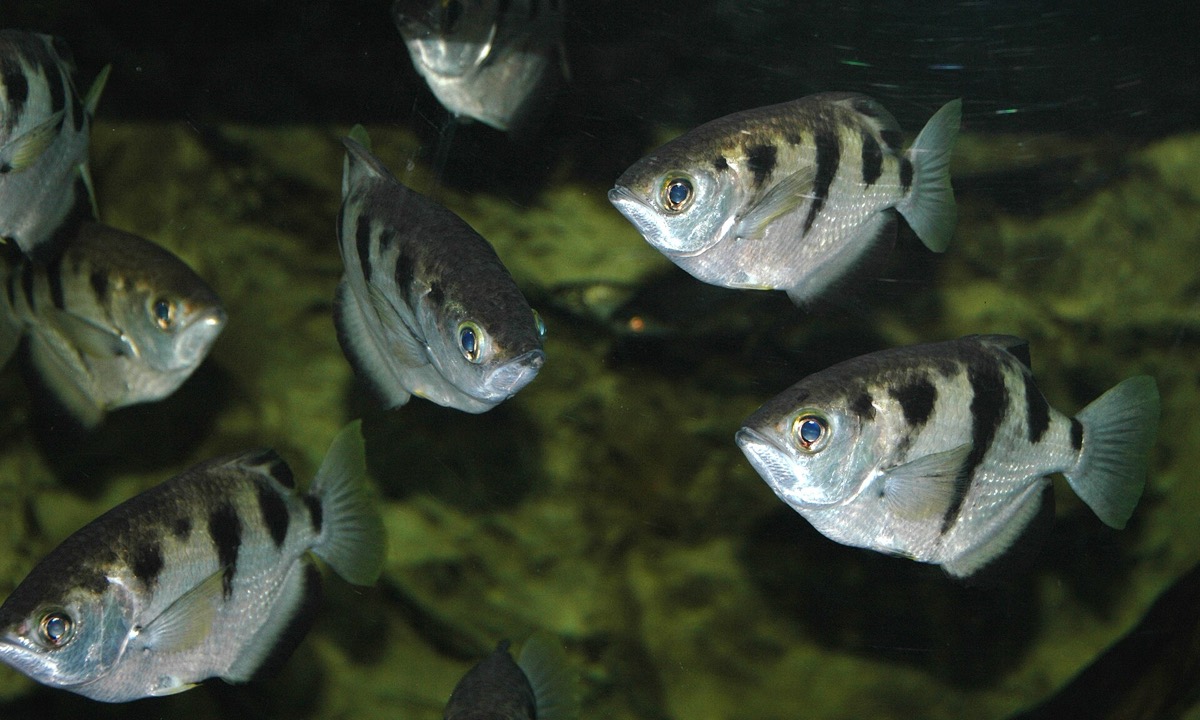 A fish has no cortex like ours. So how does it tell faces apart?vision