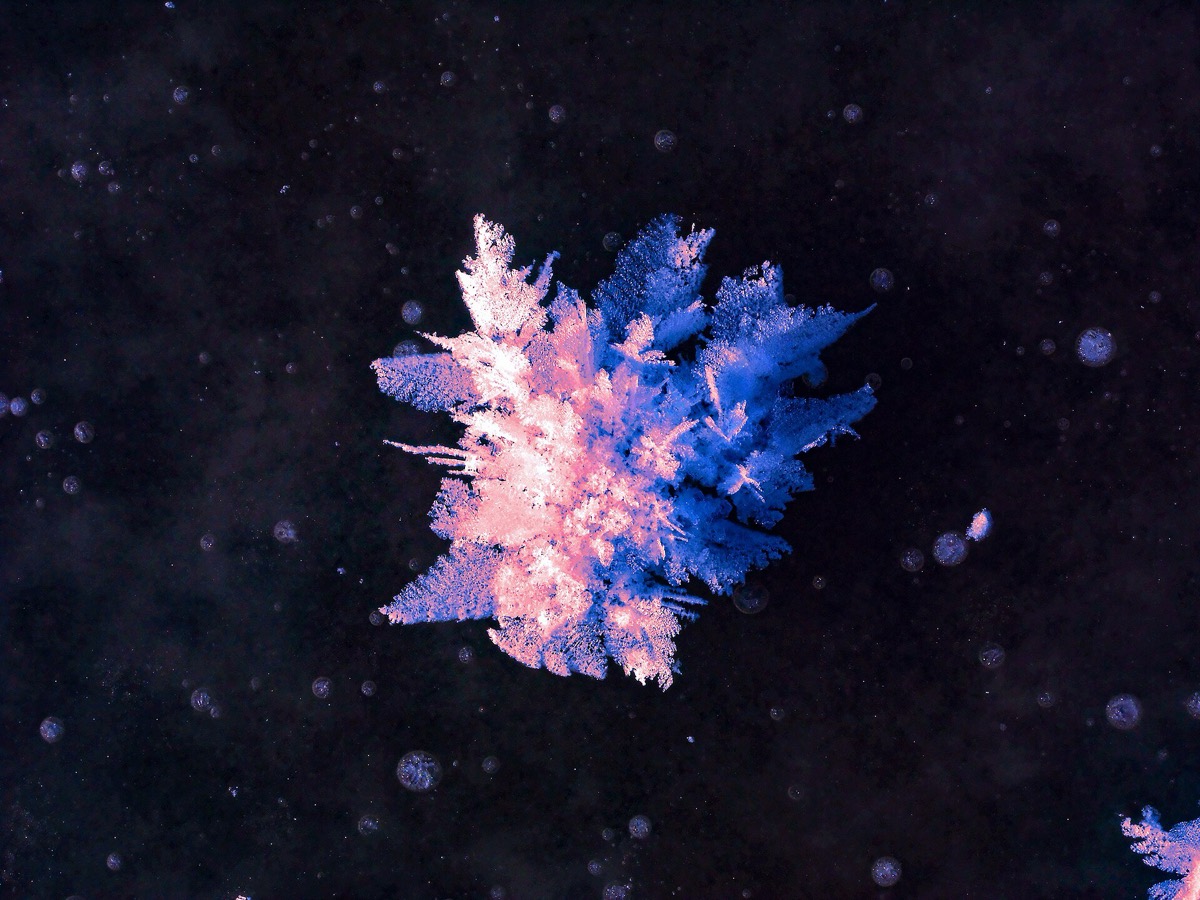
Frost flowers are clusters of ice crystals that grow on freshly formed sea ice and sometimes on frozen lakes. Two explanations had been assumed: condensation out of a supersaturated atmosphere, or brine wicked up through porous sea ice. Both require a supply of water from somewhere. So the authors worked out the physics and then tried growing them on solid pure ice in dry air. Where did the water come from?
From the ice itself, away. The authors show frost flowers can form on solid, pure ice that is sublimating into an , with no supersaturated air and no brine wicking required. They derive a general setting out the atmospheric conditions under which the different vapor-related phenomena occur, and confirmed the predictions for frost flowers in a series of laboratory experiments.
Frost flowers are clusters of ice crystals found on freshly formed sea ice and occasionally on frozen lakes. They belong to a family of vapor-related phenomena that also includes freezing fog, hoar frost and dew, all of which involve water moving through the air rather than freezing in place.
Two mechanisms had been supposed. Either the crystals condense out of a supersaturated atmosphere, or water is wicked up through porous sea ice from the brine below. Both share an assumption: that the water arrives from outside the ice surface the flower grows on.
The authors show that frost flowers can form on solid, pure ice sublimating into an unsaturated atmosphere. There is no brine to wick and the air is drier than saturation, so the water has to be coming from the ice itself, leaving the surface as vapor and redepositing as crystals.
They derive a general regime diagram showing the atmospheric conditions under which the different vapor-related phenomena occur, and confirm their predictions of frost-flower formation in a series of laboratory experiments. The application is practical: frost flowers significantly enhance and provide the substrate for chemical production of ozone-depleting bromine monoxide, and the results can also relate sea-salt aerosols in ice cores to past atmospheric conditions. Note that the confirmation is laboratory work, not field observation.
wat. A frost flower can build itself from the ice it stands on, as the ice evaporates straight into air too dry to be feeding it.
wat wat
Frost flowers matter beyond their appearance. They significantly raise albedo and they supply the substrate for chemical production of ozone-depleting bromine monoxide, so predicting where they form is a climate modeling problem.
How do we know?
Style and Worster derived a regime diagram for vapor-related ice phenomena from the underlying physics, then confirmed their predictions of frost-flower formation in a series of laboratory experiments.
What is still unknown
A theoretical regime diagram confirmed in the laboratory, not in the field. Whether the pure-ice route is what actually dominates on real sea ice, where brine and humid air are both present, is a separate question.
Learn something?
Where to next
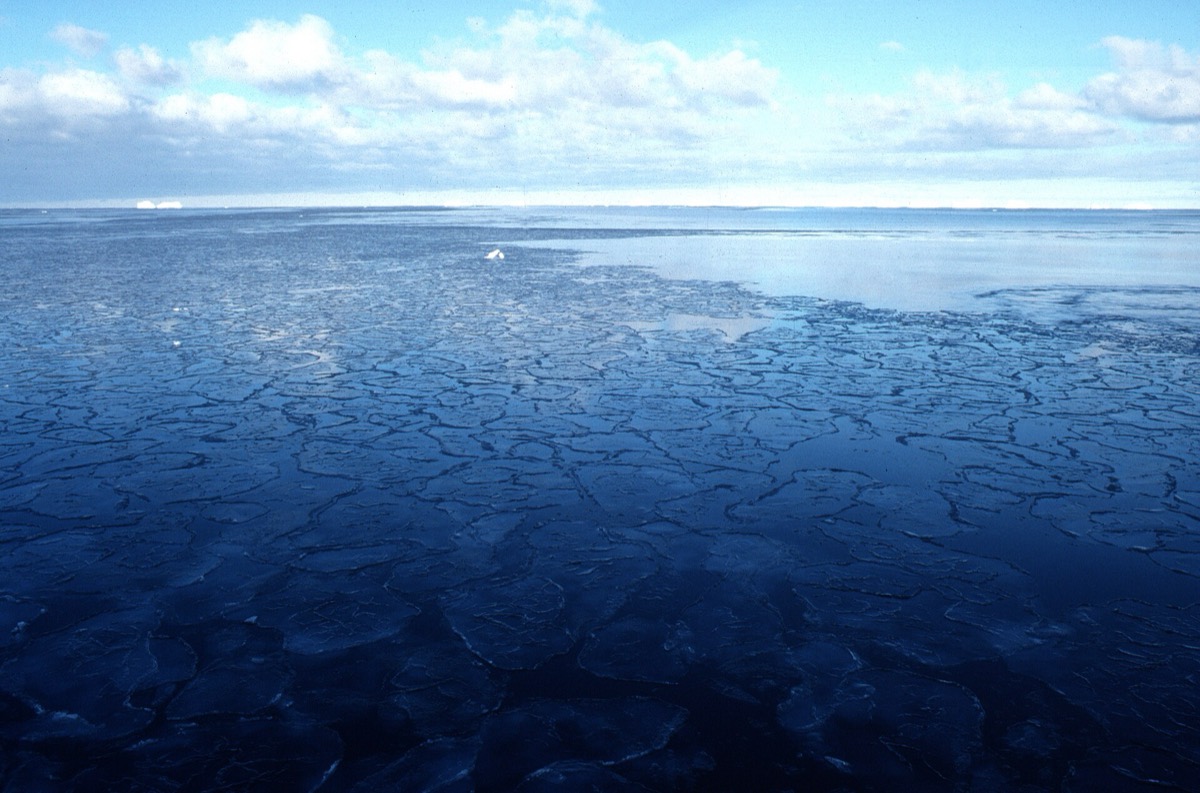 What decides how thick a field of pancake ice ends up?sea ice
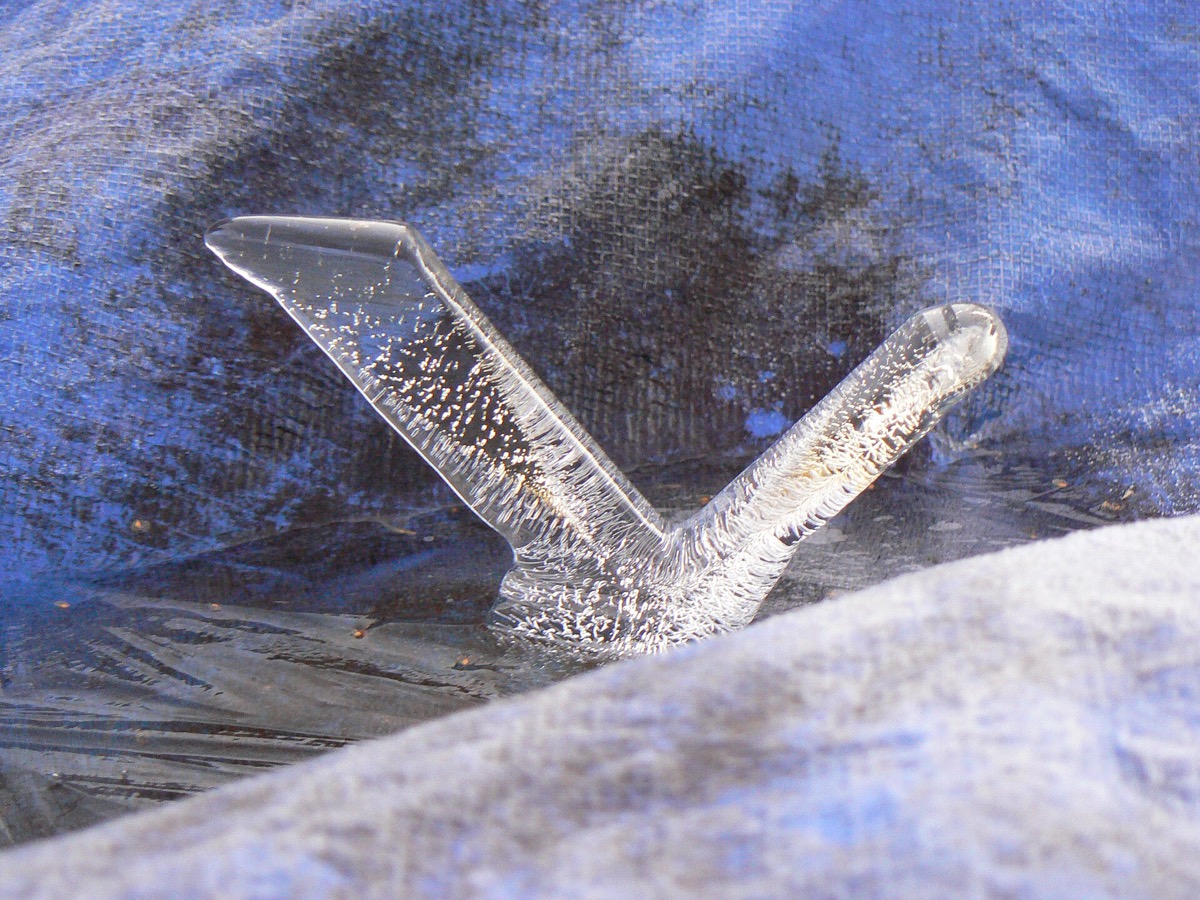 Why does a thin spike of ice sometimes grow out of an ice cube?crystals
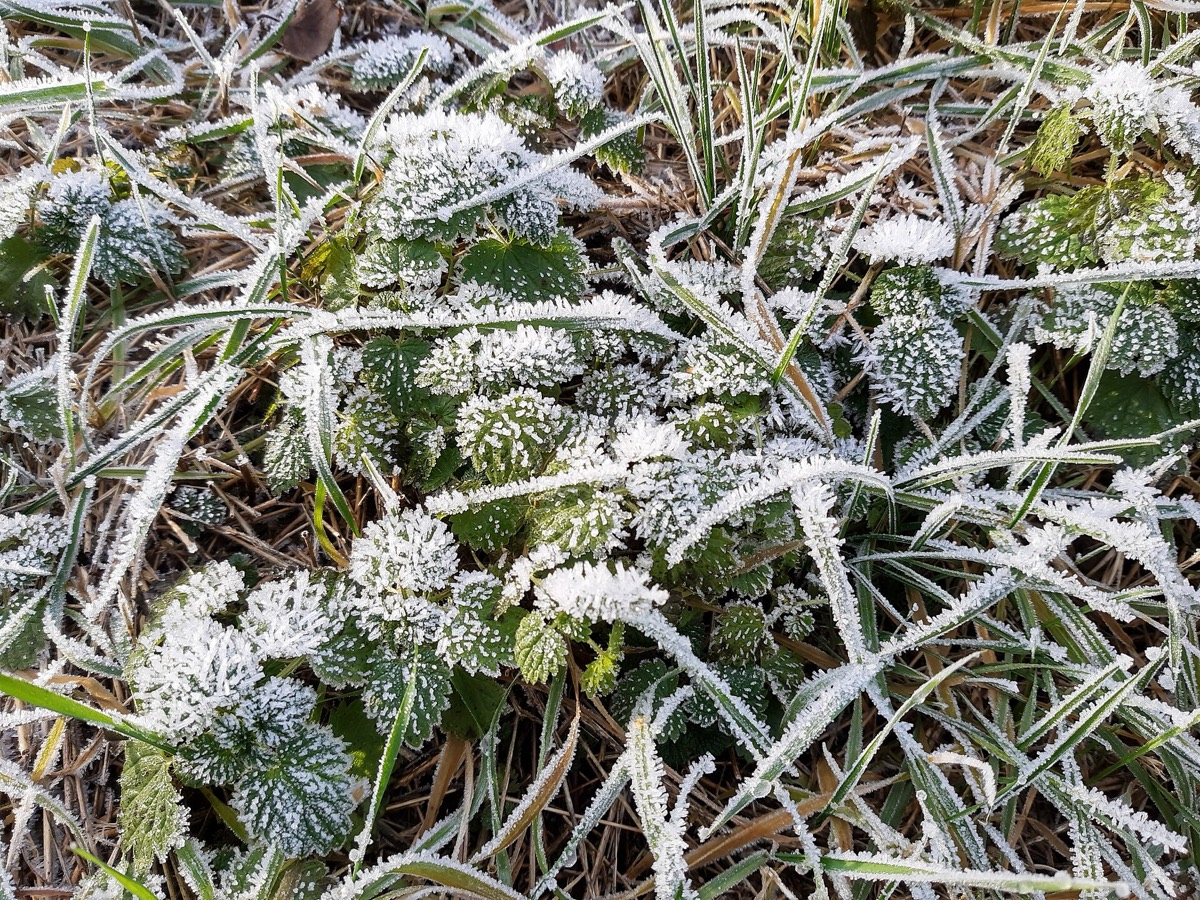 Does frost come from dew that froze?frost