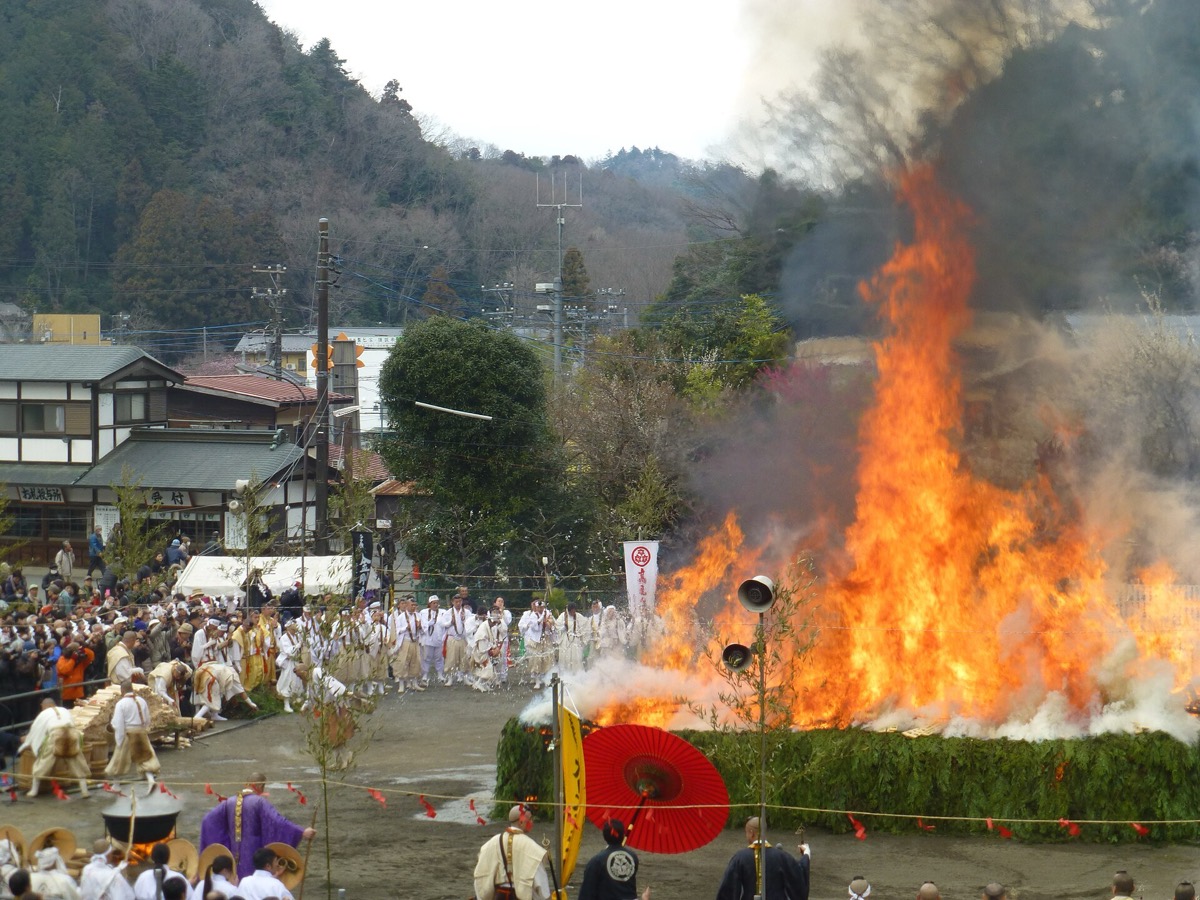
At a there is the person who walks and the person who watches, and the usual assumption is that only the first has something happen in the body. Heart monitors went on the walkers, on relatives watching, and on unrelated spectators from the village. What did the measurements show?
The relatives tracked the walkers. The of the walkers and of their relatives changed in an almost identical pattern across the ritual. Among the unrelated spectators that pattern did not appear at all. The body of someone emotionally connected responded as though they were on the coals themselves.
The ritual takes place in San Pedro Manrique in Spain, a small village where firewalking is an annual event the whole community attends. That is what made it a natural laboratory: the people present could be divided into three clear groups, and the question asked was what distinguishes them.
The first group was the walkers themselves. The second, relatives watching from the crowd. The third, other residents of the village with no connection to any of the walkers. All of them wore heart monitors, and all of them sat at the same physical distance from the fire.
The curves of the walkers and of their relatives rose and fell at almost the same moments. Among the unrelated spectators that pattern did not appear at all, although they watched exactly the same ritual from the same distance. So what decided it was the emotional connection and not what the eyes saw.
The finding is interesting precisely because of what it does not prove. A between two curves does not explain what drives it. The candidates are identification, tense anticipation, and shared breathing responses, and this design cannot separate them. What it does show is that the line between taking part and watching is less sharp than it seems.
wat. At the fire ritual in Spain, a relative’s heart in the crowd rose and fell with the walker’s. For a stranger in the same crowd it did not.
wat wat
Rituals are sometimes treated as an external show. Here they produced a shared bodily response in people who belong to the community.
How do we know?
The team recorded continuous heart rate from all three groups during the ritual itself and compared mathematically how far the pulse curves moved together. Emotional connection, rather than physical proximity, predicted the synchrony.
What is still unknown
This is one ritual in one community, with a small number of participants. A synchrony between curves does not prove what exactly causes it.
Learn something?
Where to next
Whose heart keeps time with a fire-walker?ritual Can a painful ritual raise generosity toward a community?ritual
 Does walking in step actually make us cooperate?ritual