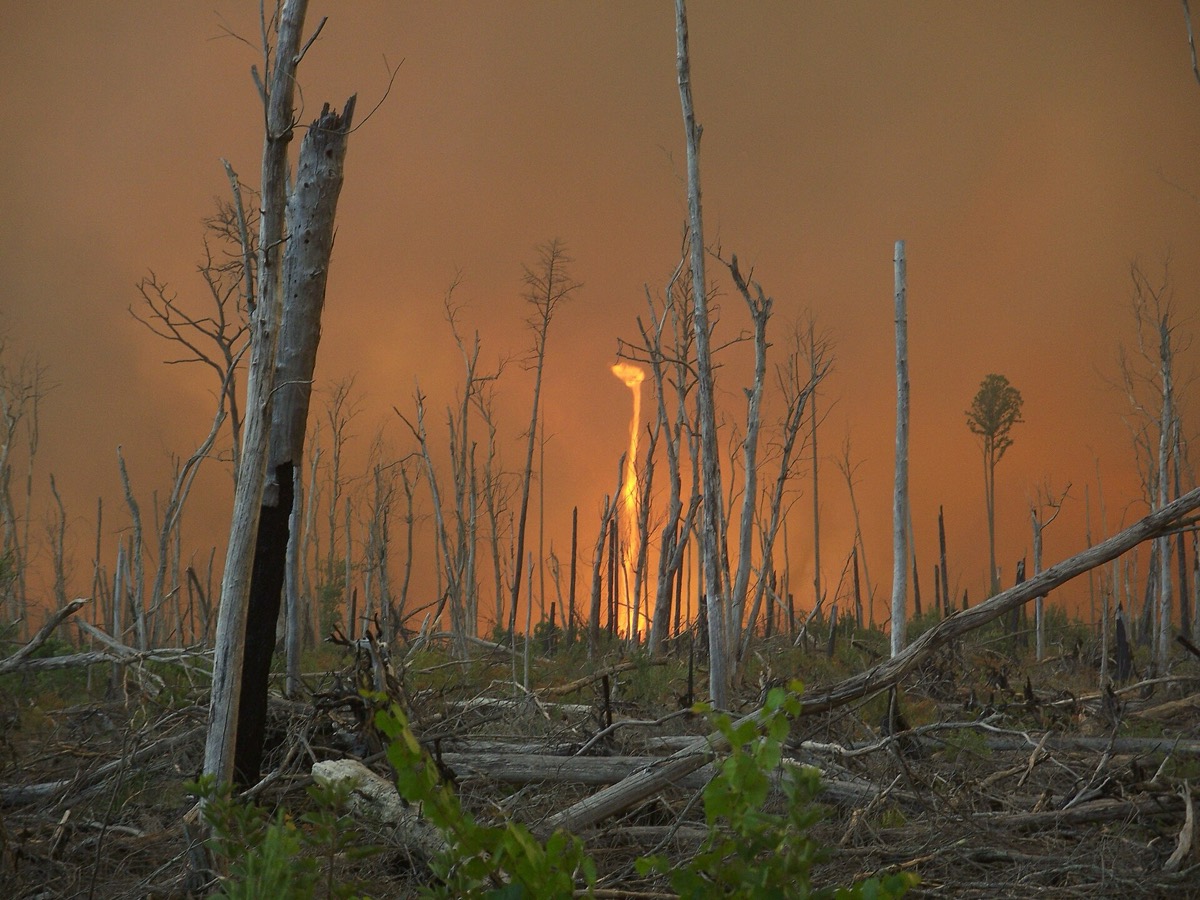
A fire lying flat across the ground can gather itself into a rotating column of flame. Nobody adds fuel at that moment, and nobody adds spin either. Because the real thing is too dangerous to instrument, almost everything known about it comes from scale models in a laboratory. So where does the column come from?
From air arriving crookedly. When the flow feeding a fire comes in off-center, the inflow carries rotation. As that air converges on a narrow axis, conservation of spins it faster, the way a skater pulls her arms in. drops, hot gas is drawn upward, and the flame stretches into a column. The spin also keeps feeding it .
have been studied for a long time, because of what they do during large urban and wildland fires. Their destructive power has also hidden them, since instrumenting one in the field is close to impossible, so most knowledge about their formation and growth comes from scale modeling in a laboratory.
What the experiments show is that formation is dominated by wind and by geometry. Air feeding the fire arrives off-center, the inflow carries rotation, and as it converges on the axis conservation of angular momentum accelerates it.
The rest follows from the spin. Pressure at the center falls, hot gas is drawn upward, and the flat fire stretches into a tall narrow column, with heat concentrated into a much smaller volume.
The spin also solves the fire’s supply problem by pulling air in from the sides continuously, which is why the column burns more intensely than the surrounding fire. Quasi-steady whirls over a fuel source are the ones studied best, the full-scale structure has still not been reliably measured, and scaling laws remain the bridge between the laboratory and the fire.
wat. A fire whirl intensifies because rotating air accelerates as it converges on the center of the flame.
wat wat
A whirl can lift embers and throw them clear, change direction faster than a fire front does, and burn far more intensely than the fire around it.
How do we know?
Laboratory experiments on scale models supply most of what is known, measuring rotation, temperature and velocity fields inside quasi-steady whirls formed directly over a fuel source, with scaling laws connecting them to the real thing.
What is still unknown
The structure of a fire whirl has yet to be reliably measured at large scale. Formation also depends on terrain and local wind, so predicting exactly where and when one appears remains out of reach.
Learn something?
Where to next
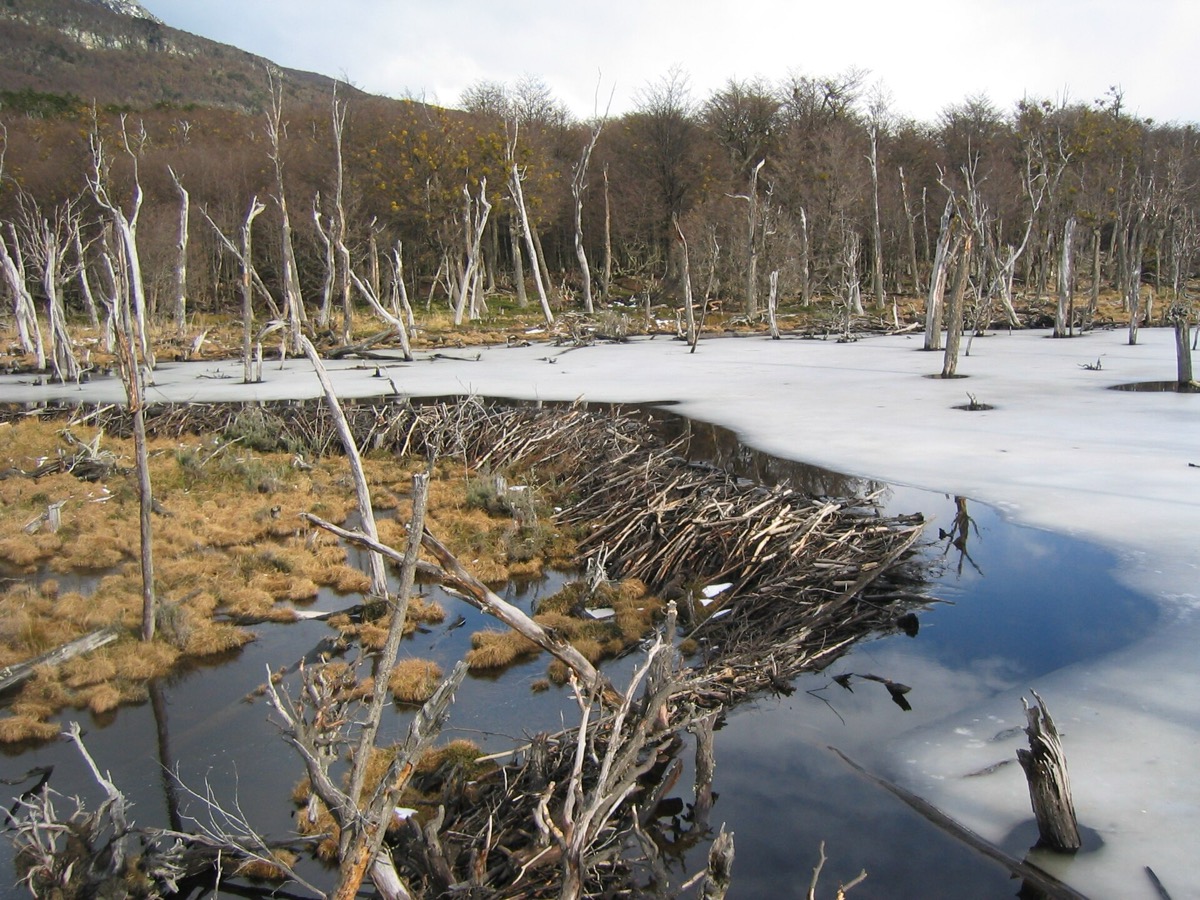 How do beavers help a landscape survive drought and fire?wildfire
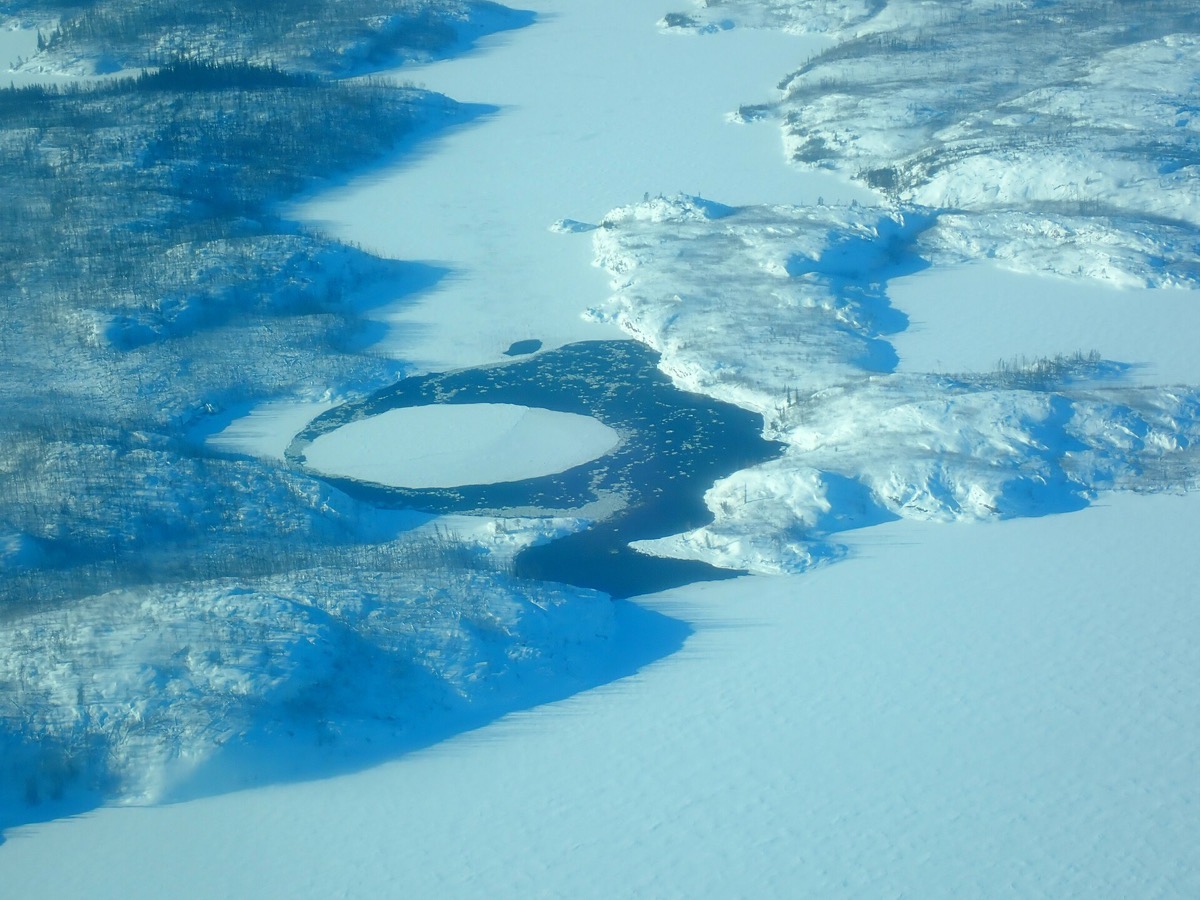 How does a round disk of ice start turning on still water?fluid dynamics
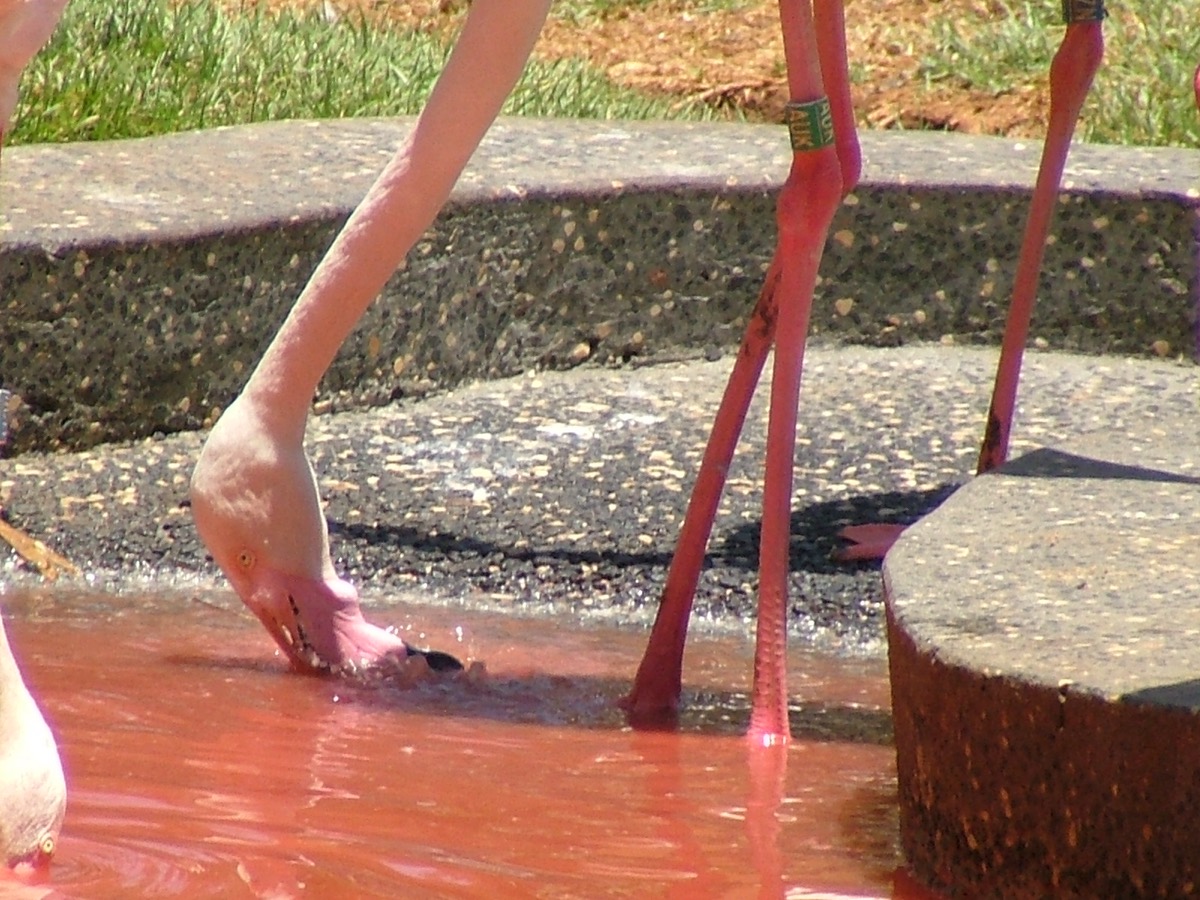 How does a flamingo catch brine shrimp that swim faster than it does?fluid dynamics