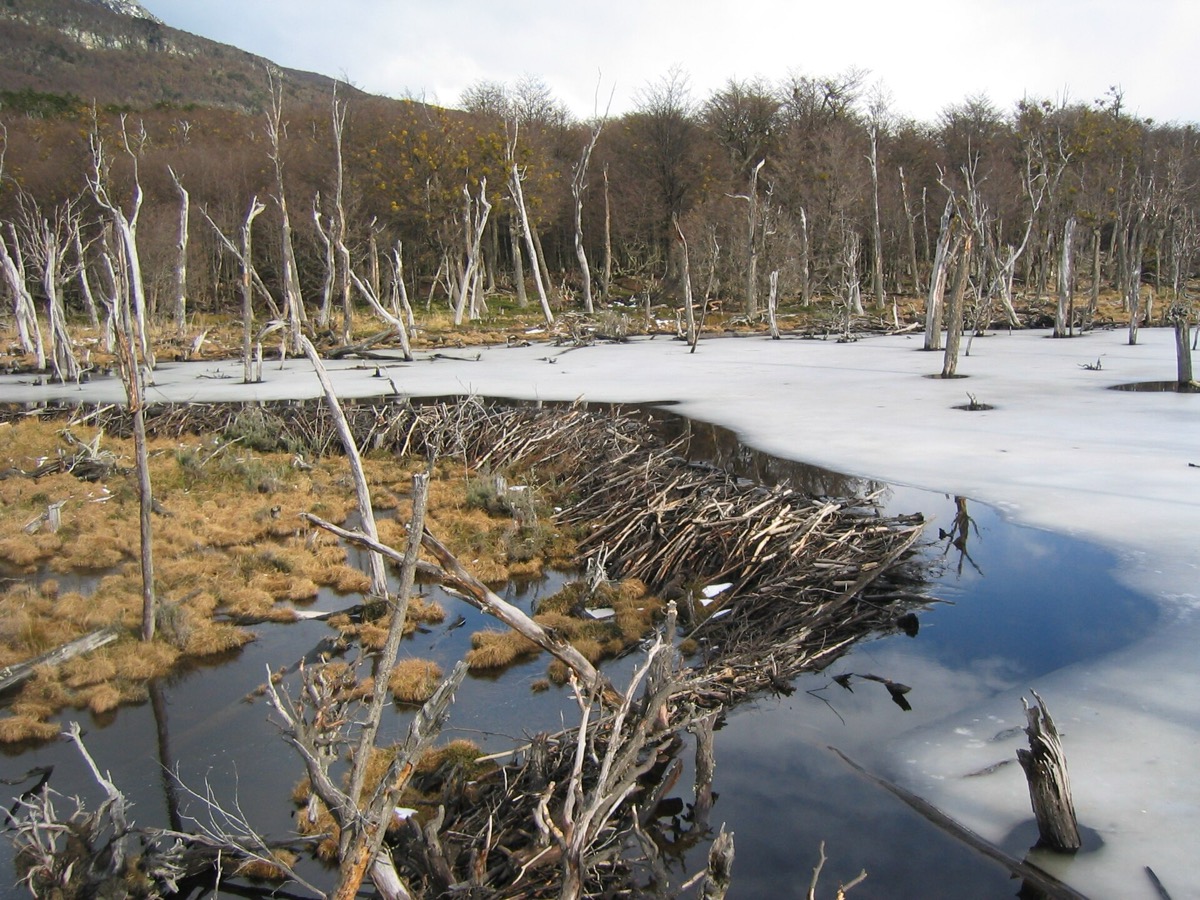
build dams to make themselves a safe pond, with no intention of changing anything beyond that. But a dam slows the flow, raises and spreads moisture out into the banks. What does that do to the land around?
It keeps it wet. A single beaver may hold as much as 120 thousand liters behind its dams, and the vegetation around stays green even in a dry season. That makes a , a strip fire finds harder to cross, and after a large wildfire you can see it from the air as a green band in the shape of a stream. Which turns beavers into : let the animal do the work rather than build the result.
Worth saying up front that the beaver is not trying to help anybody. It builds a dam to make a deep pond that will protect its lodge, and the trigger for building is even the sound of running water. Everything else is a side effect.
That side effect is a change in how water behaves across a whole catchment. The dam slows the flow, the water has time to seep in, and the water table rises. The moisture spreads sideways into the banks of the stream rather than staying in the pond.
From that comes the part that matters in an age of drought and fire. A single beaver may hold as much as 120 thousand liters behind its dams. The vegetation around stays green and saturated even in a dry season, and strips form that fire finds harder to cross. After large wildfires you can see it in aerial photographs: a green band in the shape of a stream inside a burned area.
The work mapped existing dams and ponds from aerial and satellite imagery, and built a model estimating storage capacity and buffer area, to identify where returning beavers would do the most good. In the Sierra Nevada the potential comes to some 120 million cubic meters. One precision is owed: these are modeled estimates of potential and not measurements of benefit obtained, and beavers do flood roads and fields and start real conflicts with landowners.
wat. The vegetation around a beaver pond stays saturated in a dry season, and fire finds it harder to cross.
wat wat
It is a relatively cheap approach to restoration: instead of building engineered infrastructure, you let a local animal do the work it does anyway.
How do we know?
The researchers mapped existing dams and ponds from aerial and satellite imagery, and built a model estimating water storage capacity and the area of fire buffer.
What is still unknown
The figures are modeled estimates of potential, not measurements of a benefit actually obtained. Beavers also flood roads and fields and start real conflicts with landowners.
Learn something?
Where to next
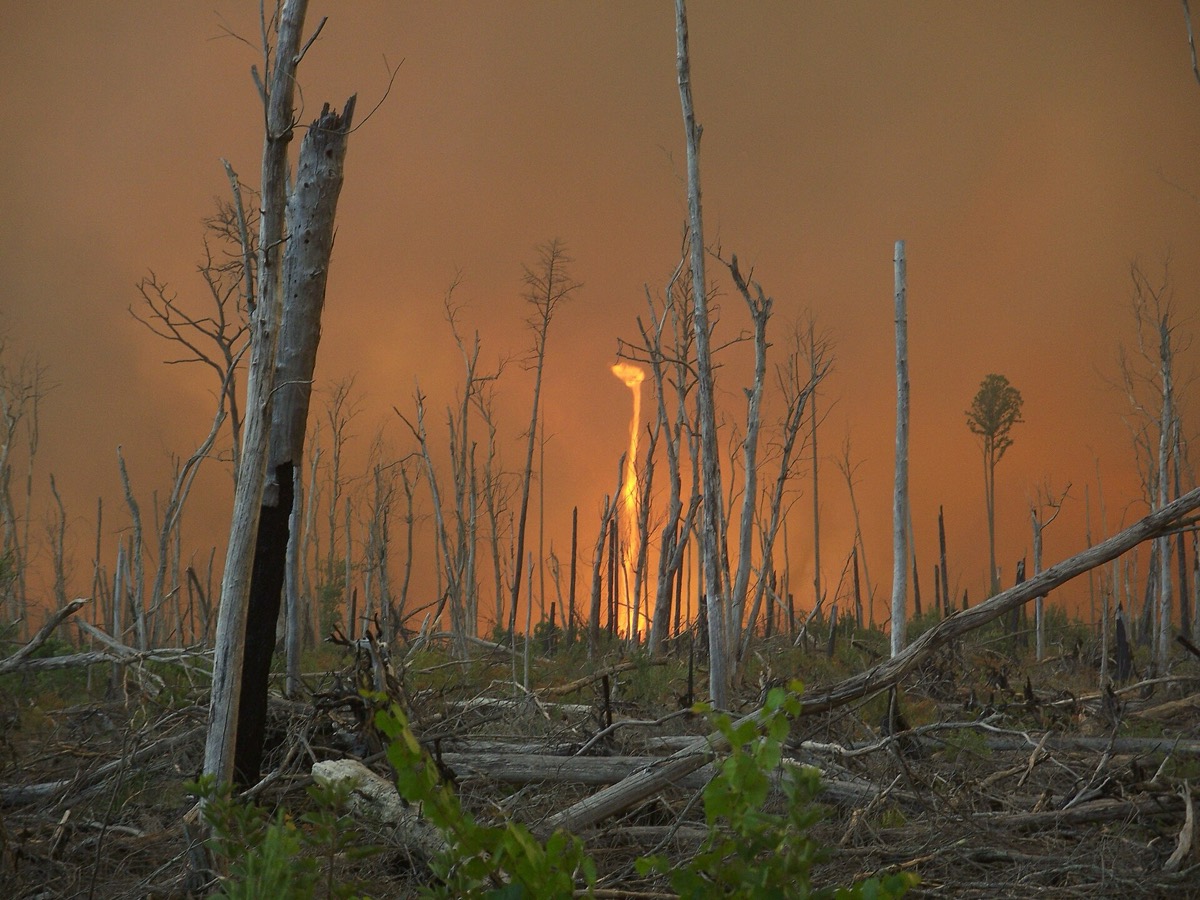 How does a flat fire on the ground turn into a tall spinning column?wildfire