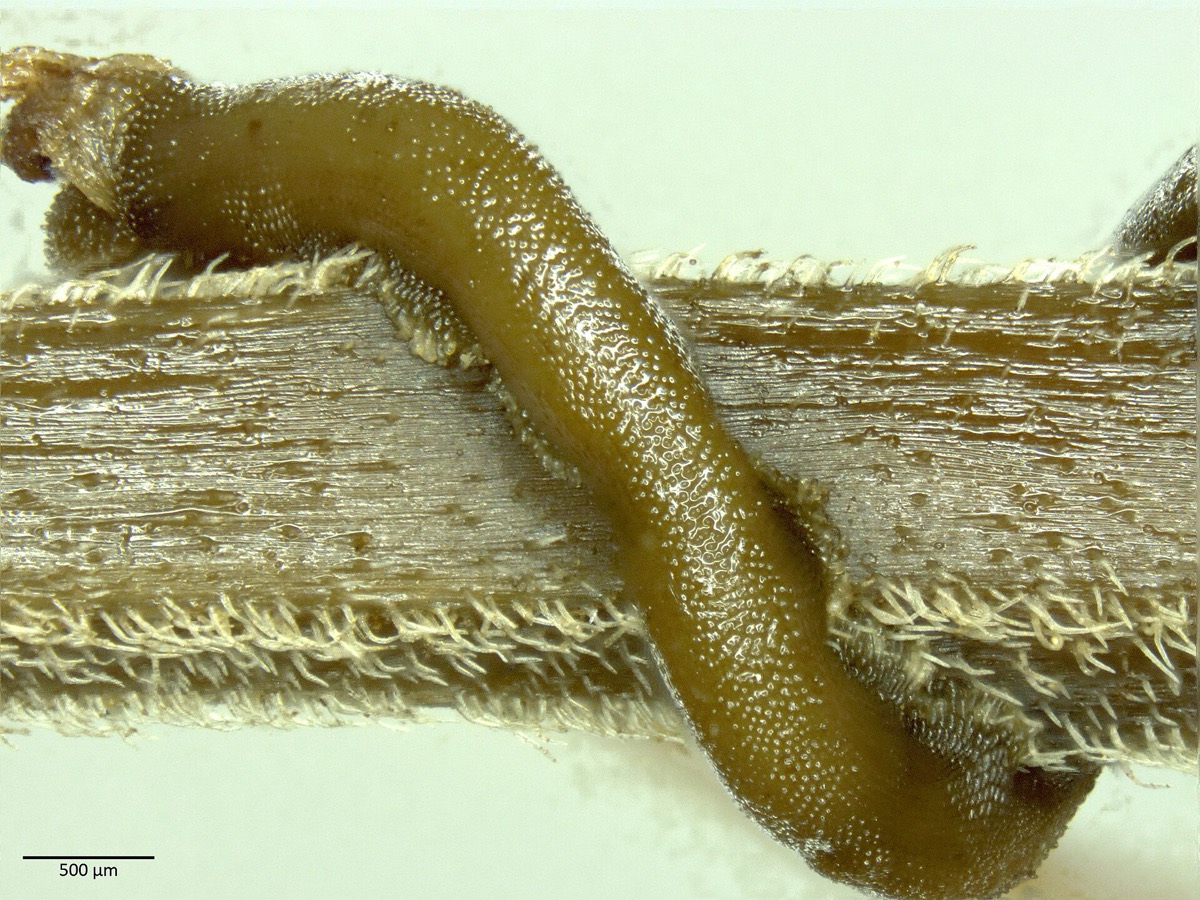
is a plant that has given up on making its own living. It twines onto a host, taps the stem and takes what it needs, and a seedling with no host within reach dies. Whether it can tell one potential host from another before touching anything is the question. The authors measured pigment levels and recorded electrical signals in Cuscuta racemosa offered different neighbors. Can it tell from a distance?
It behaves differently depending on who is nearby. With no host detected, the plants raised their a, chlorophyll b and beta-carotene, which reads as falling back on photosynthesis to buy time, and the amounts varied with which host was presented. The changed by host species too, in patterns machine learning could classify. The authors read a likely process of into the result.
Cuscuta racemosa makes almost nothing for itself. It germinates, finds a host, twines on, and taps the host’s vascular system, and a seedling that finds nobody in time simply runs out. Everything about its life depends on what is nearby.
The authors hypothesized that these plants recognize different hosts at a distance and change strategy according to what they detect. They added a second hypothesis about pigments: that a dodder failing to detect any host would raise chlorophyll production, trying to prolong its own survival through photosynthesis.
The pigments came out as predicted. Absence of a host increased chlorophyll a, chlorophyll b and beta-carotene, and the content varied depending on which host was presented, which already implies discrimination rather than a simple present-or-absent response.
The electrical side carries the stronger claim. Electrical signalling in the dodders changed according to the host species perceived, in patterns that machine learning techniques could detect, which suggests recognition at a distance. The authors go further and read evidence for a likely process of attention toward the host plants, offered as a first empirical case rather than a conclusion.
wat. With nobody to feed on, it greens up and waits, and its electrical chatter changes according to which neighbor is out there.
wat wat
Foraging is usually an animal word. A parasite that adjusts its chemistry and its electrical activity according to which host is out there is doing something that needs the same vocabulary.
How do we know?
The authors quantified photosynthetic pigments in Cuscuta racemosa under different host treatments, recorded electrophysiological time series, analyzed signal complexity, and classified the signals with machine learning.
What is still unknown
One parasite species under controlled treatments, with attention inferred from signal patterns rather than observed. Machine learning that separates two conditions shows a difference exists, not what the plant is doing with it.
Learn something?
Where to next
 Where exactly does an ant lose its footing on a pitcher plant?plants
 Can an ape treat its own injury with a plant?plants
 Does a plant under stress make any sound you could pick up?plants