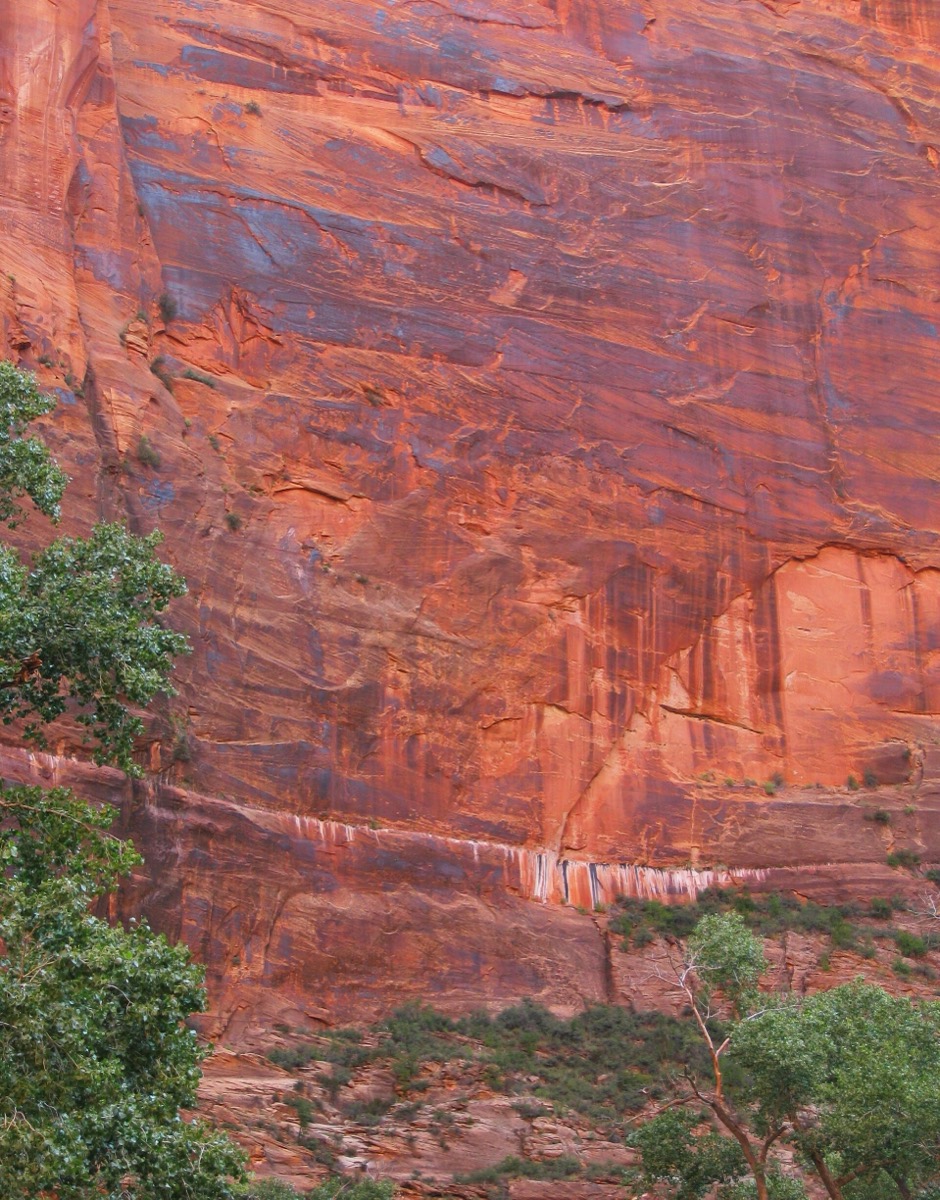
Dickerson argues it is, on a very small scale. is the dark coating coating bedrock and surface sediments across arid regions, and under a microscope it is layered. Each lamination records the climate conditions in which it was laid down. So a stain barely thicker than a hair carries a readable sequence of local climate history.
The material is not from the rock. Desert varnish is built from , atmospheric aerosols and microbes that settle on an exposed surface and accumulate. The chemical and mineral makeup of each layer reflects conditions at the time. So reading the layers in order gives a local climate record, and a way to put a date on the geomorphic surface underneath.
Desert varnish is a surface stain, coating bedrock surfaces as well as surface sediments in arid regions around the world. It looks like discoloration. Dickerson’s review makes a stronger claim: the varnish itself comprises a sedimentary formation, containing internal microscopic . On that reading, it is a rock record rather than a mark on one.
The layers are what carry the information. The chemical and mineral composition of each layer reflects the climate conditions under which it was deposited. A detailed study of the individual layers can therefore do two jobs at once: reconstruct local and regional climate history, and quantitatively date .
The material arriving on the surface is not from the rock below. Wind-blown dust, atmospheric aerosols and microbes supply it. That delivery route is why varnish appears on widely different rock types in deserts far apart from one another, and why what it records is the atmosphere rather than the stone.
One substantial caveat sits at the center of the subject, and the review states it plainly. The role of microbial activity in the formation of desert varnish remains a source of active research and lively debate. Microbes are in the material. Whether they build the coating or merely live in it is the open question. This is also a short review article rather than new measurement, so the layering is better established than the mechanism.
wat. The dark stain on a desert boulder is a stack of dust layers waiting to be read.
wat wat
It changes what counts as a rock record. Dating a desert surface normally means finding something buried in it, and varnish offers a chronology sitting on top of the surface instead.
How do we know?
A review in Geology Today describes desert varnish as a sedimentary formation with internal microscopic laminations. It sets out what the layers are made of, and how detailed study of them supports climate reconstruction and surface dating.
What is still unknown
A short review rather than new measurement, and it is explicit that the role of microbial activity in forming varnish remains a source of active research and lively debate. The mechanism is unsettled even where the layering is not.
Learn something?
Where to next
 Does the Amazon depend on dust blown from Africa?dust
 Where did the stone at the center of Stonehenge come from?geology
 What actually flies off a comet when the sun warms it?dust