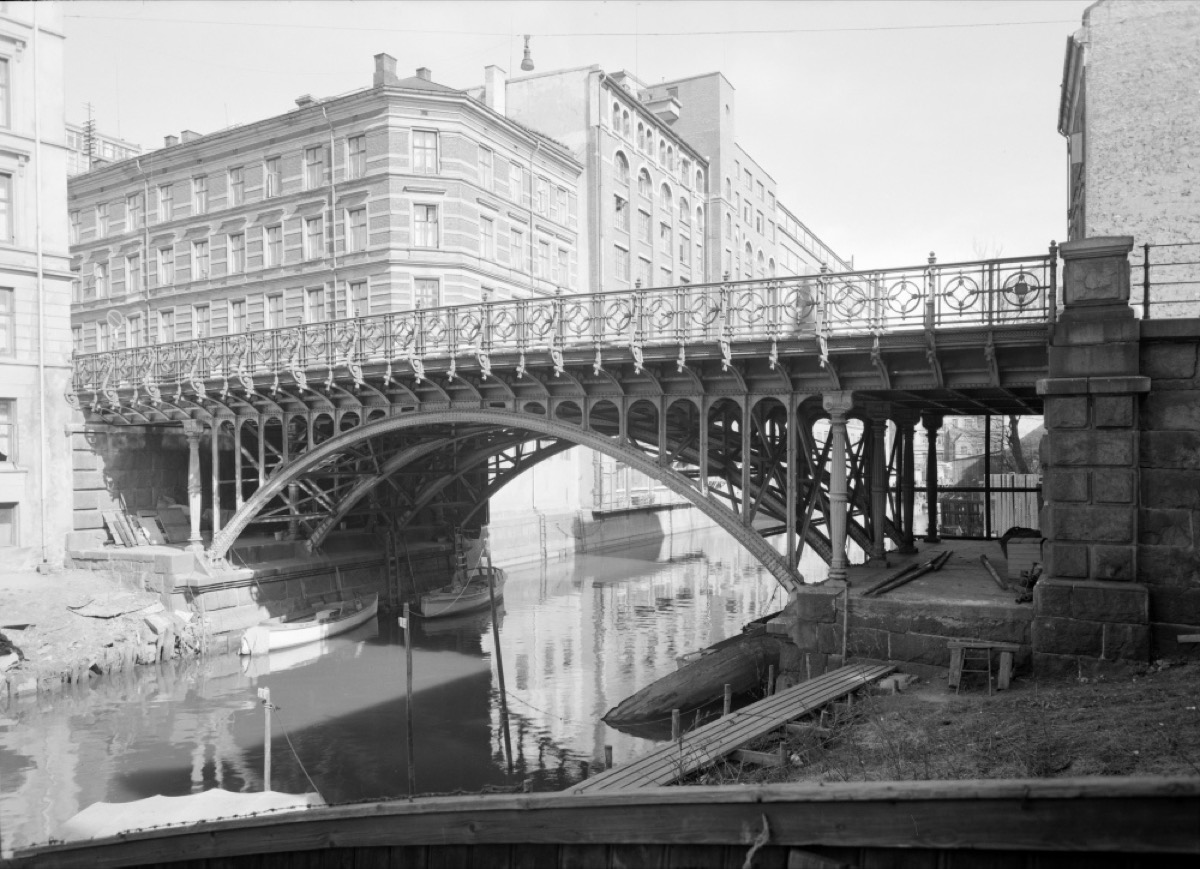
Cities buried their streams in culverts, and some are now reopening them, a practice called . The aim is to restore ecosystem functions and services, and the outcomes of such projects usually go unreported, which makes the method hard to improve. So a recently daylighted stream in Oslo was monitored: a buried channel turned into interconnected riffles and ponds, seeded with plants. What colonized it, and how fast?
Algae and invertebrates arrived within nine months. Benthic algal and macroinvertebrate communities began colonizing the restored stretch in a relatively short time. The two communities behaved differently, which suggests spatial processes govern the establishment of while time matters more for . Net across the daylighted stretch came to 226, 128, 38 and 14 percent for phosphate, total nitrogen, total phosphorus and calcium.
Restoring aquatic ecosystems is still at an early stage, and the outcomes of the remediation techniques used often go unreported. That limits the opportunity to learn anything, which is a particular waste in urban work where each project is expensive and highly visible.
Daylighting is one of the common techniques: reopening a once-buried stream with the aim of restoring ecosystem functions and services. The project monitored here, in Oslo, transformed a buried channel into an open stream of interconnected riffles and ponds, seeded with aquatic and terrestrial plants.
Benthic algal and macroinvertebrate communities began to colonize the restored stretch within a relatively short time, nine months following daylighting. The dynamics of the two differed, which the authors read as spatial processes being influential for benthic algae while time matters more for macroinvertebrate communities.
Nutrient retention was assessed as well. Net retention from the daylighted stretch came to 226, 128, 38 and 14 percent for phosphate, total nitrogen, total phosphorus and calcium respectively, which is a very uneven performance across nutrients. Read the whole thing as an early report on one stream: colonization beginning is not a community established, and a single site shortly after construction cannot say what the stretch becomes.
wat. Nine months after a buried Oslo stream was opened up, algae and invertebrates had already moved in, each on its own schedule.
wat wat
Restoration projects are rarely followed up, so each one repeats the last one’s mistakes. Reporting what colonized and in what order is what turns daylighting from a gesture into a technique.
How do we know?
Baho and colleagues monitored colonization by benthic algae and macroinvertebrates and assessed nutrient retention in a recently daylighted urban stream in Oslo, Norway, built as interconnected riffles and ponds seeded with aquatic and terrestrial plants.
What is still unknown
One stream in one city, monitored over a short period after construction. Early colonization is not the same as a functioning community, and nothing here shows what the stretch looks like years later.
Learn something?
Where to next
 How much greenery in a neighborhood is linked to less mental distress?city
 Half an hour in a park. Does it really do something to the body’s numbers?city
 Can you hear a coral reef recovering?restoration