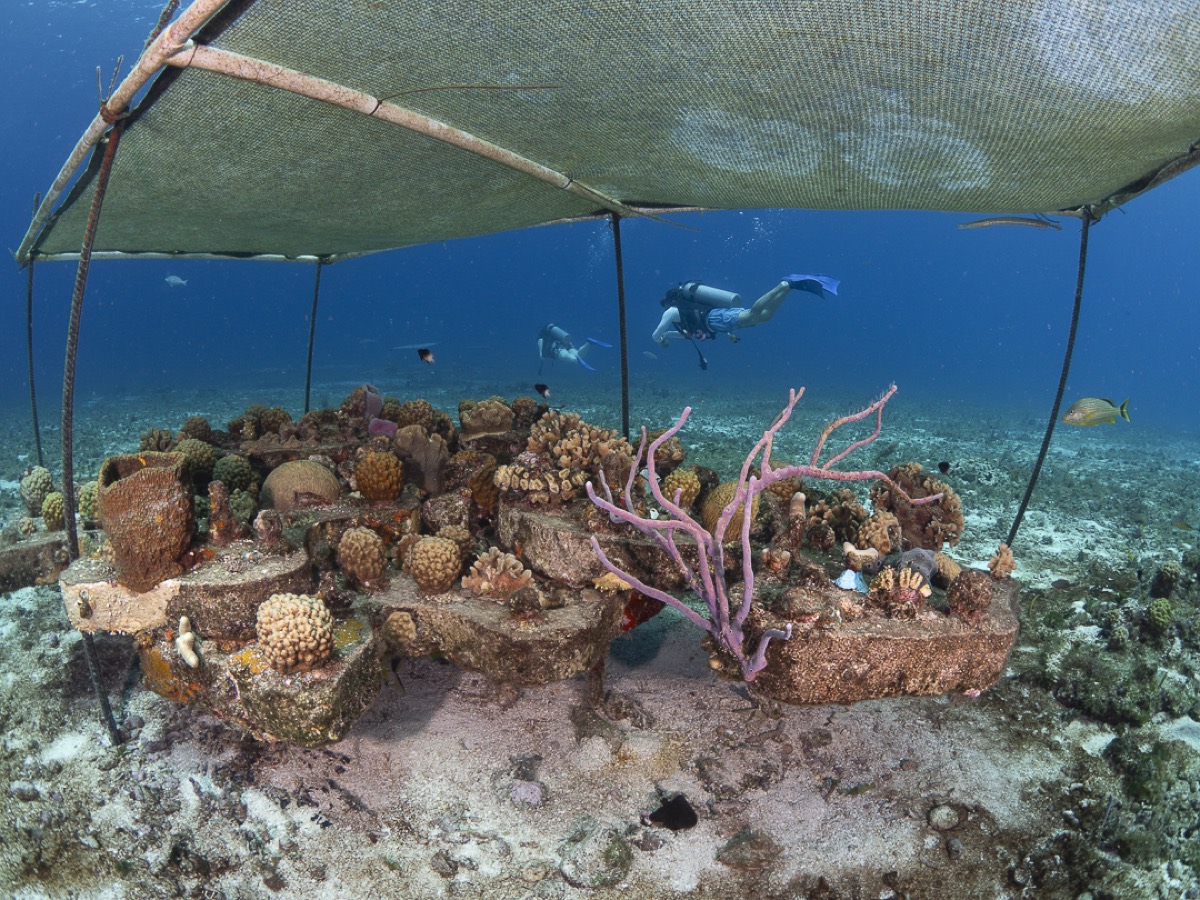
is not a quiet place: fish and invertebrates produce clicks, grunts and other sounds in it. If the life returns, perhaps the sound returns with it. A healthy reef, a damaged reef and restored reefs were recorded in parallel. What could be heard?
The restored reefs sounded like the healthy one. The damaged reef had been harmed by , and the restored ones had been under restoration for one to three years. In of kinds of animal sound, the restored reefs resembled the healthy reef more than the damaged one. But not every of a recording distinguished the states, so listening adds information only if you choose carefully what to measure.
Reef restoration is sometimes measured by how much coral has grown back. But a functioning reef is also a home for animals that make sound and draw further creatures to it.
The researchers recorded healthy, damaged and restored reefs at the same time. The variety of biological sounds was higher in the healthy and restored reefs than in the damaged ones.
In the computational tests one of the complexity measures gave a similar picture at low frequencies, while a loudness measure did not distinguish the states. One number is no substitute for detailed listening.
The work proposes acoustic monitoring as a further tool for assessing restoration. To generalize to other oceans and longer periods, the measurements have to be repeated at many sites.
wat. A restored reef can sound alive again, and you have to listen to the kinds of sound rather than only to the volume.
wat wat
Coral cover alone does not show whether the animals and the activity around them have returned to a reef.
How do we know?
Underwater recordings from three reef states were compared by counting sounds and by computational measures of loudness and complexity.
What is still unknown
This is one restoration site, and the acoustic measures did not always agree. Not every loud sound indicates a healthy reef.
Learn something?
Where to next
 Why does living near water seem to be good for you?sea
 A sand dune starts booming loud enough to hear from far away. Who is playing?sound
 Where in the world do waterspouts actually happen?sea