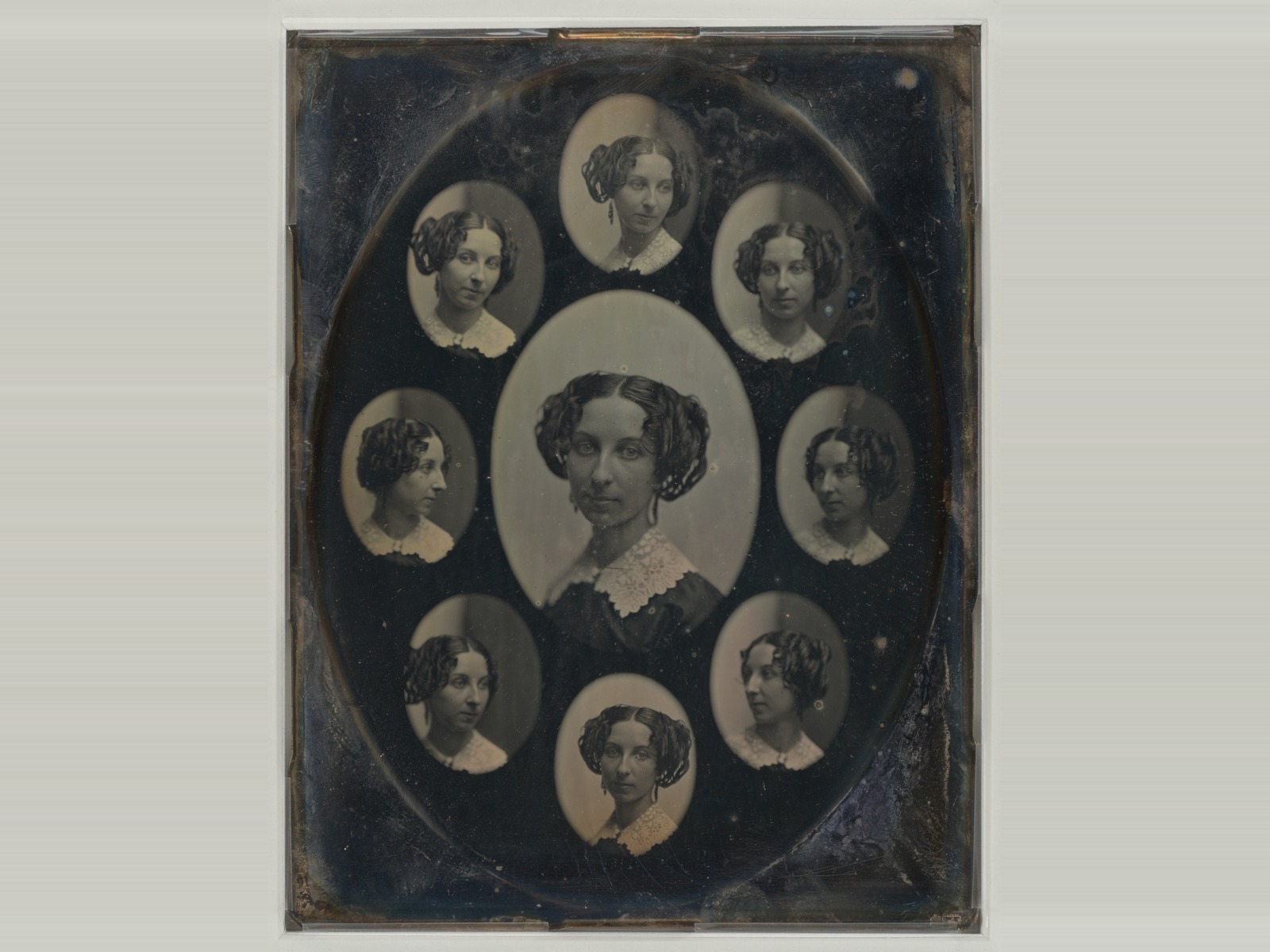
With a , patented by one of the photographers. of Boston used it around 1850 to take eight sequential exposures on one silvered copper plate, producing a medallion portrait of an unidentified woman. Each plate is unique and cannot be reprinted, which is what makes a repeated sitter on one plate so difficult.
The arrangement is deliberate rather than merely economical. The sitter’s face is placed in a cycle that suggests the phases of the moon, from new to full, an effect the photographers accentuated with a carefully bisected black and white background. One exposure gives a portrait. Eight in a ring give a figure moving through time.
Louis Daguerre presented his process to the public in Paris in 1839, and it spread rapidly around the world. Each highly polished silvered copper plate is exposed in a camera obscura and developed in mercury vapors, and what comes out is a . Viewed in proper light it shows extraordinary detail and a three-dimensionality that later processes lost.
Uniqueness is also a limitation. There is no negative, so nothing can be reprinted, enlarged or repeated afterward. Anything you want more than once has to happen inside the camera, on the single plate in front of you, which is the constraint this object was built around.
The Boston partnership of Southworth and Hawes produced the finest portrait daguerreotypes in America, for a clientele including leading political, intellectual and artistic figures. For this medallion portrait of an unidentified woman, made around 1850, they used a sliding plateholder that Southworth had patented, taking eight sequential exposures on the same plate. The museum calls it a rare example of a difficult technique.
The arrangement does something the technique alone does not require. The sitter’s face is set in a cycle that suggests the phases of the moon from new to full, an effect accentuated by a carefully bisected black and white background. One caution: that reading is the museum’s, offered as what the arrangement suggests. The object itself is titled as nine oval views, while the entry describes eight sequential exposures.
wat. Eight exposures on one plate, arranged so a face waxes and wanes like the moon.
wat wat
The uniqueness of the plate is the whole constraint. Because there is no negative, anything repeated has to be repeated at the moment of exposure, in the camera, on the one piece of metal you have.
How do we know?
The Metropolitan Museum’s catalogue entry for object 39.22.4 describes the daguerreotype process, the Southworth and Hawes partnership, the patented sliding plateholder, and the lunar arrangement of the images.
What is still unknown
A museum catalogue entry describing one object. The reading of the arrangement as lunar phases is the museum’s interpretation, offered as what the cyclical arrangement suggests rather than as a documented intention.
Learn something?
Where to next
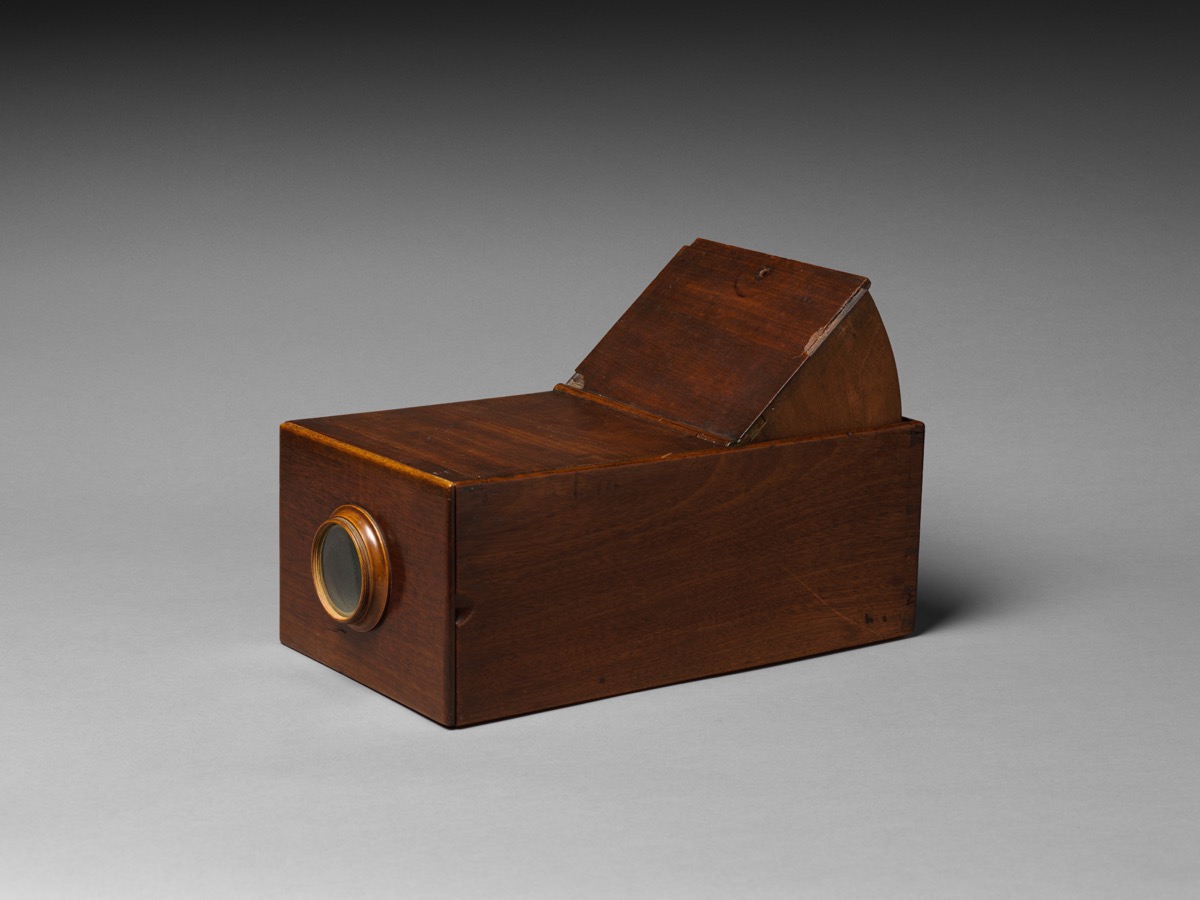 Who was looking at photographic images before photography existed?photography
 Why did jumping backwards change the high jump?technique
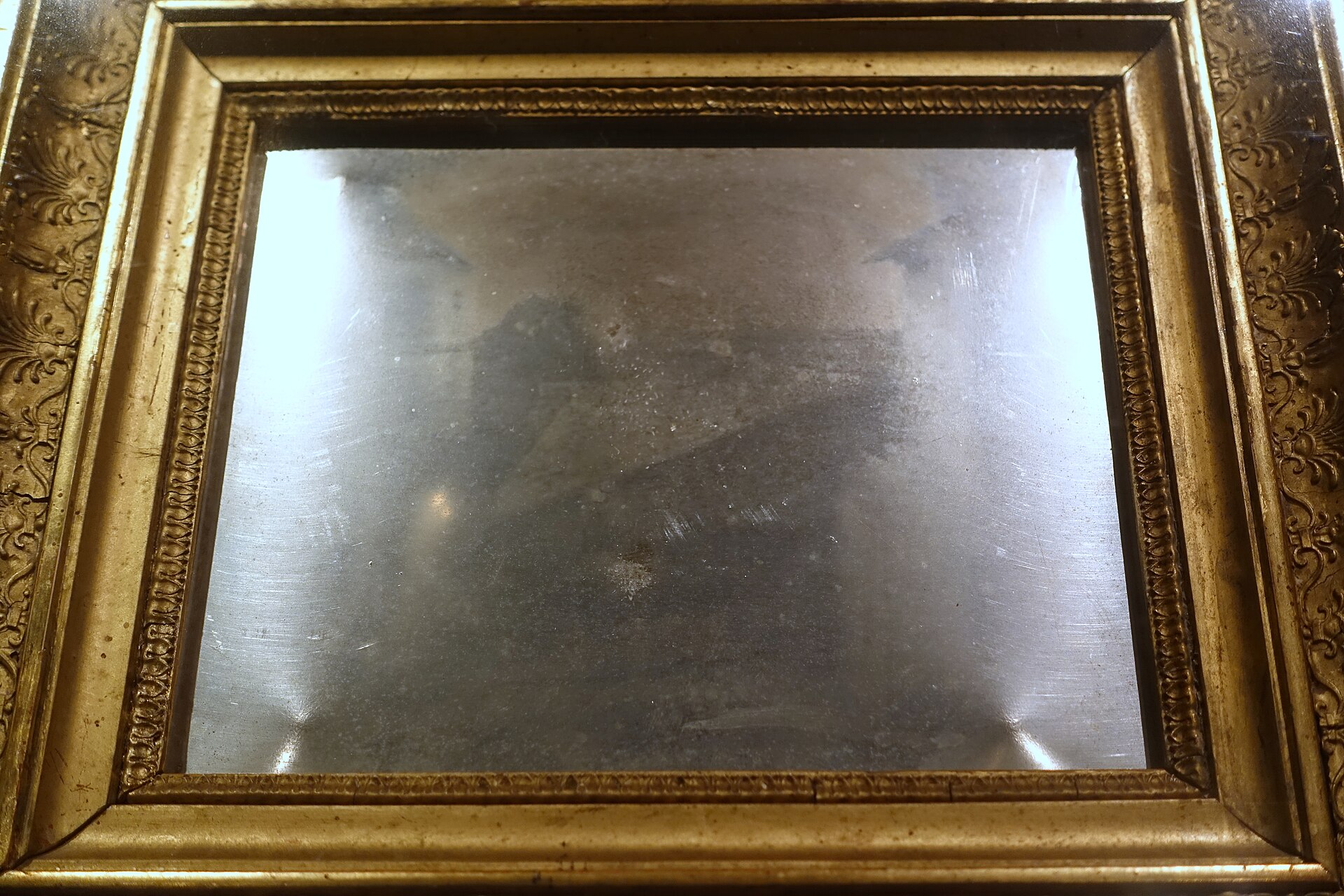 How long did the first photograph take to expose?photography