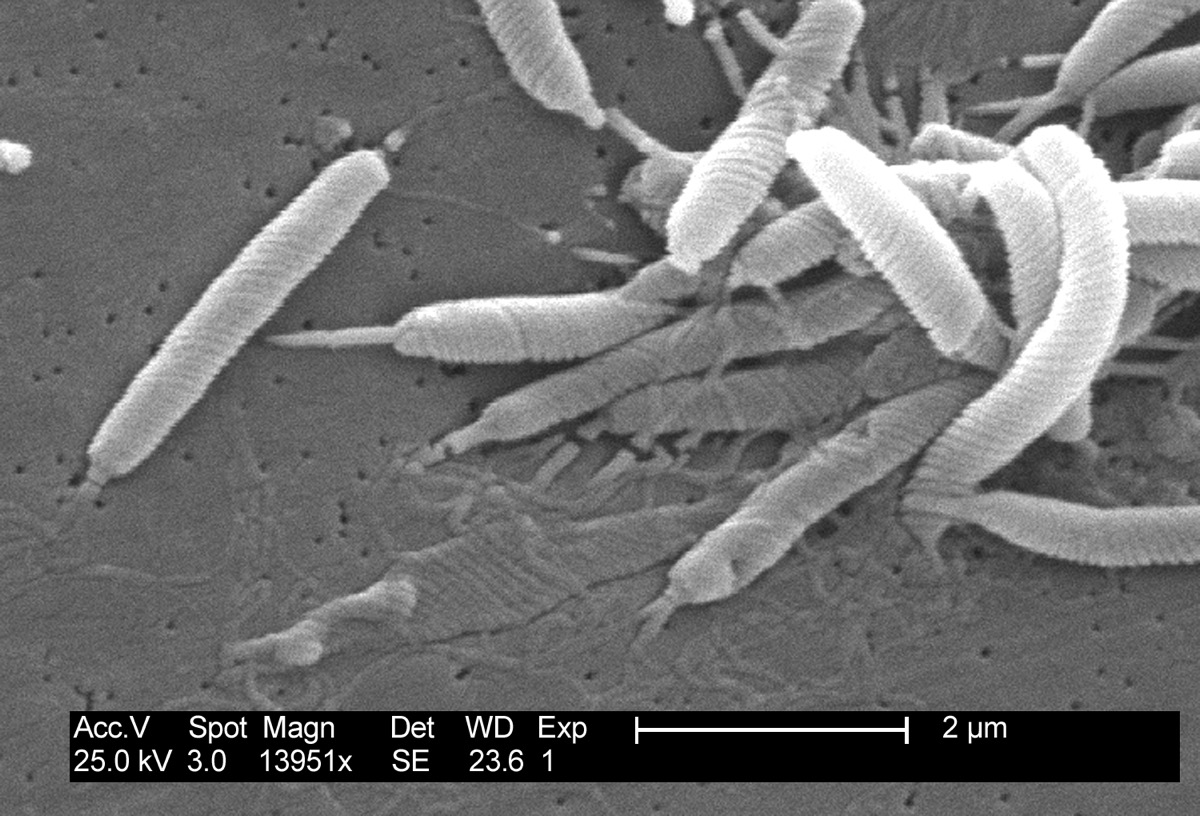
Stomach acid was assumed to sterilize the stomach, so bacteria living there was close to unthinkable. Ulcers were therefore explained by acid and stress. Two Australian doctors took biopsies from intact in 100 consecutive patients coming for gastroscopy and looked at what was on the slides. The paper that came out of it runs to a few hundred words. What did they see?
Spiral or , in 58 of the 100 patients. Bacilli cultured from 11 of those biopsies were gram-negative, flagellate and , and appeared to be a new species related to the genus . The bacteria were present in almost all the patients with active chronic gastritis, duodenal ulcer or gastric ulcer. The authors suggested they may be an important factor in the cause of these diseases.
The stomach was supposed to be sterile. Acid strong enough to digest meat was assumed to sterilize anything that arrived, which made persistent bacterial colonization there close to unthinkable, and left ulcers to be explained by acid, diet and stress. That assumption is what this short paper ran into.
Biopsy specimens were taken from intact areas of antral mucosa in 100 consecutive consenting patients presenting for gastroscopy. Taking them from intact lining rather than from the ulcer matters, because an organism found inside a crater might simply be living in damaged tissue.
Spiral or curved bacilli were shown in specimens from 58 patients. Bacilli cultured from 11 biopsies were gram-negative, flagellate and microaerophilic, and appeared to be a new species related to the genus Campylobacter. The microaerophilic part explains why earlier attempts at culture had failed: the organism needs low oxygen, and standard conditions do not supply it.
The bacteria were present in almost all patients with active chronic gastritis, duodenal ulcer or gastric ulcer, and the authors wrote that they may therefore be an important factor in the cause of these diseases. That is the language of an association, correctly, because a descriptive series of 100 patients with no control group and no treatment cannot establish cause. What followed, including one of the authors deliberately infecting himself, is what settled it.
wat. Curved bacteria turned up in fifty-eight of a hundred stomachs, and in almost every patient who had gastritis or an ulcer.
wat wat
It turned ulcer disease from a chronic condition managed with acid suppression into an infection treatable with antibiotics. Few single papers have changed what happens to that many patients.
How do we know?
Marshall and Warren took biopsy specimens from intact areas of antral mucosa in 100 consecutive consenting patients presenting for gastroscopy, then cultured the organism from a subset of those biopsies.
What is still unknown
A descriptive study of 100 consecutive patients with no control group and no treatment. Presence in almost all ulcer patients is an association, which is why the authors wrote that the bacteria may be an important factor rather than claiming cause.
Learn something?
Where to next
 How many bacteria are there really in your body per human cell?bacteria
 The food hit the floor and you grabbed it. Do five seconds really save it?bacteria
 Why do bacteria hold on better to a paper note than a plastic one?bacteria