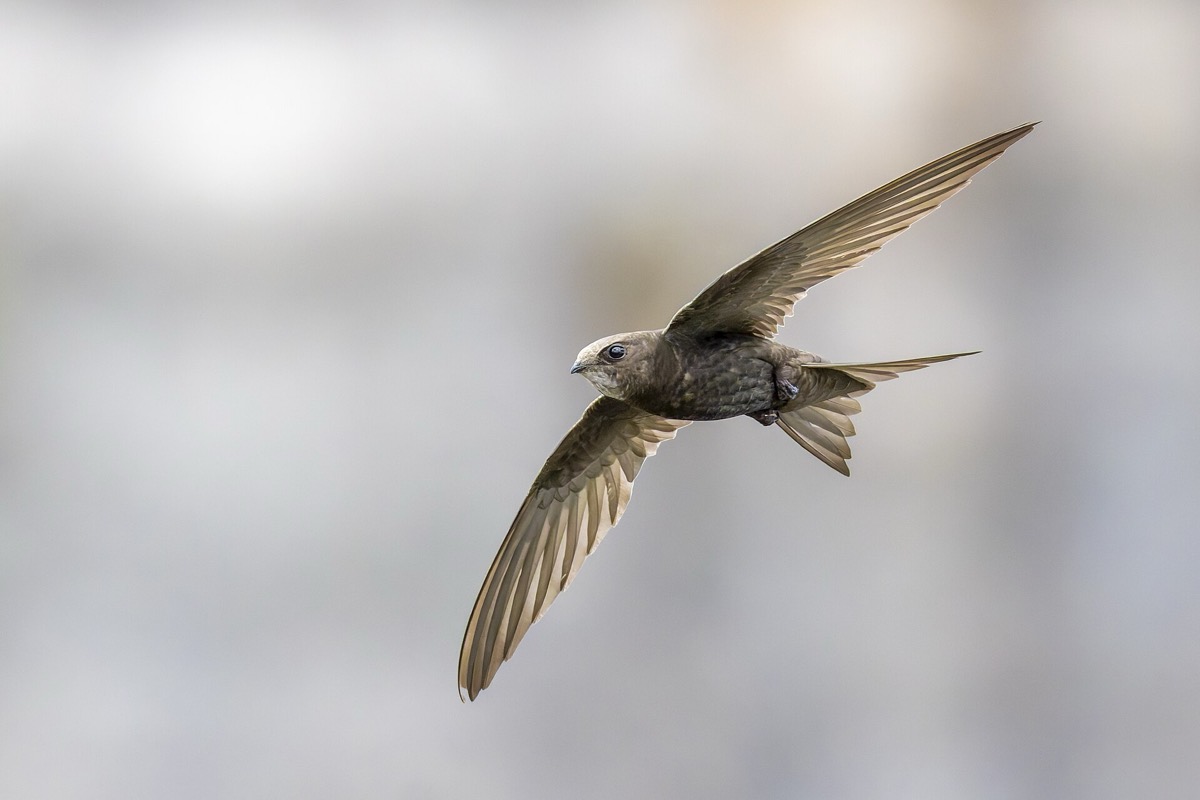
The common swift catches food and nest material in flight, which led scientists to suspect it stays airborne through its whole non-breeding period, migration into sub-Saharan Africa included. Winter sightings are scarce and no roost has ever been found there. Suspicion is not measurement.
More than 99 percent of the ten-month non-breeding period, with some individuals never settling at all. Loggers carried by the birds recorded flight activity and location, and while brief events of occurred in most individuals, the airborne fraction leaves no room for a nightly roost.
The common swift is adapted to an aerial lifestyle, capturing food and nest material in the air. Observations prompted the hypothesis that it stays airborne for its entire non-breeding period, migration into sub-Saharan Africa included, and no roost site has ever been found there.
Its relatives behave differently, which is what keeps the question open. The North American chimney swift and Vaux’s swift regularly settle to roost in chimneys and buildings during migration and winter. Among common swifts it is mainly juveniles that roost in trees or buildings before autumn migration, in bad weather.
So the birds were fitted with micro data loggers, an for flight activity across two years and a light-level sensor for in the second. The result is that swifts are airborne for more than 99 percent of their ten-month non-breeding period, with some individuals never settling, while occasional events of flight inactivity occurred in most.
Two further patterns came out. Apparent flight activity was lower in daytime than at night, most likely because of prolonged gliding while soaring in thermals, and seen previously in summer occur all year. The implications are physiological, including the need to sleep while airborne.
wat. Common swifts were airborne for more than 99 percent of ten months, and some never came down.
wat wat
An animal that does not land for most of the year has to solve sleep, moult and rest on the wing, which sets the outer limit of what a body can do in flight.
How do we know?
Hedenström and colleagues fitted common swifts with a micro data logger carrying an accelerometer to record flight activity, and in the second year a light-level sensor for geolocation.
What is still unknown
A small number of tagged individuals, with flight activity inferred from an accelerometer rather than watched directly.
Learn something?
Where to next
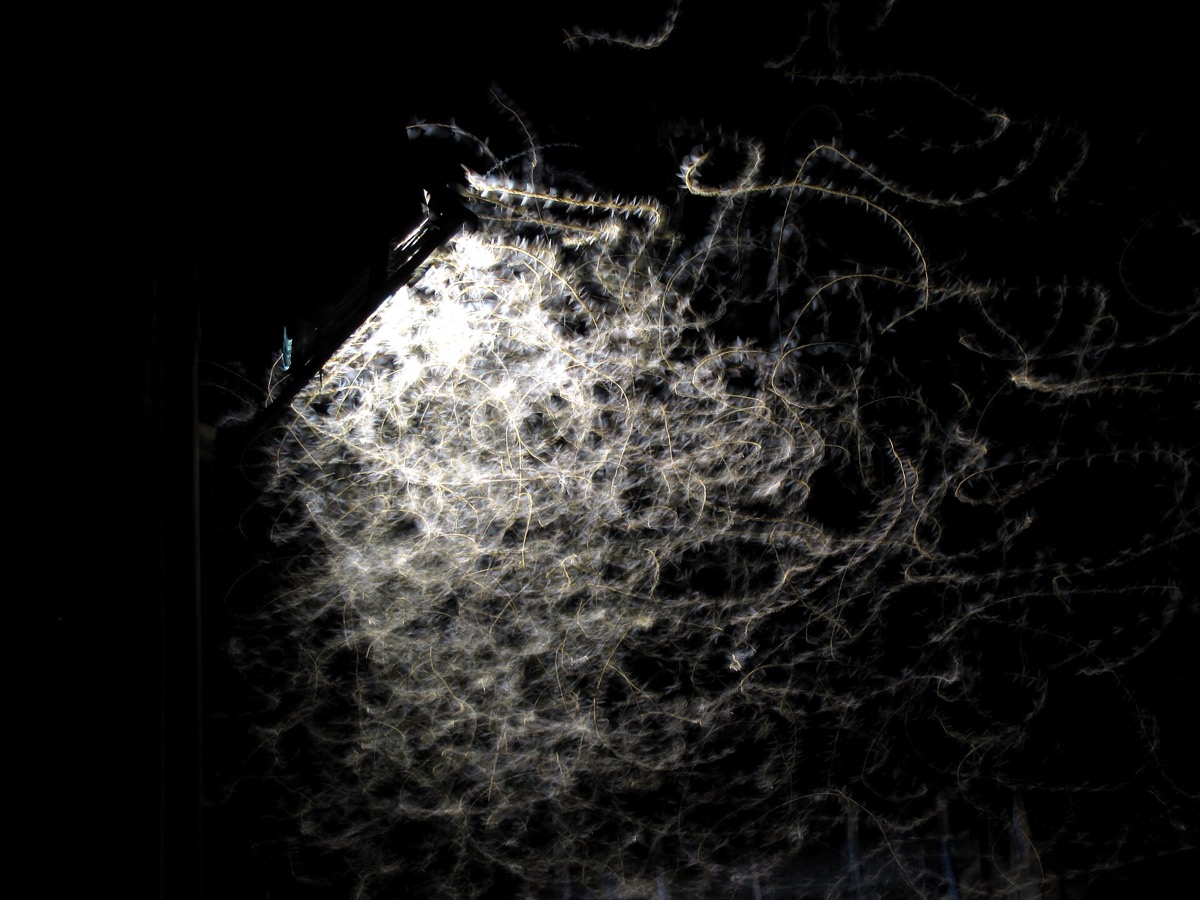 A moth circles a lamp and then dives. Is it really drawn to the light?flight
 How can a cloud hang motionless over a mountain in a gale?flight
 Do migrating birds actually see the magnetic field?migration