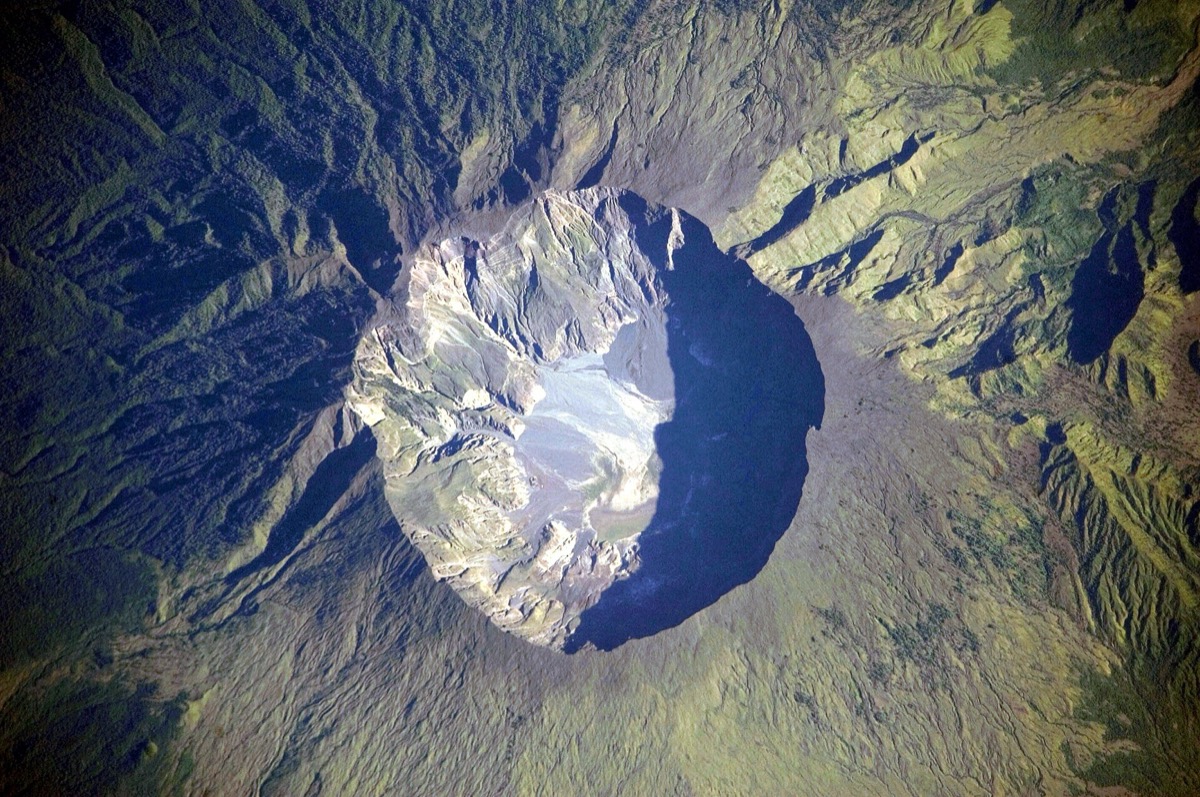
The decade from 1810 to 1819 is probably the coldest in five hundred years or more, and it contains in 1816. The explanation has been the Tambora eruption of 1815. That leaves a problem of timing, because the early years of the decade were already cold before Tambora erupted. So polar snow was examined for the chemical signature of volcanic sulfur.
A second eruption, in 1809, that nobody recorded. is a signature unique to volcanic sulfuric acid produced in the stratosphere and preserved in polar snow. That signature, with the precise timing of the deposition in , shows another large eruption in 1809, also stratospheric and in the tropics. Tambora and this undocumented eruption together account for the cold decade.
Climate records indicate that the decade from 1810 to 1819, which includes the year without a summer in 1816, is probably the coldest during the past five hundred years or longer. The cause has been attributed primarily to the cataclysmic Tambora eruption in Indonesia in 1815.
That attribution has an awkward gap in it. The cold temperatures in the early part of the decade arrived before Tambora erupted, and the timing of the eruption therefore calls into question how much of the decade volcanoes can really account for. Either volcanic cooling is weaker than supposed, or something is missing from the record.
The evidence that settles it comes from polar snow. Sulfur isotope anomaly is a unique indicator of volcanic sulfuric acid produced in the stratosphere, and it is preserved in the snow along with a datable deposition layer. Combined with the precise timing of volcanic deposition in both polar regions, it identifies another large eruption in 1809 that was also stratospheric and occurred in the tropics.
The Tambora eruption and this undocumented 1809 eruption are together responsible for the unusually cold decade. Note what the method can and cannot give. It establishes that a large tropical stratospheric eruption happened in 1809 and left sulfate at both poles, and it does not identify the volcano, which remains unknown.
wat. The coldest decade in five centuries needed two eruptions, and the first one left no record except its sulfur in polar snow.
wat wat
It repairs the chronology rather than the physics. Volcanic cooling was never in doubt; what did not fit was a decade turning cold years before the eruption blamed for it, and the missing eruption closes that gap.
How do we know?
Cole-Dai and colleagues used the sulfur isotope anomaly in polar snow, an indicator specific to stratospheric volcanic sulfuric acid, along with the precise timing of volcanic deposition in both polar regions.
What is still unknown
The 1809 eruption is identified from its chemical deposit alone, so its location is constrained to the tropics and the volcano itself remains unidentified. Attribution of a decade of climate to two eruptions is an inference from the ice record.
Learn something?
Where to next
 If trees cancel almost half the urban heat effect, why does the thermometer barely move?climate
 Does the Amazon still absorb more carbon than it releases?climate
 What comes out of the frozen ground of the north when it thaws?climate