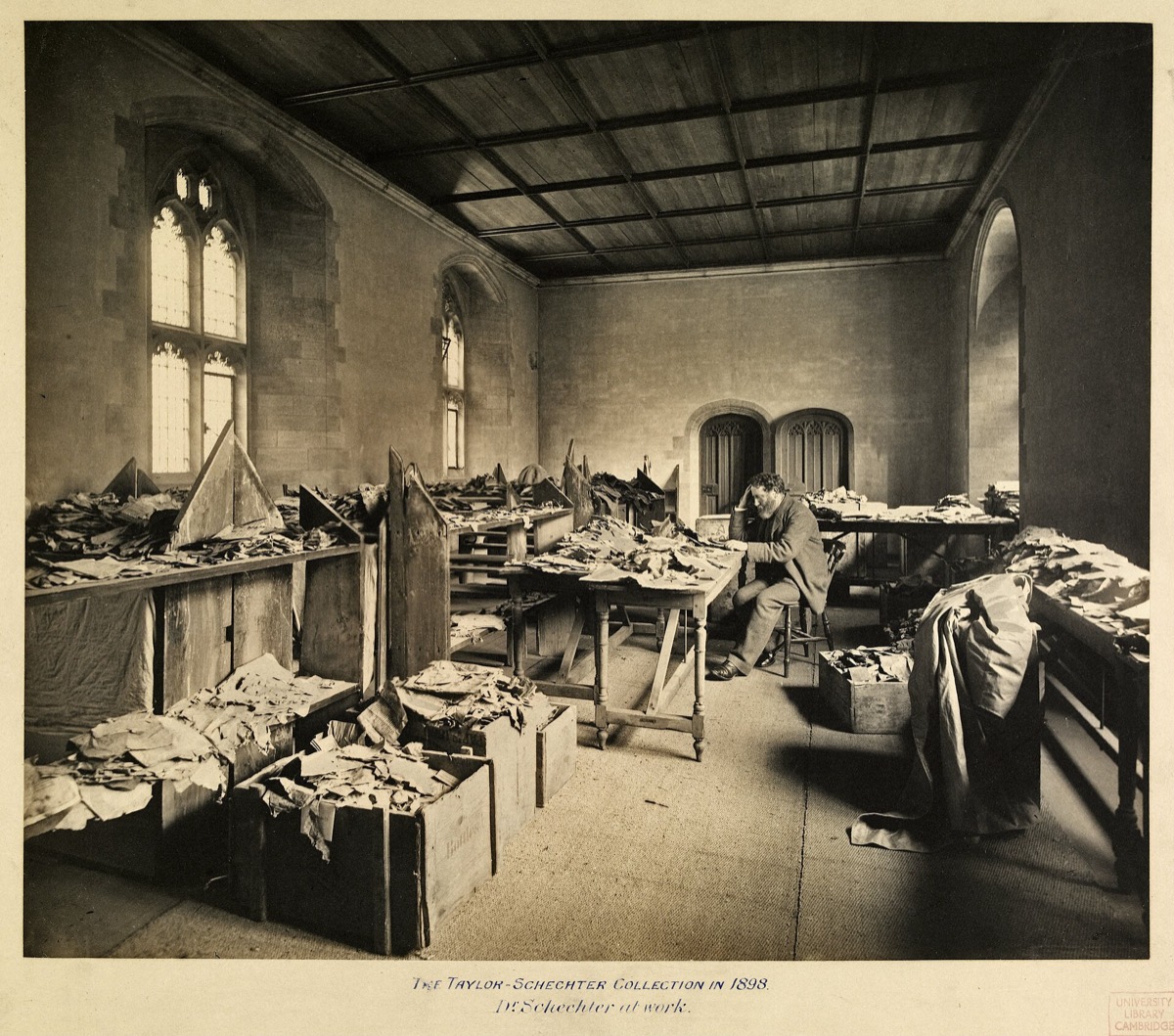
In the of the Ben Ezra Synagogue in Fustat, no paper bearing Hebrew script or sacred content was ever thrown away, so hundreds of thousands of fragments accumulated there over centuries. But people wrote in Hebrew letters about things that are not sacred at all. What else was in the pile?
Ordinary life, in enormous quantity. in Cambridge holds some 200,000 medieval fragments. Alongside sacred writings there are documents of : letters, trade lists, legal documents and medical material, which make it possible to see how people worked, traveled, bought and cared for a family.
The mechanism that created this treasure is religious rather than archival. A text bearing the name of God may not be discarded, and the practice widened to any Hebrew writing. For about a thousand years every written scrap went into one room instead of the rubbish.
Nobody sorted and nobody selected, and the dry climate did the rest. The result is an archive of some two hundred thousand fragments created with no intention to document, which is exactly why it is so useful.
What is in there is the layer that almost never survives. Alongside sacred writings there are shopping lists, marriage contracts, letters from merchants who traded as far as India, complaints, debts and medical prescriptions. Official archives tell you about rulers, and here people speak.
Working on the collection demands patience: torn fragments, faded handwriting, and sometimes two sides of the same page sitting in libraries on different continents. And like any archive, this one is not : it describes one community in Fustat, and mainly those who could write.
wat. About 2,000 fragments from the Cairo genizah relate to medicine, inside a collection of some 200,000 fragments.
wat wat
Most ancient archives concentrate on rulers and institutions. The genizah adds the voices of merchants, students, family members and people writing to themselves.
How do we know?
Researchers catalogue, photograph and compare the fragments in the Cambridge collections and in other libraries. The content is examined by reading, dating, identifying handwriting and matching fragments that belonged to the same page.
What is still unknown
This is a collection created inside one particular community, and the documents that survived are not a representative sample of all the inhabitants of Egypt or of all medieval Jews. What survived is what somebody kept.
Learn something?
Where to next
 What was actually secret about the Vatican Secret Archives?history
 Who wrote down a star exploding almost a thousand years ago?history
 How did a blue stone in a nun’s teeth change what we knew about manuscripts?manuscripts