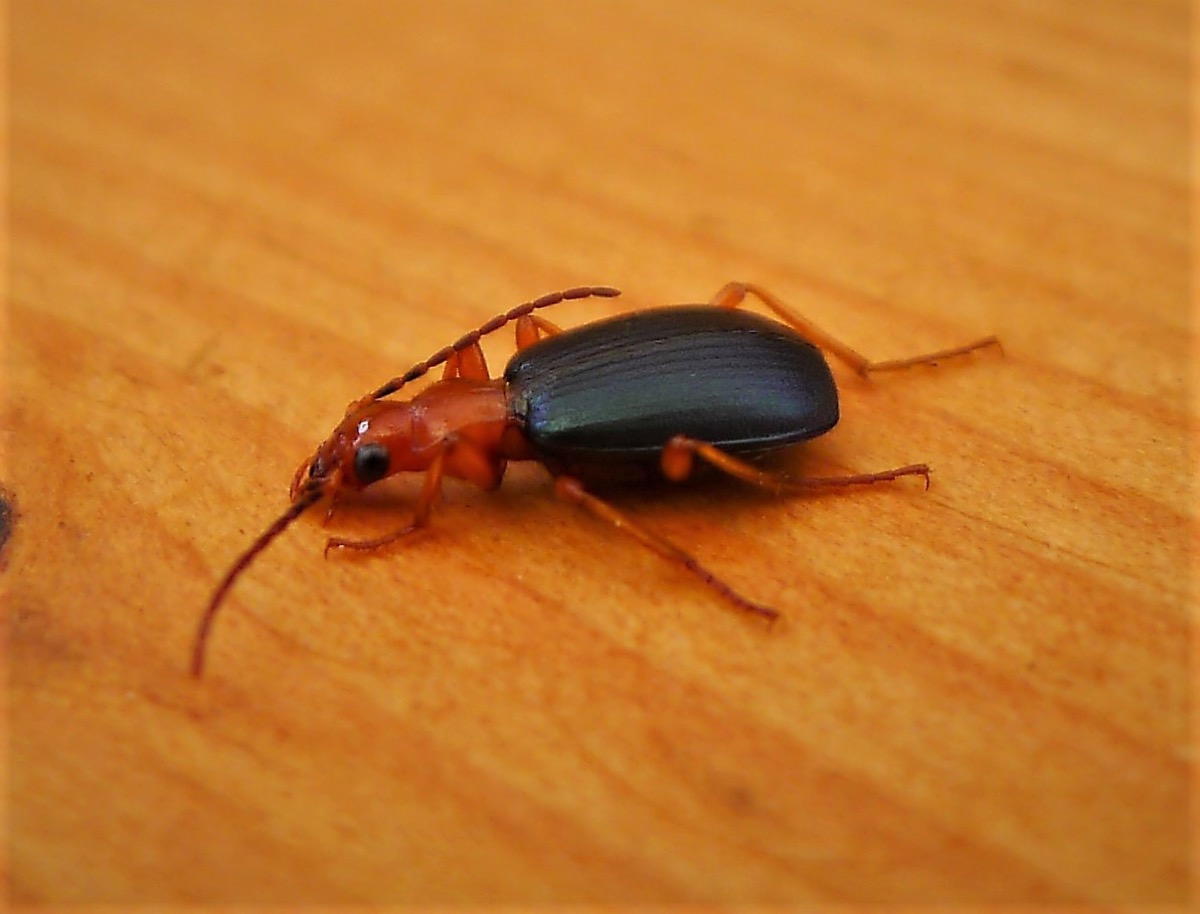
The stores two chemicals in separate glands in its abdomen, and as long as they stay apart nothing happens. When it is attacked, a muscle pushes them into a rigid reaction chamber holding the that catalyse the reaction. What happens in there?
is the whole secret. The reaction releases a great deal of heat, the pressure in the chamber climbs sharply, and the near-boiling liquid is fired out in fast, aimed at close to a hundred degrees Celsius. High-speed filming showed this is not one jet but hundreds of short bursts a second, from a valve that opens and shuts again and again, which is what allows high pressure without cooking the beetle.
The problem this animal solves is an engineering one, not a chemical one. The reaction itself is fairly simple, and the difficulty is keeping the chemicals inside a living body without harming it, and then releasing them at exactly the right moment.
The solution is separation. Two chemicals sit in one reservoir without reacting with each other, and the enzyme that catalyses the reaction sits apart, in a rigid chamber. As long as they do not meet, nothing happens.
When the beetle is attacked, a muscle pushes the chemicals into the reaction chamber. There the reaction runs fast, releases a great deal of heat, and the pressure leaps. The liquid is fired out at close to a hundred degrees, in a direction the animal chooses with a mobile abdomen tip.
The detail revealed by high-speed filming is that this is not one jet but hundreds of short bursts a second, produced by a valve opening and shutting repeatedly. That is what allows high pressure without heating the beetle itself, and exactly why the mechanism inspires industrial spray systems. It has been described in detail in one or two species, and there may be differences across the family.
wat. The liquid the beetle fires comes out near boiling, in fast and well-aimed pulses.
wat wat
The mechanism is an inspiration for engineering industrial spray and control systems that need precise command of the pressure and timing of a chemical reaction.
How do we know?
Researchers filmed the process with very high-speed cameras and analyzed the chemistry inside the reaction chamber, to work out how the pressure driving the discharge builds.
What is still unknown
It has been described in detail in one or two species of bombardier beetle, and there may be differences across the family that nobody has examined closely.
Learn something?
Where to next
 How does a shrimp break a shell underwater?biomechanics
 What is hagfish slime actually for?biomechanics
 What is a cat's tongue actually doing when it grooms?biomechanics