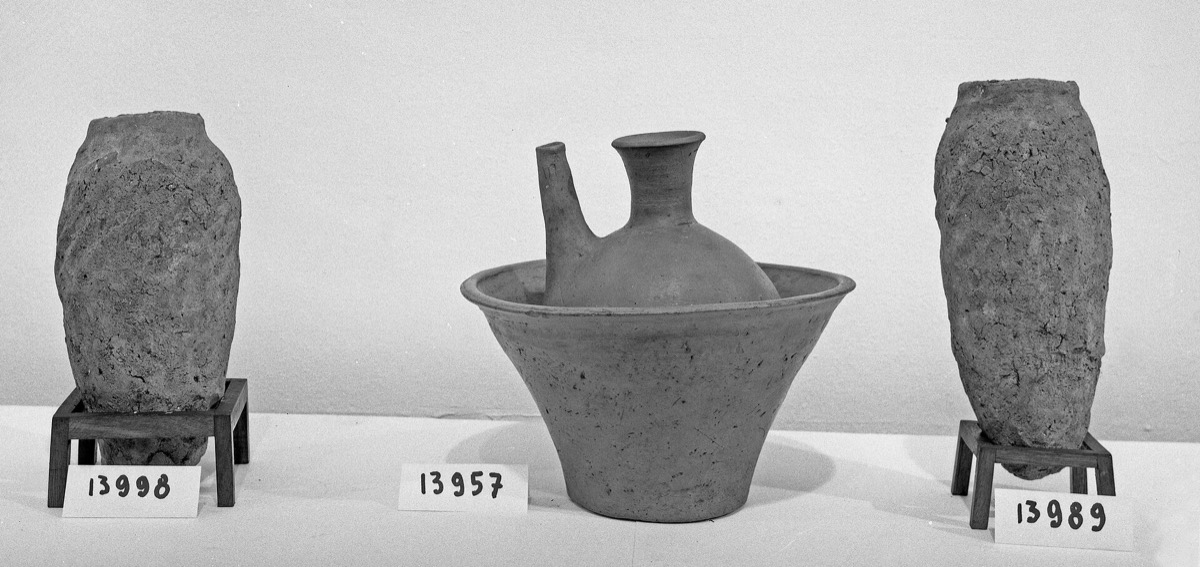
Brewing is hard to identify archaeologically without pictures or distinctive vessels, and molecular methods run into problems of preservation and specificity. Brewing does leave a hard residue on the vessel, a calcium oxalate deposit called . Researchers ran shotgun on modern beerstone to see what it holds. Could this mark ancient beer?
It holds proteins from both sides of brewing. The analysis identified proteins matching barley and brewer’s yeast, including hordeins, lipid transfer proteins, trypsin and amylase inhibitors and protein Z, all familiar from proteomic work on beer. Beerstone preserves only part of the proteome, and what it keeps reflects the finished beer more than the earlier stages.
Beer matters to archaeology out of proportion to the drink, because identifying it speaks to agriculture, feasting, labor, tribute and social structure. It is also unusually hard to find, since brewing leaves no distinctive tool and no image in most contexts.
Molecular approaches have their own limits of preservation and specificity. So the target here is the residue brewing leaves behind: beerstone, a calcium oxalate deposit that forms on vessels during production and is tough enough to survive.
The team ran shotgun proteomics on modern beerstone and compared the result with protein profiles of ungerminated and germinated barley, which is how would be detected. Proteins matching barley and brewer’s yeast turned up, among them hordeins, lipid transfer proteins, trypsin and amylase inhibitors and protein Z.
Two caveats are built into the finding. Beerstone preserves only a subset of the proteome, and what it does preserve reflects the final product more than the earlier stages of brewing. And this is a on modern material, so the method looks possible rather than proven on anything excavated.
wat. Modern beerstone holds proteins from barley and yeast, and nobody has yet shown the same marks survive in an ancient jar.
wat wat
Identifying several proteins together is a stronger claim than a mineral deposit on its own, which is what archaeologists have mostly had to work with.
How do we know?
Paskulin and colleagues applied shotgun proteomics to a sample of modern beerstone, and compared the proteome against protein profiles of ungerminated and germinated barley to find markers of malting.
What is still unknown
This is a feasibility test on modern material. The study did not identify beer in any ancient vessel, and whether these proteins survive centuries, and can be told apart from other foods, still needs testing.
Learn something?
Where to next
 How do we know Iron Age salt miners knew blue cheese and beer?beer
 Why is a radiocarbon date not a date?method
 Does drinking beer make mosquitoes more interested in you?beer