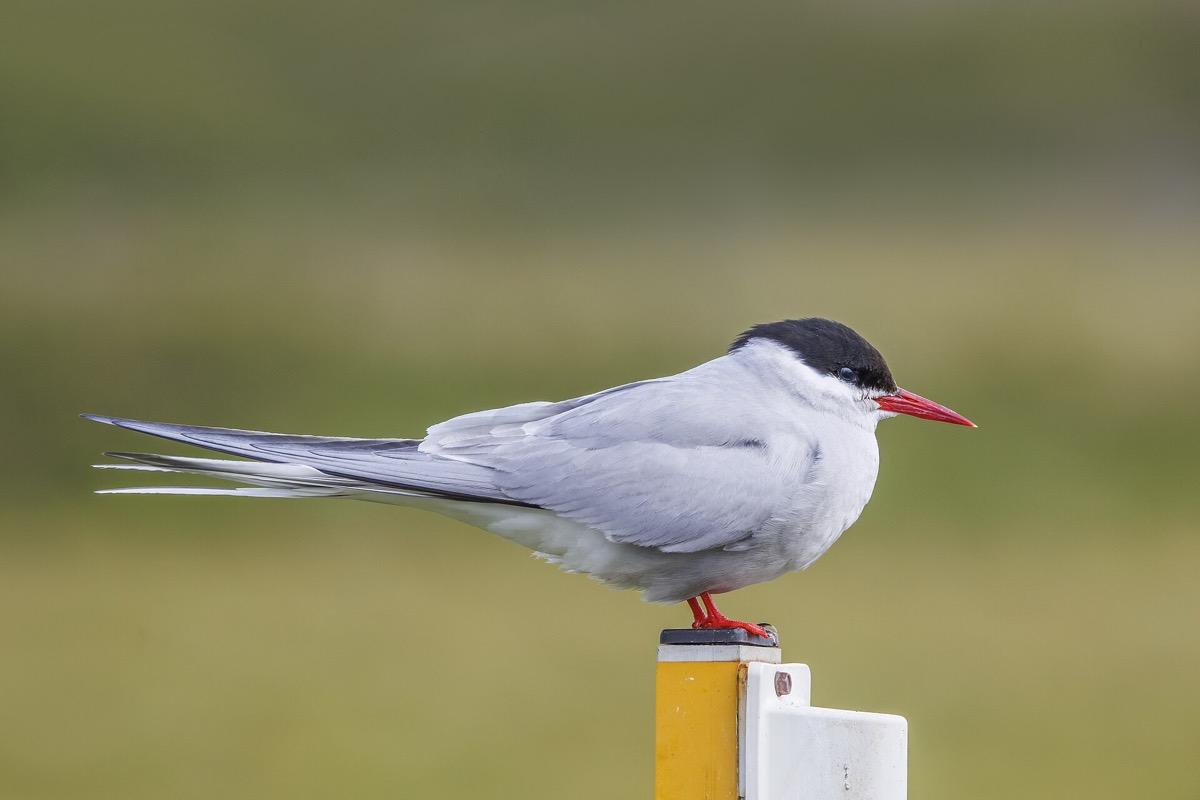
The nests in the far north and winters near Antarctica, and for years the length of that trip was estimated from scattered sightings. Then tiny tracking devices were tied to the birds, and the birds were caught again a year later. What was the real route?
Not a straight line at all. The terns detour in wide arcs over the ocean to make use of steady wind systems, so the total annual distance came out far larger than any earlier estimate. They are not taking a shortcut; they are saving energy, and the longer route is the cheaper one. It is the longest migration known in the animal world.
Before the tiny devices arrived, everything known about a small bird’s migration was assembled from scattered sightings: somebody saw one here, somebody ringed one there. A route was estimated from that, and it was necessarily a line joining dots.
The technical solution is elegant precisely because it gives up on communication. The only writes down light, and so it weighs less than a gram. The catch is that you have to catch that same bird again a year later, at its nest, to read the data off it.
What came out is that the route is not a straight line in the least. The terns swing out in wide arcs over the ocean to take advantage of wind systems, and so the total annual distance came out far larger than any previous estimate. They are not shortening the way; they are .
Two conclusions follow. The first is about the bird: this is the longest migration known in the animal world, and it is made between two summers, which means the bird lives almost permanently in daylight. The second is about the method: these devices changed what is known about migration in general. And it bears remembering the in it: the data come from individuals caught again, which is to say from the ones that survived and returned.
wat. They do not fly in a straight line but in wide arcs, so as to ride wind systems along the way.
wat wat
These devices changed what is known about migration generally, because for the first time a small bird could be followed through a whole year.
How do we know?
A geolocator, light enough for a bird to carry, was tied to each one’s leg, recorded light data through the year, and was collected again when the birds came back to the nesting site.
What is still unknown
The measurement rests on the individuals that were caught again, which is to say the ones that survived and returned, so it may not represent the population.
Learn something?
Where to next
 Do migrating birds actually see the magnetic field?migration
 What happened to the birds inside the two beams of light over Manhattan?birds
 What decides where billions of migrating birds come down to rest?birds