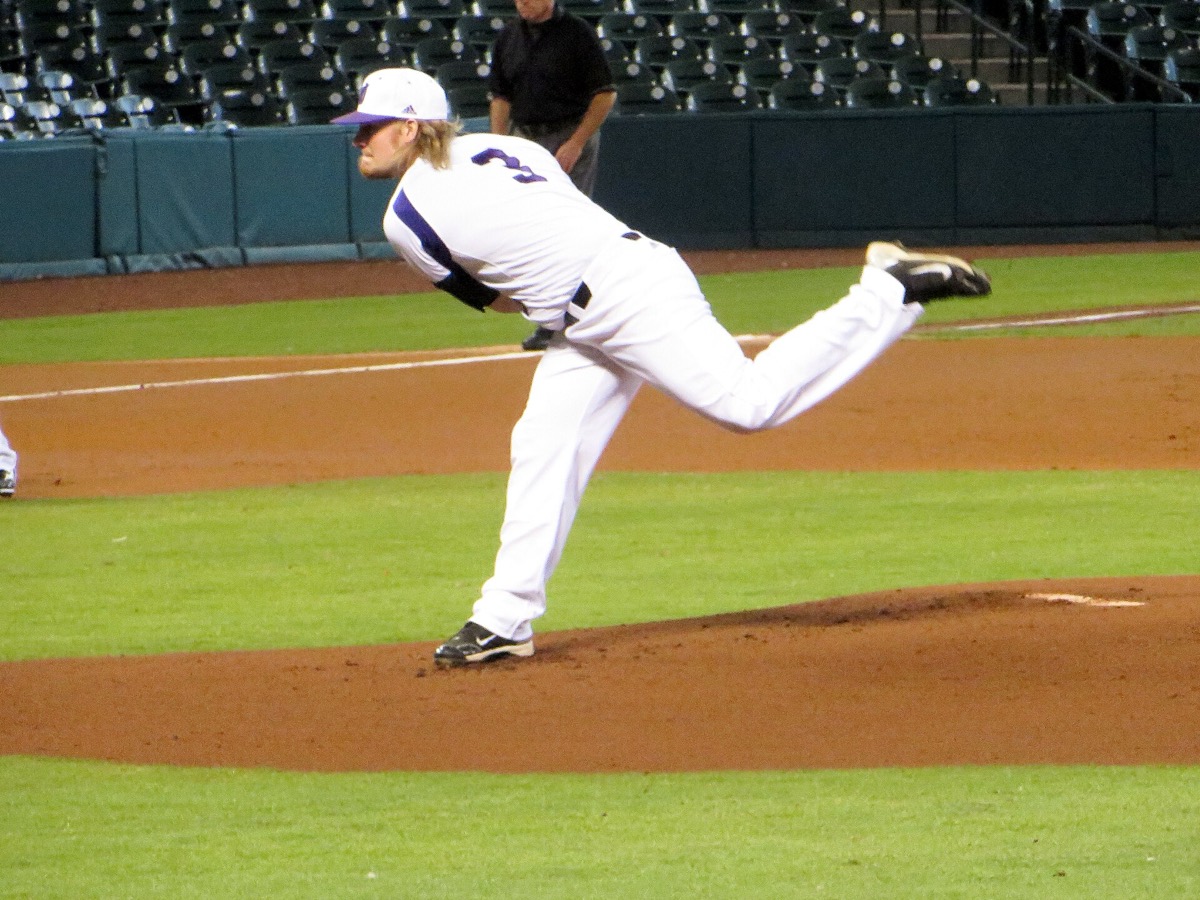
A spinning ball curves because of the , with the lift force acting perpendicular to the axis of rotation. That much is textbook. What it does not tell a pitcher is which combination of spin rate and produces the most break, and that question needs cameras.
The angle between the spin axis and the direction of travel. The correlated closely with spin rate times the sine of that angle, and the Magnus effect was greatest when the angular and translational velocity vectors were perpendicular. As the angle approached zero, the break became smaller.
The aim was to determine the direction of the spin axis and the spin rate of pitched baseballs, estimate the associated aerodynamic forces, and evaluate how axis direction and spin rate affect the trajectory.
The measurement runs at two scales. Trajectories of pitches from both a pitcher and a pitching machine were recorded with four synchronized video cameras at 60 frames per second. and a least-squares polynomial then gave time against displacement for each pitch.
The spin needed something faster. The ball was filmed immediately after release with a high-speed camera at 250 frames per second, and the spin axis direction and spin rate came from the positional changes of marks on the ball.
The result ties the two together. The lift coefficient correlated closely with spin rate times the sine of the angle between the spin axis and the pitching direction, with a correlation of 0.860 out of a possible 1. The Magnus effect was greatest when the angular and translational velocity vectors were perpendicular, and the break became smaller as that angle approached zero.
wat. Spin alone does not curve a ball; spin across the direction of flight does.
wat wat
It separates two things a radar gun cannot: how fast the ball spins, and whether that spin is pointed usefully.
How do we know?
Jinji and Sakurai recorded pitches from a pitcher and a pitching machine with four synchronized cameras and analyzed the trajectories by direct linear transformation. A high-speed camera filmed the ball right after release to compute its spin.
What is still unknown
Trajectories and spin measured in a controlled setting, which is not a game with wind, wear and a batter.
Learn something?
Where to next
 Why did jumping backwards change the high jump?biomechanics
 Does practice in a simulator make you better at the real game?baseball
 How far out of reach is DiMaggio’s hitting streak?baseball