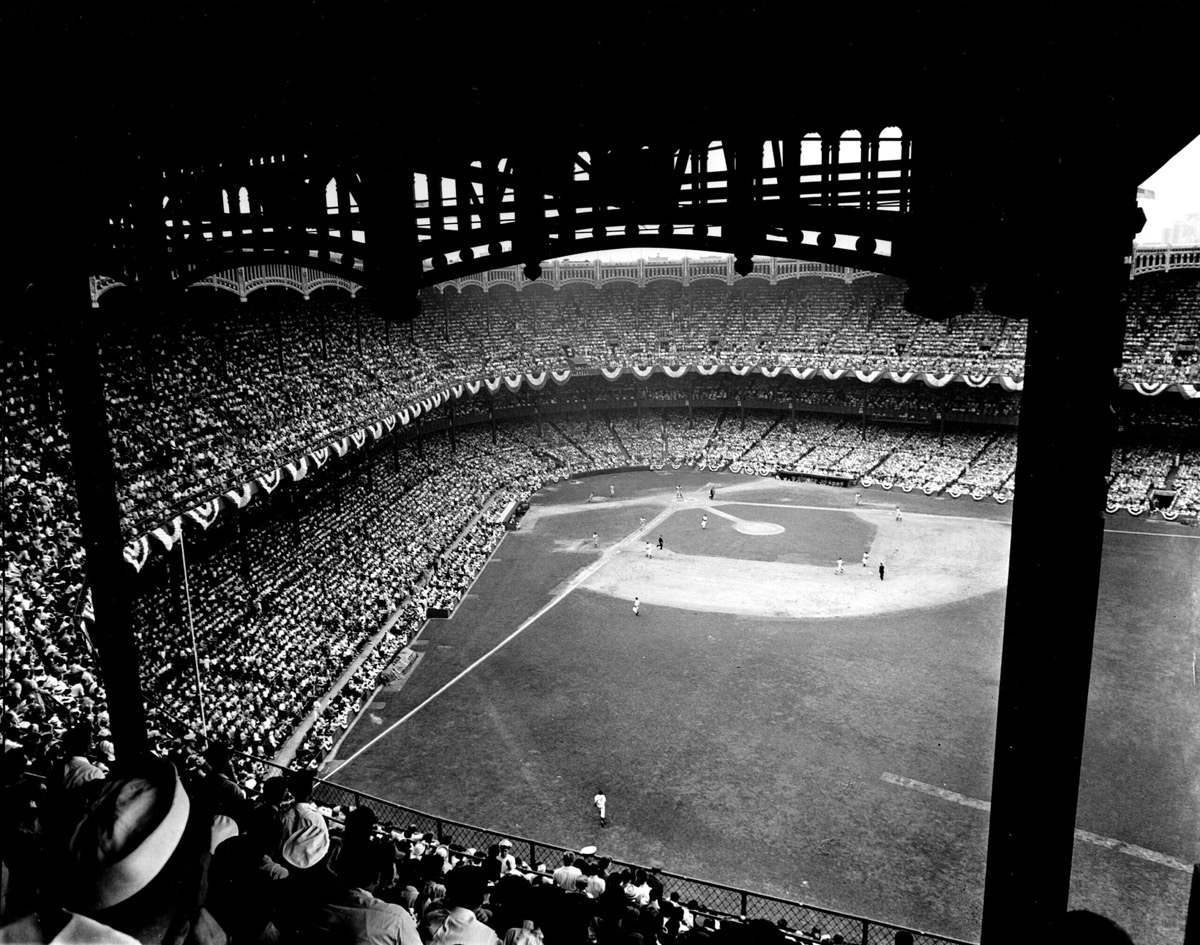
Twelve games clear of everyone else, for eighty-five years. DiMaggio hit safely in fifty-six consecutive games between the middle of May and the middle of July 1941. The previous record was forty-four games, set in 1897, when did not count as strikes. With the exception of DiMaggio’s streak, no player has hit in more than forty-four consecutive games since.
He had done something similar before reaching the majors. During his 1933 season with the minor league he had a hitting streak of sixty-one consecutive games. Britannica frames the 1941 feat as a consequence of rather than a hot streak, which fits a career that also included leading the American League in batting twice, at .381 and .352.
Joe DiMaggio reached the major leagues in 1936, after the New York Yankees purchased his contract from the minor league San Francisco Seals. He batted .323 in his rookie regular season and .346 against the New York Giants in the World Series. In 1937 he led the American League in home runs and runs scored, and in 1939 and 1940 he led it in batting, at .381 and .352.
Britannica attributes the famous record to that consistency. Early in his career, during the 1933 season with the Seals, he had already put together a hitting streak of sixty-one consecutive games. The major league version came in 1941: in fifty-six consecutive games, from the fifteenth of May to the sixteenth of July.
What makes the number remarkable is the gap around it. The prior record for the longest hitting streak was forty-four games, set in 1897, and at that time foul balls did not count as strikes, which makes the comparison inexact. More tellingly, with the exception of DiMaggio’s streak, no player has hit in more than forty-four consecutive games since.
The rest of his career is nearly as improbable. He had outstanding skill as a fielder, tying the American League fielding record in 1947 with one error in a hundred and forty-one games. He played center field with such languid expertise that some fans mistook it for laziness. Between 1936 and 1951 he helped the Yankees to nine World Series titles, taking three Most Valuable Player awards and missing three seasons to military service. One caution: a biography gives headline figures without the detail of what he faced.
wat. Fifty-six games in 1941, and nobody since has managed more than forty-four.
wat wat
A record is only remarkable relative to what else happens. This one stands not because it is long but because nobody has come within twelve games of it in eight decades.
How do we know?
Britannica’s biography of DiMaggio gives the dates and length of the streak, the previous record and the rule difference behind it, the longest streak by anyone since, and his earlier minor league run.
What is still unknown
An encyclopedia biography, so the figures are the headline ones. It does not report the quality of pitching faced, the number of plate appearances, or the near-misses inside the streak.
Learn something?
Where to next
 What decides how much a pitch breaks?baseball
 Does practice in a simulator make you better at the real game?baseball
 What was the race where the four-minute mile fell?records