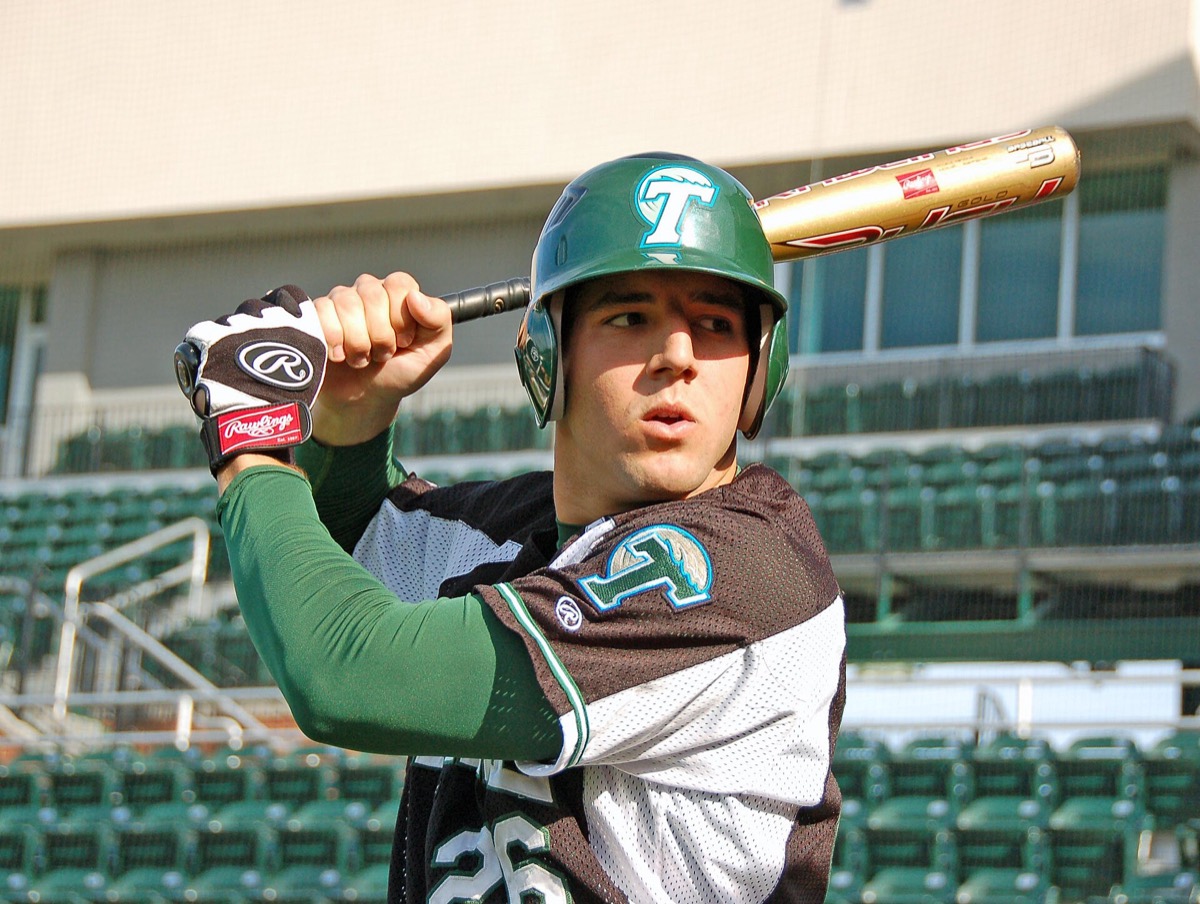
Virtual environments are spreading fast through sports training, and the question underneath them has barely been asked. Getting better inside a simulator is easy to measure and proves nothing by itself. So eighty baseball players were split four ways: hitting training in a virtual environment, extra batting practice in that environment, extra real batting practice, and no additional training. Then they were tested on a real field.
The adaptive virtual group improved most, and it carried over. On the majority of performance measures, the adaptive training group showed significantly greater improvement from before to after training than the other three groups, including on an on-field batting test and a test. Those players also had superior batting statistics in league play the following season, and reached higher levels of competition.
The use of virtual environments for training perceptual-motor skills in sports continues to grow quickly. What has not kept pace is evidence on whether training in a sports simulation to the real task, which is the only question that matters for anybody buying one.
This study investigated the transfer of perceptual-motor skills trained in an adaptive baseball batting virtual environment to real baseball performance. Eighty participants were assigned equally to four groups. They were adaptive hitting training in the virtual environment, extra batting practice in that environment, extra real batting practice, and a control condition with no additional training beyond regular practice.
Training ran as two 45 minute sessions per week for six weeks. Testing before and after covered a batting test inside the virtual environment, an of batting, and a pitch recognition test. League batting statistics in the following season and the highest level of competition reached over the following five years were also analyzed.
For the majority of performance measures, the adaptive virtual training group showed significantly greater improvement than the other groups, which includes the group doing the same amount of extra real batting practice. Players in that group also had superior batting statistics in league play and reached higher levels of competition afterward. Note which parts were randomized: the training and the tests were, while the league statistics and career progression are observational follow-up.
wat. Players trained on an adaptive batting simulator hit better on a real field, and were still outperforming their peers in league play the next season.
wat wat
Transfer is the whole point and it is almost never measured. The comparison that matters here is not simulator against nothing, but adaptive simulator training against the same amount of real batting practice.
How do we know?
Gray assigned eighty participants equally to four conditions and ran two 45 minute sessions a week for six weeks. Batting in the virtual environment, on the field and on pitch recognition was tested before and after, plus league statistics and competition level over five years.
What is still unknown
Eighty participants in one sport and one skill, with the simulator built by the researcher testing it. The league statistics and competition level are observational follow-up rather than part of the randomized comparison.
Learn something?
Where to next
 Does an ice bath after training actually speed up recovery?training
 Coffee before lifting: real strength, or just a feeling of alertness?training
 Does the menstrual cycle really decide when you will train best?training