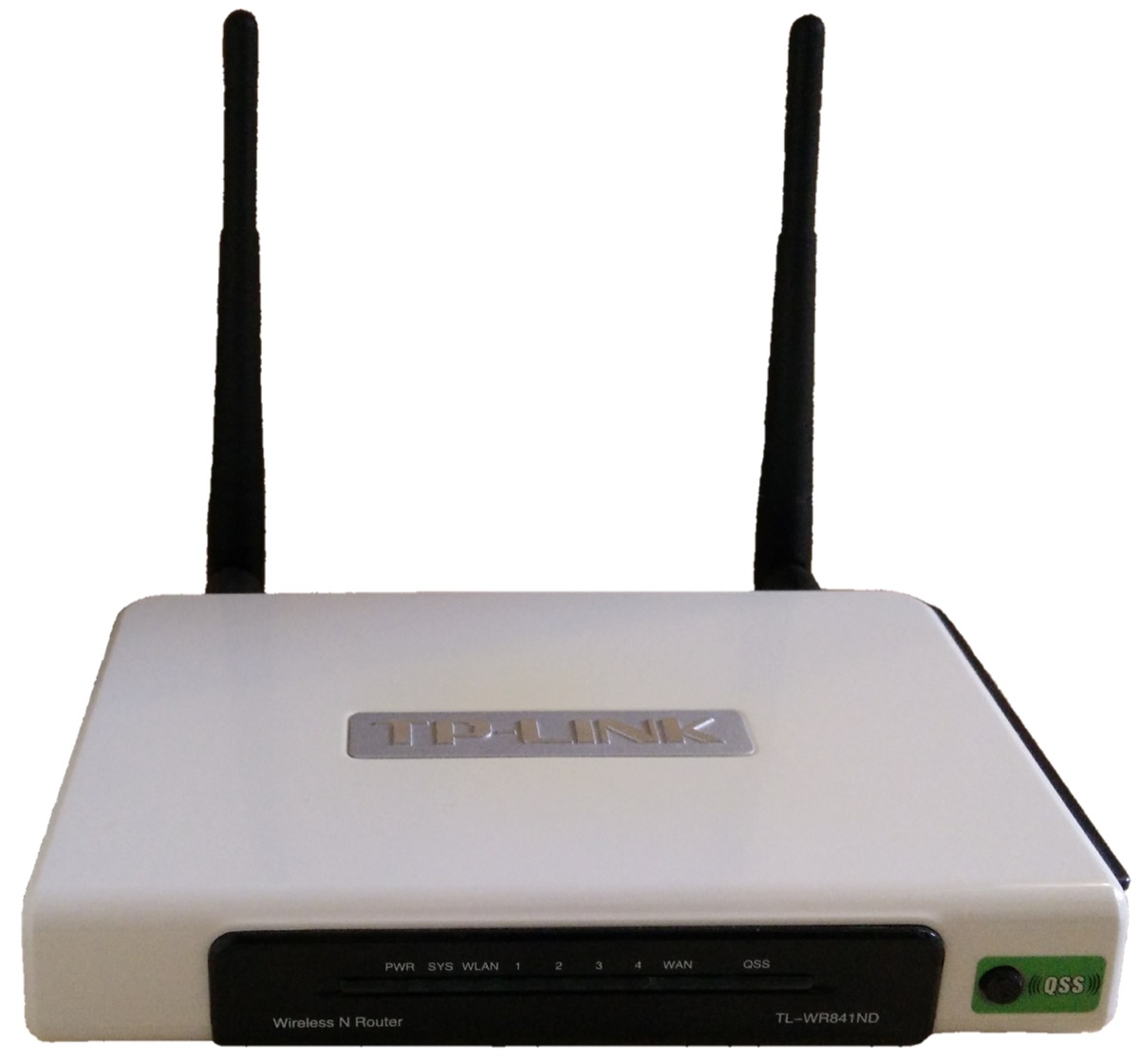
A Wi-Fi router sends out radio waves that bounce off walls, furniture and people, which gives the receiver several copies of the same signal arriving by different paths. The receiver is already measuring the strength and the shift of each one at every frequency. When somebody moves in the room, that pattern changes. What can be read out of it?
Presence, movement, and even a breathing rate. models learn to tie changes in the mixture to what is happening in the room. All of it runs on ordinary networking gear, with no lens, no image and no new device, through walls included. The information was being collected anyway, every moment, in every house. That makes it , and reading it as a measurement of the room rather than as noise to cancel is the whole move.
What turns this from a gimmick into something serious is that there is no new sensor involved. A router sends out radio waves, the receiver constantly measures how they arrived, and it has to do that anyway to decode data at all. That is being gathered in every house, every moment.
The signal arrives by several paths at once: directly, and in reflections off walls and furniture. A human body, which is mostly water, absorbs and reflects radio well, so it changes the mixture. When it moves the change is consistent rather than random, and even the rise of a chest in a breath produces a measurable periodic wobble.
No formula connects the signal pattern to what is going on in the room, so the work uses learning instead. A model is trained on cases where the answer is known, usually from a camera serving as ground truth, and is then tested on new scenarios.
Both sides of this come out of the same property. The useful application is spotting an elderly person’s fall at home without filming them and without a device they have to wear. The open question is privacy, because the capability leans on equipment that is already there. And in fairness: most demonstrations ran in controlled settings with few people, and performance drops in a crowded room or after the furniture moves.
wat. Movement in a room changes the way radio waves bounce, and a model learns to read that change.
wat wat
It opens up uses like detecting an elderly person falling at home with no camera, entirely passively. In the same breath it raises a privacy question: infrastructure that is already installed can sense people.
How do we know?
Laboratory experiments collected channel state information from standard Wi-Fi equipment alongside camera footage used as ground truth. A model was trained on the data and then tested on new scenarios.
What is still unknown
Most demonstrations ran in controlled settings with few people. Performance drops in a crowded room or with the furniture arranged differently from what the model was trained on.
Learn something?
Where to next
 Which health data does nobody collect, every single day?sensors
 Could a building panel tell you it is damp?sensors