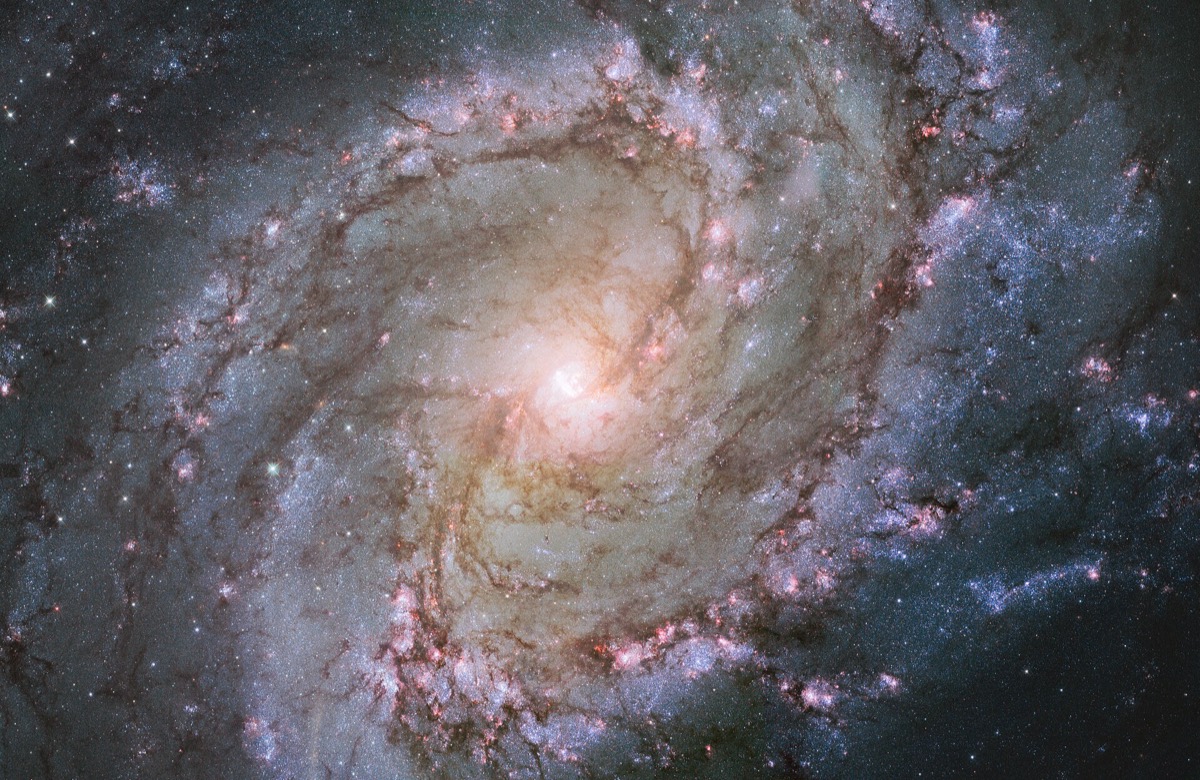
Dark matter is a central element of modern cosmology, and the standard model of the universe does not work without it. The story of how it got there is usually told as an anecdote about a few pioneering scientists. Bertone and Hooper set out to check that telling against the record.
Nobody, in the sense the question implies. The history of how dark matter became accepted as part of the is often ignored, or condensed into an focused around a handful of pioneers. The review’s aim is a broader perspective: the and the theoretical arguments that together led the scientific community to adopt it.
Dark matter is a central element of modern cosmology. The history of how it became accepted as part of the dominant paradigm, however, is often ignored, or condensed into an anecdotal account focused around the work of a few pioneering scientists.
That compression is what the review takes aim at. Its stated aim is to provide a broader historical perspective, covering both the observational discoveries and the theoretical arguments involved.
Those two strands are treated together rather than separately. What led the scientific community to adopt dark matter was the pairing of measurements that needed explaining with arguments about what could explain them.
The destination is specific. Dark matter is now an essential part of the . The review is a history of how a community arrived there, rather than an argument for or against the hypothesis.
wat. Not one discovery, but an accumulation nobody could keep explaining away.
wat wat
How a field came to believe something is part of knowing how well founded the belief is.
How do we know?
Bertone and Hooper review the historical record in Reviews of Modern Physics, tracing both the observations and the arguments rather than the biography of any one astronomer.
What is still unknown
A history of acceptance, which is a different question from whether the particle will ever be detected.
Learn something?
Where to next
 What is pulling the Milky Way, and why can we not see it?galaxies
 If the universe is endless and full of stars, why is the night sky dark?cosmology