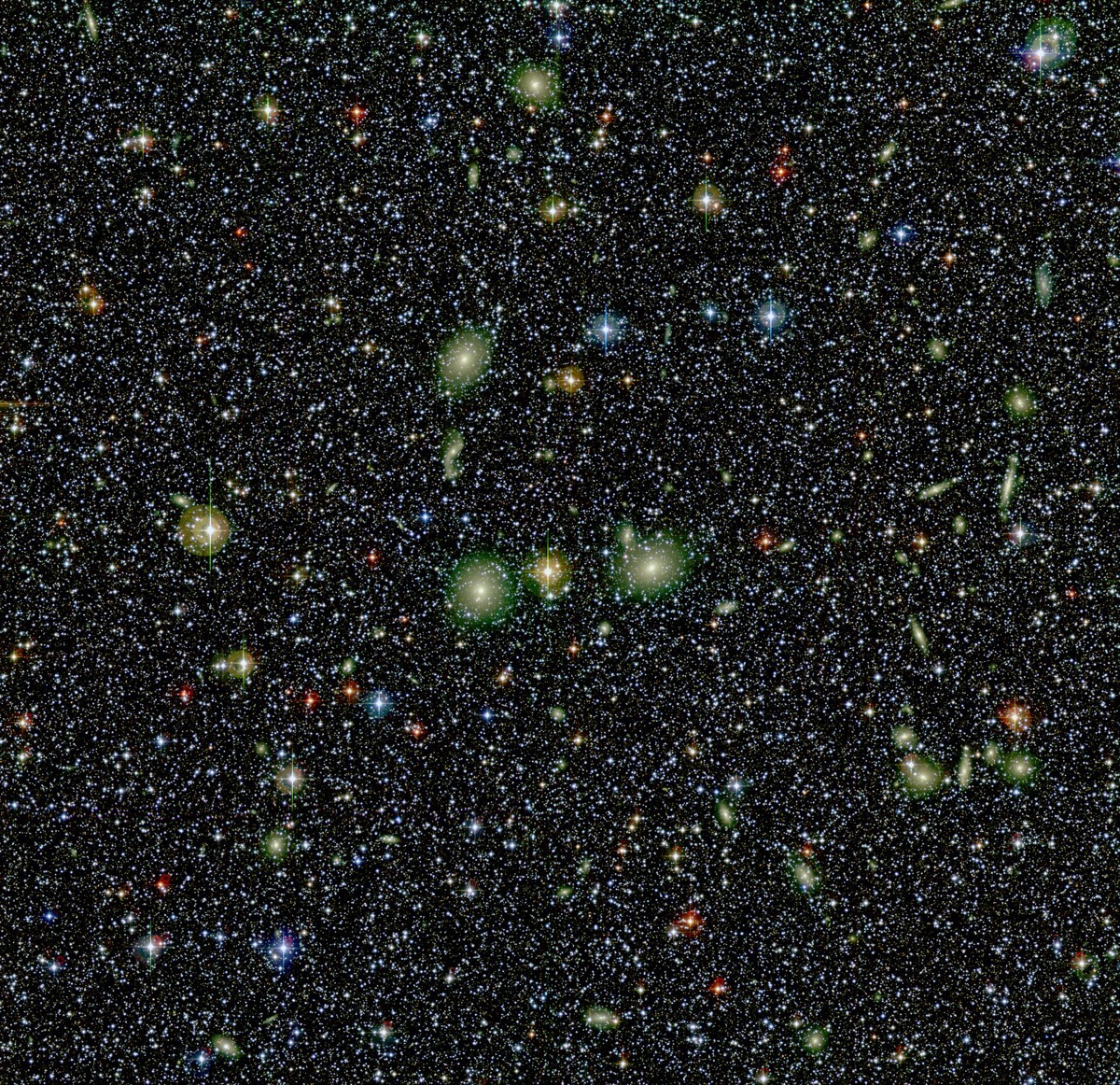
Major deviations from universal expansion turned up in the 1970s and 1980s, with our galaxy and thousands of others moving toward a diffuse concentration of mass some 250 million light-years away. Astronomers named it the . The direction it lies in is the one direction we cannot look.
Our own galaxy blocks the view. Radio observations through the found 883 galaxies, a third of them never seen before, along with three new and two new clusters. An average galaxy holds 100 billion stars, so that is a great deal of mass nobody had counted.
Scientists have been trying to get to the bottom of the Great Attractor since major deviations from universal expansion were first discovered in the 1970s and 1980s. It is a diffuse concentration of mass about 250 million light-years away, pulling the Milky Way and thousands of other galaxies toward it.
The obstacle is our own galaxy. The Milky Way completely blocks the view of the more distant galaxies behind it, in the region astronomers call the Zone of Avoidance, and decades of attempts to map what lies there have mostly failed.
Radio got through. Using the on the 64-meter Parkes radio telescope, the team saw past the stars and dust and found 883 galaxies, a third of which had never been seen before.
The survey also turned up structure. Three new galaxy concentrations confirm the diagonal crossing of the Great Attractor Wall, and two new clusters add mass in the nearer Centaurus Wall. One of those forms part of a filament 180 degrees long that dominates the southern sky. Nobody yet understands what is causing the acceleration.
wat. A third of the galaxies pulling us were hidden behind our own.
wat wat
The Milky Way is moving toward this region at more than 2 million km per hour, and nobody can yet say what is causing the acceleration.
How do we know?
Staveley-Smith and colleagues surveyed the region with the multibeam receiver on the 64-meter Parkes radio telescope, which sees through the dust and stars of the Milky Way, and published the results in the Astronomical Journal.
What is still unknown
New structures that could help explain the motion, rather than an explanation of it.
Learn something?
Where to next
 How is the distance to the Moon known to the millimeter?gravity
 What does a photograph of a black hole actually show?astronomy
 Who discovered dark matter?galaxies