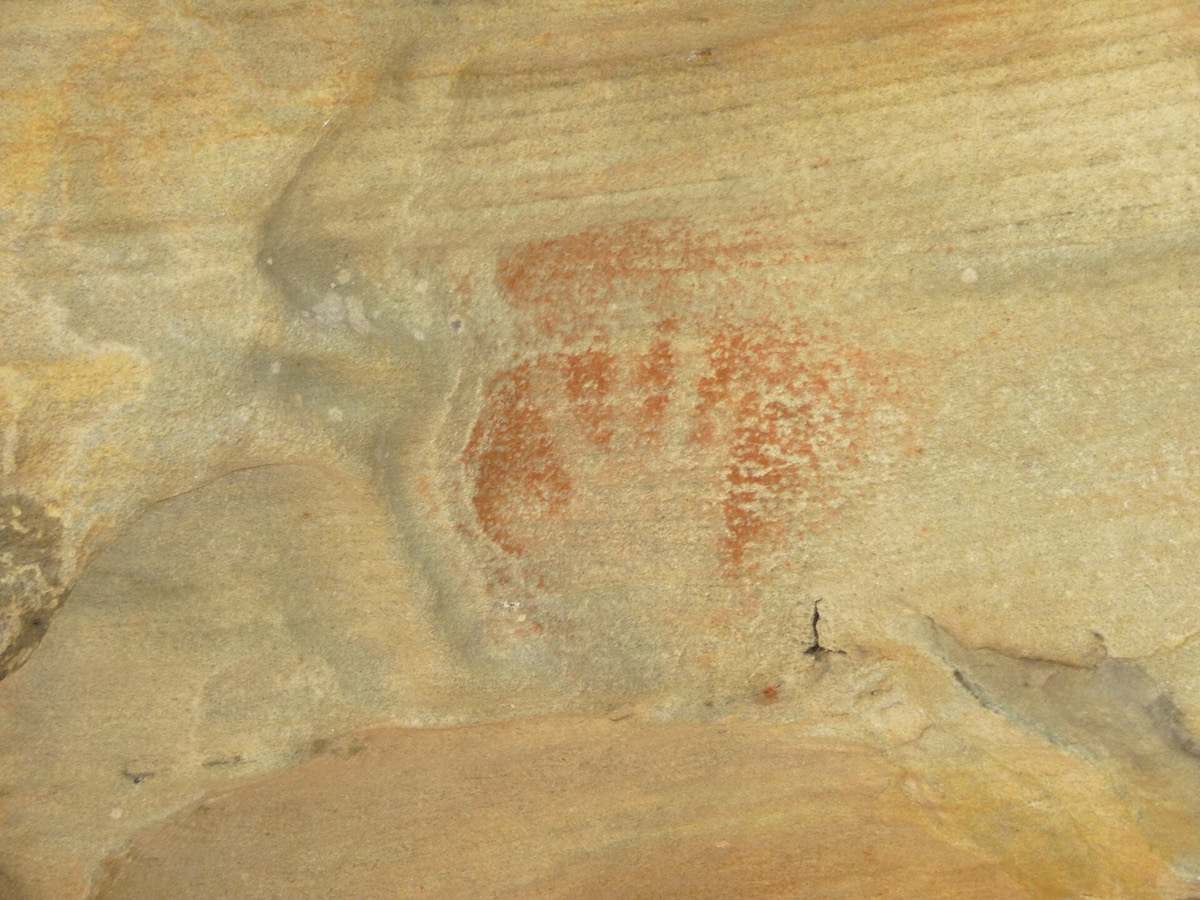
are direct impressions of an artist’s hand, dating back more than forty thousand years, which makes them look like the best available evidence about who was painting. Reading a biological profile off them has proved very hard. works well on shapes in other disciplines, so the obvious question is whether it transfers. The complication is that archaeological hands are splayed differently.
Finger position swamps everything else. A sample of 70 living individuals, 35 female and 35 male, was scanned in three standardized positions and digitized with 32 landmarks. The mean distance between two positions of the same hand came out larger than the mean distance between different individuals. Relative finger position, and including all hand parts, had an overshadowing effect on other variables such as .
Hand stencils are a remarkable graphic expression in prehistoric rock art, dating back to 42 thousand years before present. They provide direct impressions of the artists’ hands, so reading a biological profile off them, meaning biological sex and age, is an obvious thing to attempt and a very challenging one.
Previous studies tried it with traditional morphometrics. Little research had used geometric morphometrics, a landmark-based approach widely used in other disciplines and only tentatively employed in rock art studies. The obstacle the authors identify up front is the large variation in relative finger position in archaeological hands, which raises the question of whether these representations can be examined this way at all.
To address that, a sample of two-dimensional hand scans from 70 living individuals, 35 female and 35 male, was collected in three standardized positions, giving 210 scans, each digitized with 32 conventional landmarks. The design asks a prior question: how much does one hand change shape between poses, compared with how much hands differ from each other?
The answer settles it. The between positions came out larger than the inter-individual distance within positions. Mean Procrustes distances between pose pairs exceeded the between-individual means in every one of the three positions. The authors show that relative finger positions, and the inclusion of all hand parts, overshadow other variables potentially involved in the morphometric variability of the hand. Biological sex is among them.
wat. The same hand held two different ways differs more than two different hands do, which is why a stencil will not tell you whose it was.
wat wat
It is a negative methods result that saves work. If the same hand in two poses differs more than two different hands do, then a sex estimate from a stencil is measuring the pose, and knowing that before publishing matters.
How do we know?
Fernández Navarro and colleagues collected two-dimensional hand scans of 70 living individuals in three standardized positions, giving 210 scans, digitized each with 32 conventional landmarks, and compared intra-individual against inter-individual shape distances.
What is still unknown
The sample is modern hand scans rather than archaeological stencils, so this tests whether the method could work in principle. It shows that relative finger position creates an unmanageable error, not what the stencils themselves record.
Learn something?
Where to next
 Who was wearing royal purple at a desert copper mine?archaeology
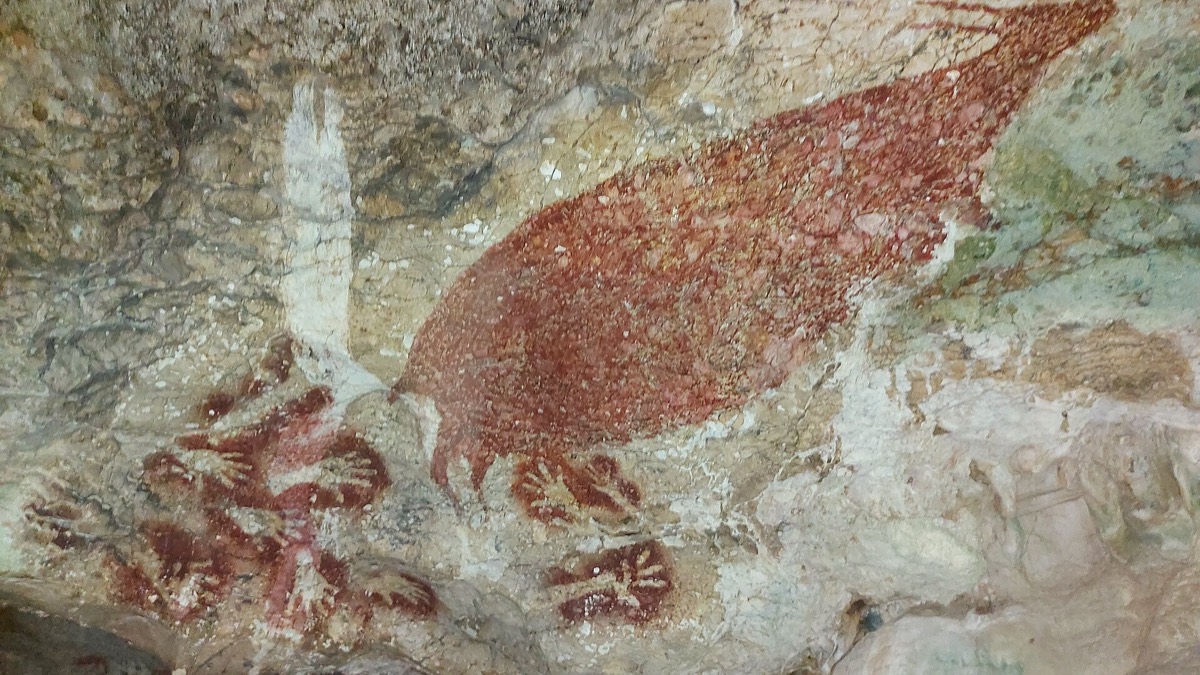 When did people start painting a story rather than a thing?cave art
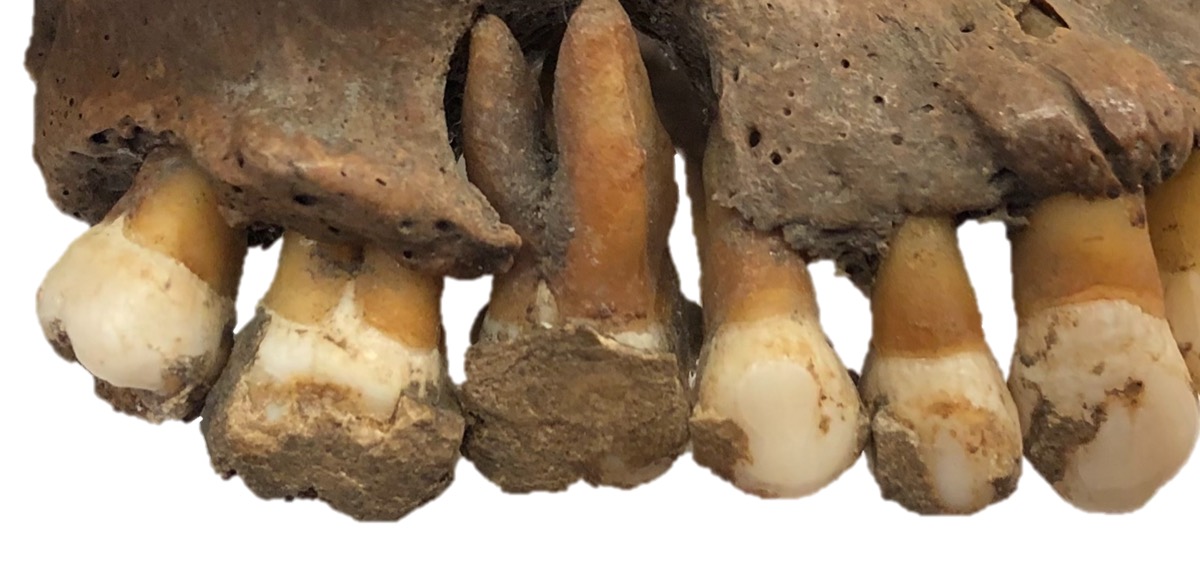 What did a meal from the past leave between the teeth?archaeology