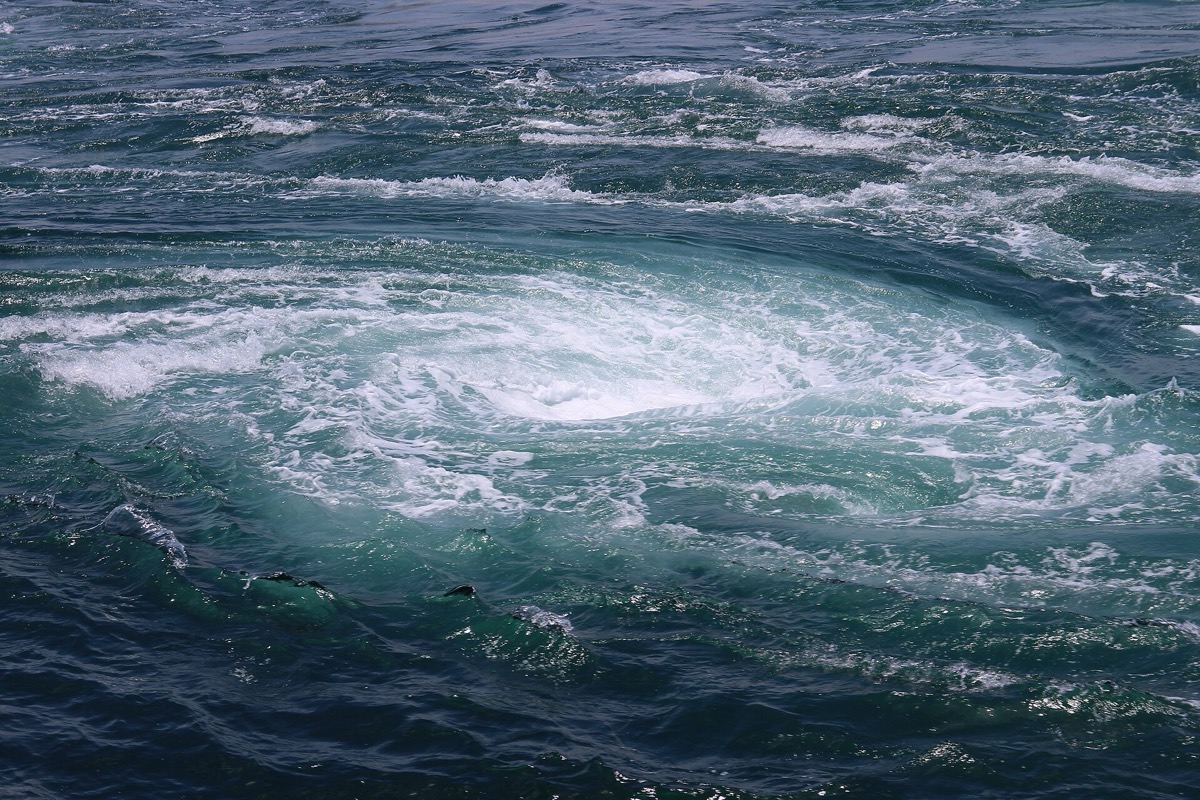
Tides working against each other. A whirlpool is a , a large-scale eddy produced by the interaction of rising and falling tides. Similar currents with a central downdraft are called , and they occur where coastal and bottom configurations provide narrow passages of considerable depth.
Rivers do something related but not the same. At certain stages of turbulent flow, streams form rotating currents with central updrafts rather than downdrafts. These are called , or boils, and they are readily visible on the surface. Updraft or downdraft is the distinction, and it separates a river boil from a sea vortex.
A whirlpool is a rotary oceanic current: a large-scale eddy produced by the interaction of rising and falling tides. That definition does most of the work. It is a current rather than a hole, and it is tidal, which means it has a schedule rather than being a permanent feature of a place.
Britannica separates a second form. Currents with a central downdraft are termed vortexes, and they occur where coastal and bottom configurations leave narrow passages of considerable depth. The geometry is doing the work: a constriction to force the flow through, and depth underneath for water to descend into.
Rivers produce something that looks related and is not. At certain stages of turbulent flow, rotating currents with central updrafts form, and these are called kolks, or boils, readily visible on the surface. The vertical direction is reversed, so a boil in a river is not a miniature whirlpool but a different phenomenon.
The famous examples all confirm the requirement for a narrow passage. Garofalo lies along the coast of Calabria in southern Italy, supposedly the Charybdis of ancient legend, and Messina in the strait between Sicily and the mainland. The , from the Dutch for whirling stream, sits near the Lofoten Islands off Norway, and others near the Hebrides and Orkney islands are well known. A characteristic vortex occurs in the Naruto Strait, connecting Japan’s Inland Sea to the Pacific. One caution: this entry defines and lists without measuring anything.
wat. A whirlpool is two tides meeting in a passage too narrow to share.
wat wat
The ingredients are geometric. A whirlpool needs opposing tidal flow and a narrow, deep passage to force it through, which is why the famous ones are all in named straits.
How do we know?
Britannica’s entry on whirlpools defines them as tidal eddies, distinguishes vortexes and the conditions they need, separates river kolks by their updraft, and names the famous examples around the world.
What is still unknown
An encyclopedia entry giving definitions and examples rather than measurements. It offers no speeds, diameters or tidal ranges, so it says what produces a whirlpool and not how strong any of them is.
Learn something?
Where to next
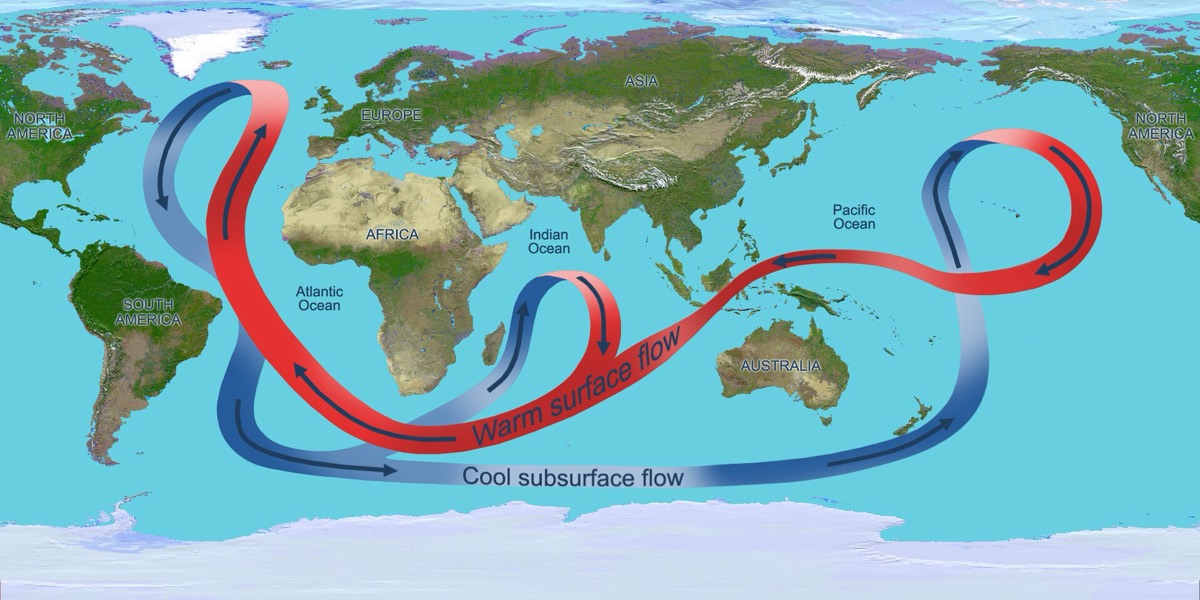 Why does the ocean get colder the deeper you go?oceans
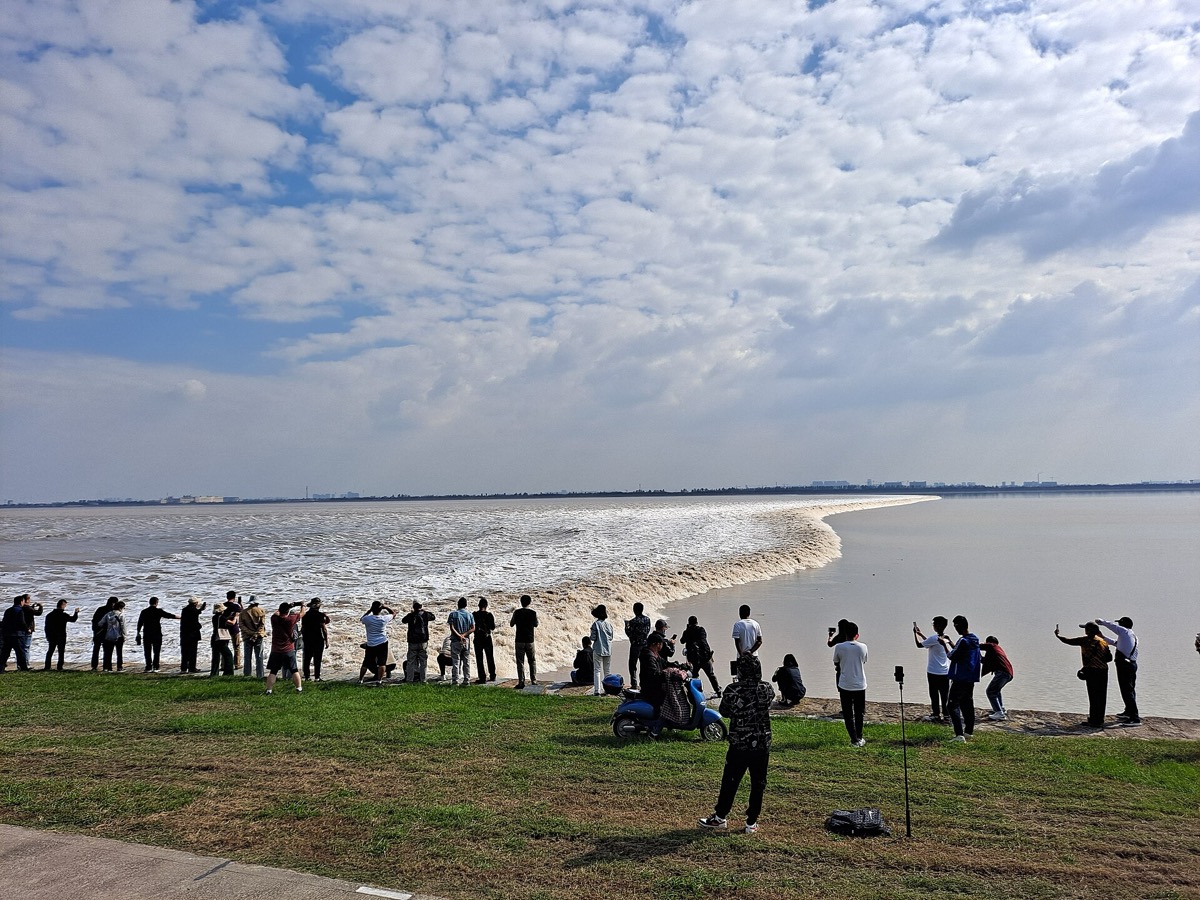 How does a tide from the sea turn into a wave that runs up a river?tides
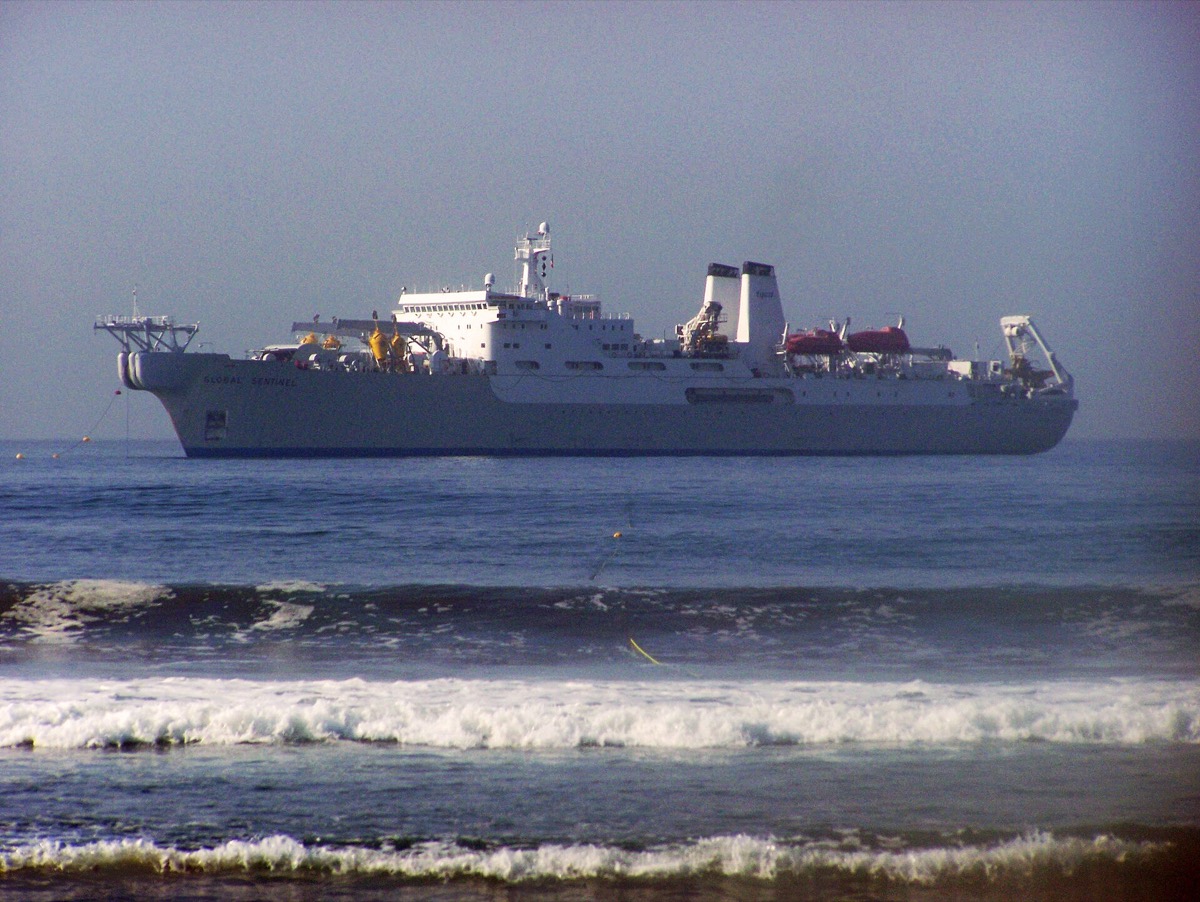 Do undersea cables really carry almost all the world’s data?oceans