The deep ocean is cold, and the obvious explanation runs the wrong way. The Earth gets hotter with depth, because heat from radioactive decay leaks outward from the core, and that heat does reach the seafloor. So the water at the bottom sits on a warm surface and is nonetheless the coldest water in the column. Something must be supplying it faster than the planet can warm it.
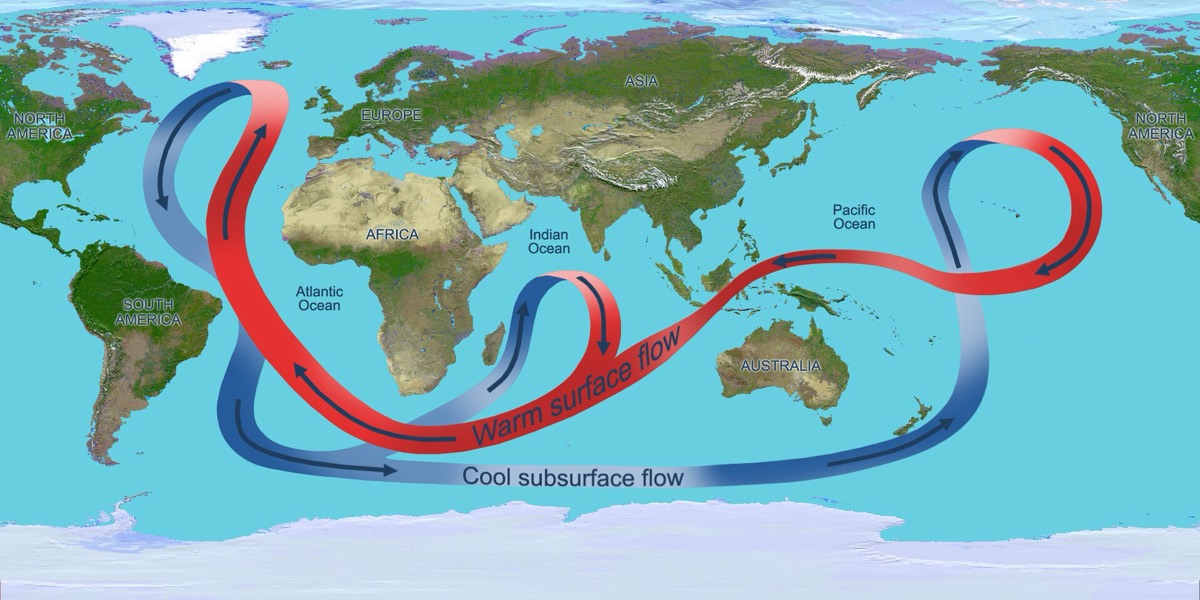
Cold salty water sinks, and keeps being replaced. Cold water is denser than warm, so cold salty ocean water sinks beneath the less dense warmer water near the surface. That sinking and deep transport, combined with the wind-driven flow of warm water at the surface, creates the pattern called the . driven by differences constantly replace the bottom layer with colder water.
Water gets colder with depth, and the Earth gets hotter with depth. Those two facts sit awkwardly together, because the energy of radioactive decay leaking outward from the planet’s core does reach the ocean along the seafloor. The deep water is in contact with a warm floor and is still the coldest water there is.
The resolution is density. Cold water has a higher density than warm water, and salty water is denser than fresh. So cold salty ocean water sinks to the bottom of the ocean basins, below the less dense warmer water near the surface.
That sinking is one half of a global system. The sinking and deep transport of cold salty water combines with the wind-driven flow of warm water at the surface. Together they create the complex pattern of circulation called the global conveyor belt.
The reason the warm seafloor loses so decisively is a matter of rates. emanating from the Earth averages only about one tenth of a watt per square meter. At that rate, NOAA notes, and without taking currents into account, it would take well over a year just to heat the bottom meter of the ocean by one degree Centigrade. The effect on ocean water is so small it is immeasurable by direct means. Meanwhile complex deep currents driven by density variations are constantly replacing the bottom layer with colder water.
wat. The deep ocean is cold because dense cold water keeps sinking into it faster than the Earth below can warm it.
wat wat
The arithmetic is the persuasive part. Geothermal heat loses to deep circulation by such a margin that the planet warming the seafloor is effectively irrelevant to how cold the deep ocean is.
How do we know?
NOAA’s Ocean Service explains the density relationship, sets the geothermal heat flux against the heat needed to warm the ocean, and describes the resulting global conveyor belt.
What is still unknown
This is a public explainer stating established physical oceanography rather than new measurement. NOAA also notes the geothermal transfer to the ocean is so small that it is immeasurable by direct means.
Learn something?
Where to next
 What does carbon dioxide do once the ocean absorbs it?oceans
 Where has almost all the trapped heat actually gone?oceans
 What makes a whirlpool in the open sea?currents