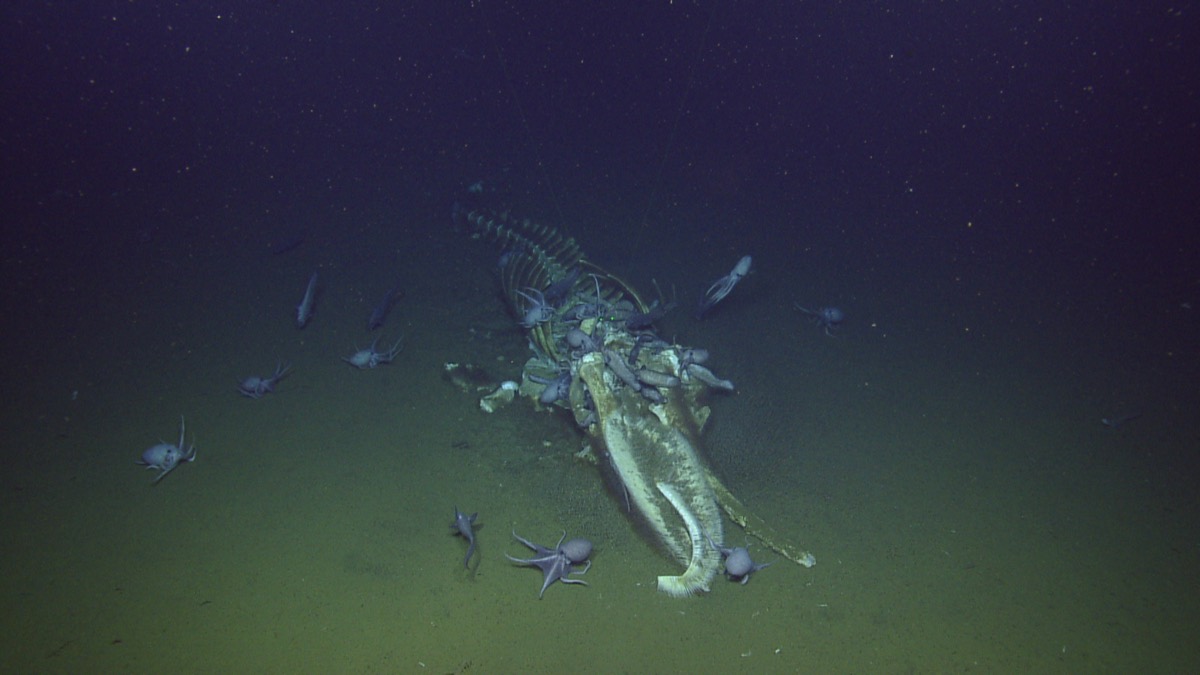
The deep sea is energy-poor: whatever sinks from the sunlit water arrives as a thin rain of particles. Then a great whale dies, and tens of tonnes of flesh and bone land in one place. Smith and colleagues review what a decade of work on modern and fossil whale remains has found. It is not a single feast.
A succession, running for years, with different communities in turn. Whale falls produce organic-rich and sulfide-rich on the seafloor, and deep-sea animal communities at them pass through a series of overlapping successional stages that vary with carcass size, water depth and local conditions. Giant body size and especially high are what make such a long sequence possible.
Whale falls produce remarkable organic-rich and sulfide-rich habitat islands at the seafloor, and the past decade has seen a dramatic increase in studies of both modern and fossil whale remains. The review gathers those results, which is how the picture shifted from a single scavenging event to a sequence.
Two properties of a whale are what let the sequence run. Giant body sizes, and especially high bone-lipid content, allow a great whale carcass to support a series of heterotrophic and then microbial assemblages in the energy-poor deep sea. The soft tissue is the opening course; the fat inside the bones is what lasts.
Above the microbes, the animals come in overlapping waves. Deep-sea metazoan communities at whale falls pass through a series of overlapping successional stages that vary with carcass size, water depth and environmental conditions. Those communities contain many new species and evolutionary novelties, including and snails, and a diversity of grazers on sulfur bacteria.
The evolutionary argument goes further than the carcass. Molecular and paleoecological studies suggest whale falls have served as hot spots of adaptive radiation for a specialized fauna. They have also provided evolutionary stepping stones for vent and seep mussels, and may have helped new species arise among other vent and seep animals. That makes a dead whale a stage in the history of habitats it never visited.
wat. The bones are the point. The lipids inside them keep the community going long after the flesh is gone.
wat wat
These are not just meals. The review describes whale falls as hot spots of adaptive radiation, and as evolutionary stepping stones that helped vent and seep mussels reach their habitats.
How do we know?
A review in the Annual Review of Marine Science drawing together a decade of studies of modern and fossil whale remains. It covers the microbial assemblages, the animal communities, and the molecular and paleoecological work on their origins.
What is still unknown
A review rather than one observation, and the sequence it summarizes varies with carcass size, depth and environment. The evolutionary claims rest on molecular and paleoecological inference.
Learn something?
Where to next
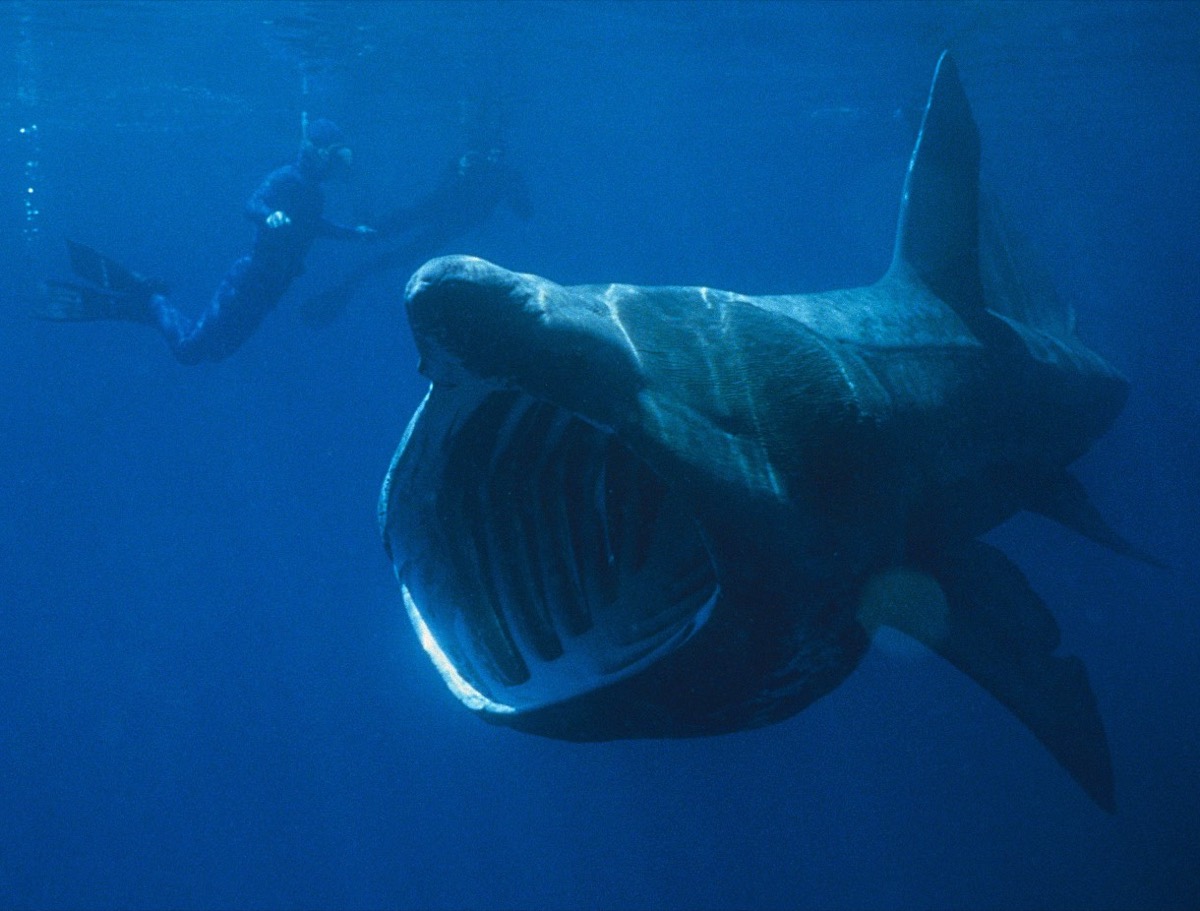 Does a filter-feeding shark eat while crossing an ocean?deep sea
 Is the water at the bottom of the deepest trench on earth standing still?deep sea
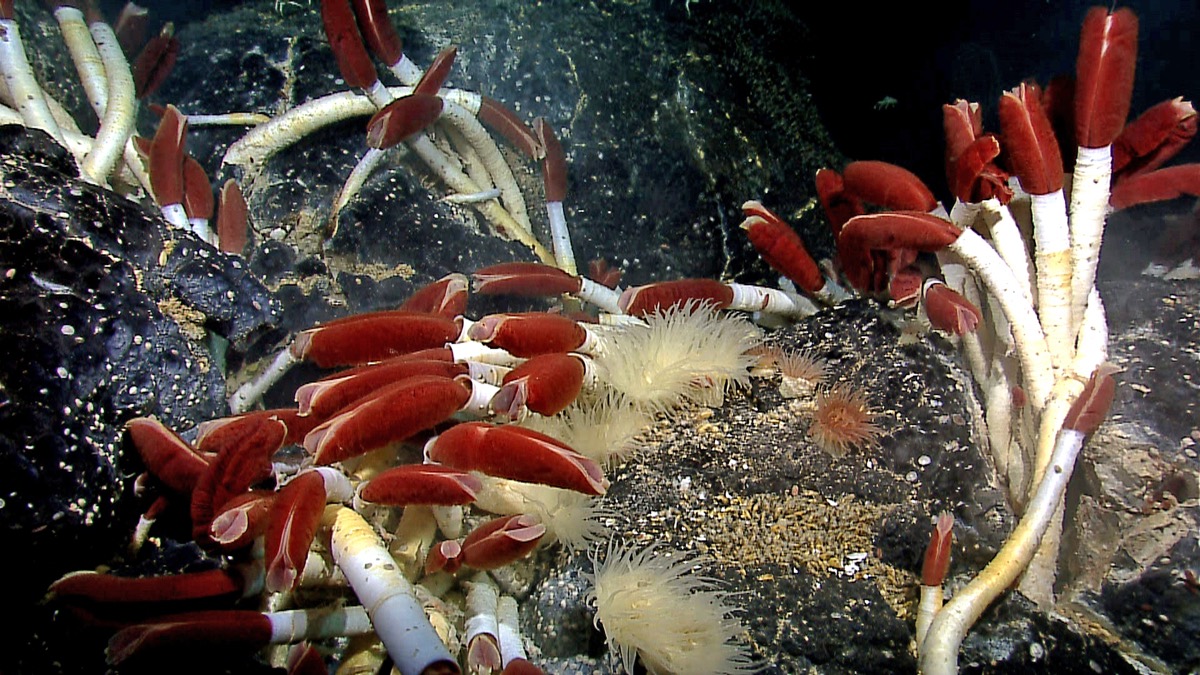 What happens to a tubeworm’s bacteria when the tubeworm dies?deep sea