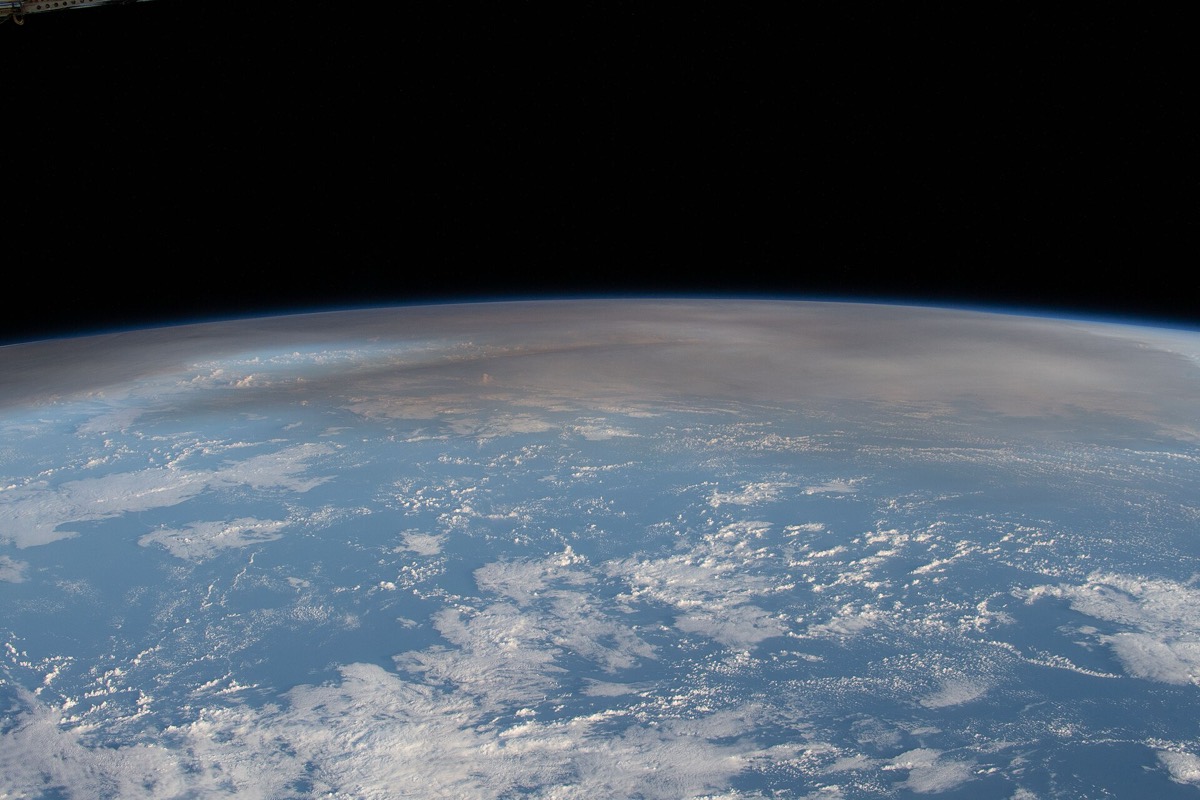
The Hunga Tonga eruption of January two thousand and twenty-two was one of the most explosive volcanic events of the modern era, throwing a plume that peaked more than fifty kilometers above the Earth. The explosion and the plume set off atmospheric waves that went around the world several times. Nobody had recorded a global wave response like it from one source.
It rang the atmosphere from the ground to the . Satellite and ground observations caught a broad spectrum of waves. moved at about three hundred and eighteen meters per second at the surface, and at two hundred and thirty-eight to two hundred and sixty-nine in the stratosphere. Gravity waves had never been seen at those speeds below the ionosphere, or crossing the whole Earth from one source.
The eruption was extreme in a measurable way. January two thousand and twenty-two saw one of the most explosive volcanic events of the modern era at Hunga Tonga, with a vertical plume that peaked more than fifty kilometers above the Earth. The initial explosion and the plume that followed triggered atmospheric waves that went around the world multiple times. Nobody had recorded a global-scale wave response of that magnitude from a single source.
The paper exists to pin the response down rather than to report that it happened. Using a comprehensive set of satellite and ground-based observations, the authors quantify what the atmosphere did from the surface up to the ionosphere. That span is what makes the event one coherent measurement rather than a collection of separate reports.
What they find is a broad spectrum of waves with distinguishable speeds. Lamb waves moved at three hundred and eighteen point two meters per second at surface level, and between three hundred and eight and three hundred and nineteen in the stratosphere. Gravity waves ran slower, at two hundred and thirty-eight to two hundred and sixty-nine meters per second in the stratosphere. Those had not previously been seen at such speeds below ionospheric heights, or spreading over the entire planet from one point.
The plume kept working after the bang. release from it remained the most significant individual gravity wave source worldwide for more than twelve hours, throwing circular wavefronts that satellites could see crossing the Pacific basin. A single source dominating so large a region is also unique in the observational record. The authors frame the event as a key natural experiment in how the atmosphere answers a sudden point-source-driven state change, useful for improving weather and climate models.
wat. One explosion, and the whole atmosphere rang with it for days, from sea level to the edge of space.
wat wat
The authors treat it as a natural experiment: a sudden point-source change to the atmosphere, of exactly the kind weather and climate models are never able to test against.
How do we know?
A paper in Nature using a comprehensive set of satellite and ground-based observations to quantify the wave response from the surface up to the ionosphere, and to separate the wave types by their phase speeds.
What is still unknown
Observations of one event. The measurements establish what happened and how fast, not how an atmosphere would answer a different eruption in a different place.
Learn something?
Where to next
 How does a cloud of dry ash throw lightning with no rainstorm?volcano
 Did a giant eruption bring down a kingdom in East Asia?volcano
 The sky looks like a rough sea seen from below. Is that really a new kind of cloud?waves